



Weekly birding round-up: 10 - 16 Jul
The summer showed little sign of taking its foot off the throttle this week, with yet another highly desirable passerine mega found Scotland, a rare seabird in northern England, and notable wader in the south. While a certain football team wasn’t able to score when it mattered this week, some birders were finding the back of the net when it counted.
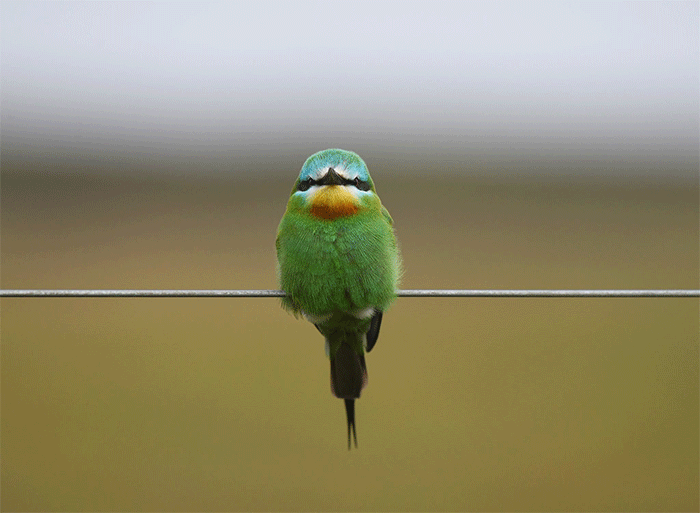
There are few, if any, more attractive vagrants on the British list than Blue-cheeked Bee-eater, these simply glorious birds being a particularly lysergic rarity – and a mega one, with a mere dozen seen in Britain to date. Of that dozen, one-day birds are largely the order of the day, with only three birds having extended their stays beyond that – three-day birds being seen around the Otter Estuary (Devon) on 30th June – 2nd July 1987, and at Cowden (Lincolnshire) on 8th-10th July 1989. The latter bird was suspected to have been present since 25th June, but it’s the famous Shetland bird in 1997 that holds the record for being the most steadfast of its kind in Britain – this being a bird that settled in the greater Lerwick, Bressay and Tingwall Valley area for a fortnight on 20th June – 3rd July.
It remains to be seen how long the bird initially reported this week from Papa Westray (Orkney) on 13th hangs around – it certainly made it until 15th there, and latterly transpired to have been present on Westray on 11th. There may be a fair chance it lingers longer, if the Shetland bird is any precedent for an island vagrant bee-eater.
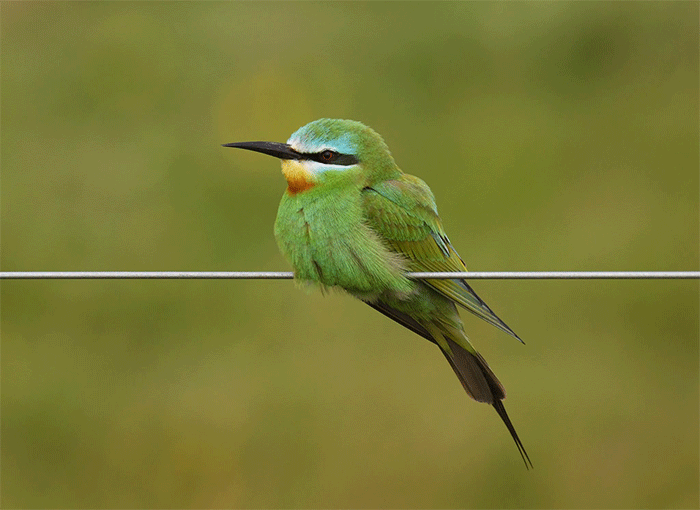
This week’s bird was a first for Orkney and, as such, was always going to galvanise local birders. Should the bird still be present as we stand on the cusp of the weekend, it may yet attract birders from further afield too…
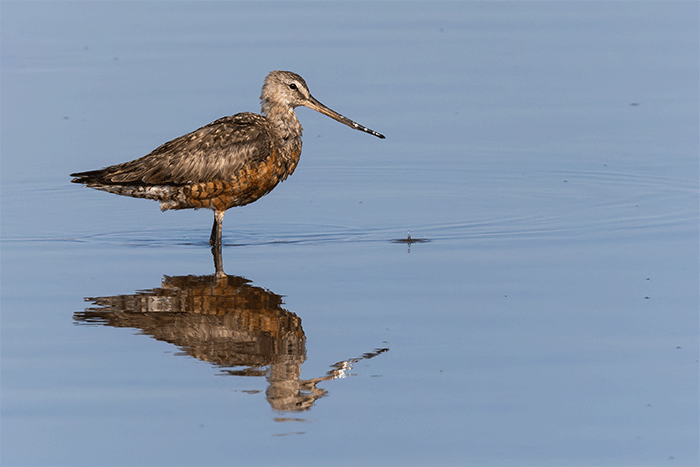
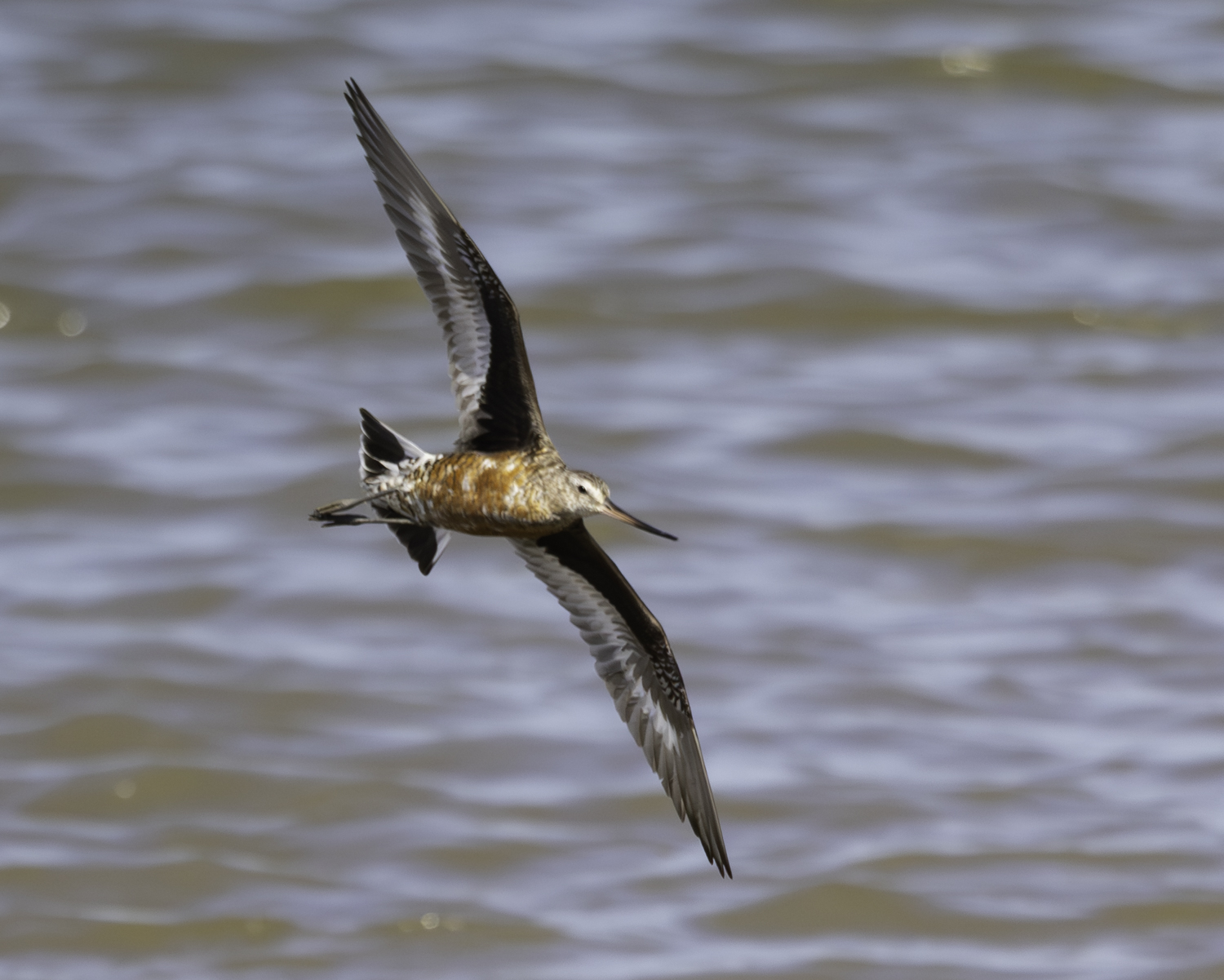
Having paid an all too fleeting visit to Suffolk in the recent past, there was a sense of relief to the news that the very dapper adult Hudsonian Godwit was back again in the county this week. Initially seen at Stutton Mill on 12th, it settled into the Cattawade area on 13th-16th, understandably attracting a steady stream of admirers.
Once upon a time, not so very long ago, Brown Booby was the stuff of birder fantasy, a species of sufficient rarity as to be almost impossible to countenance. How times change…
The past decade has marked a sea change, from the first Irish records in 2016 to Britain’s first confirmed birds in Kent and Cornwall in 2019, and onwards – records have come steadily, giving Britain a dozen to its credit, including one as far north as North Ronaldsay (Orkney). So it now comes as little surprise when one’s seen of a summer in these parts – though, of course, they’re still rarified enough to qualify as an adrenaline-pumping surprise for their fortunate finders on the day.
MEGA ?? BROWN BOOBY, Bempton.
— MarcM381 (@aquilabirding) July 14, 2026
?? photo by Steve Race. pic.twitter.com/aBrQESBsWT
This week a first-summer bird was found in East Yorkshire at Bempton Cliffs RSPB on 14th – not even a county first in these changed times, but a welcome find nonetheless. There will, surely, be more sightings this hot summer…
The Scilly pelagics of 15th and 16th made a pleasing return of eight and 16 Wilson’s Petrel respectively, reminding us anew that there are still many weeks to come this summer bursting with potential for some fine pelagic seabird rarities.
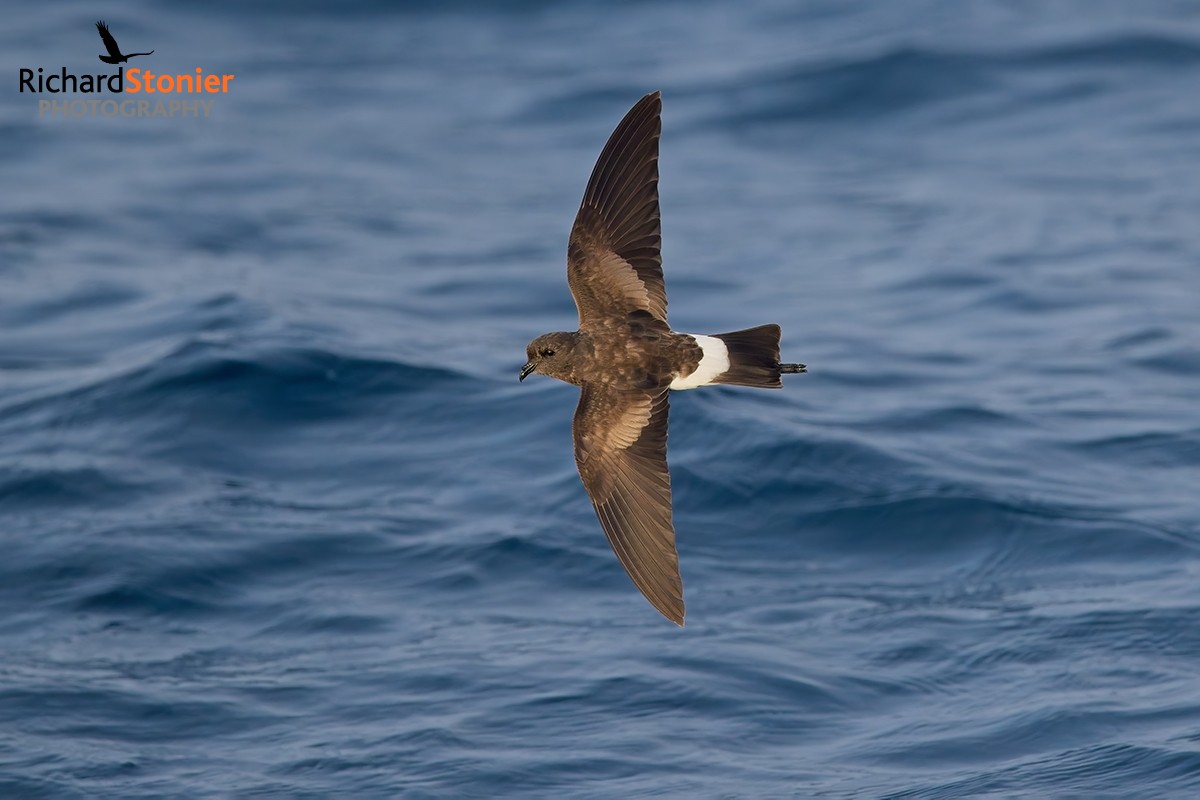
A Leach’s Petrel was logged at Mangersta Head on Lewis (Western Isles) on 14th.
Large shearwaters remained, for now, thin on the ground - two Great Shearwater were seen from the Skellig Islands (Co.Kerry) on 10th, and two from the Scilly pelagic of 14th; and singletons on the Scilly pelagic and from St Ives (Cornwall) on 16th. A Cory’s Shearwater was seen from Cape Cornwall (Cornwall) on 16th, and another that day from the Scilly pelagic.
Numbers of Balearic Shearwater also remained low, with a peak count of their kind coming once more from Portland (Dorset), where 16 birds were noted on 14th.
A Long-tailed Skua was seen on Fair Isle (Shetland) on 15th, and another on Foula on 16th.
Finally, the White-billed Diver remained off Houton (Orkney) on 11th-14th.
As the week began, the dark morph Western Reef Heron remained available in Pembrokeshire, seen on the Gann Estuary on 10th-11th, and the Nevern Estuary on 10th; reported again from the latter on 12th, but not seen anywhere thereafter. Where’s it decamped to now?
Western reef heron pic.twitter.com/vE01Ijmc2F
— Ian Lucas (@IanLuca72010585) July 12, 2026
The week was another busy one for Night Heron - the recent individual at Attenborough NR (Nottinghamshire) was again seen there on 10th-12th, while the other recent bird remained in Hampshire at Miller’s Pond on 10th-16th, and one was also seen at North Cave Wetlands YWT (East Yorkshire) on 15th. In Ireland, birds were reported from Lough Leane (Co.Kerry) on 12th, and Dun Laoghaire (Co.Dublin) on 14th.
A Spotted Crake was reported from Anglesey at Cors Goch NR on 12th.
The main point of interest among the denuded quackers this week were White-winged Scoter, with Musselburgh (Lothian) the place to be – two drakes were present there on 10th and 16th, with a second-summer drake also present there in the morning of 16th. The three recent drake Surf Scoter also lingered at Musselburgh until 16th.
In Shetland the female King Eider from earlier in the year was once more to be seen in Lerwick on 10th-16th.
The drake Lesser Scaup remained in Fife on Loch Gelly on 12th-14th.
The recent drake Ring-necked Duck remained on Nether Kinellan (Highland & Caithness) on 12th, while in Essex the female on Hanningfield Reservoir stayed put there on 10th before relocating onto Abberton Reservoir on 11th-16th. Up on Shetland an eclipse drake arrived on Loch of Clickimin on 16th; while a drake was found on 16th at Netherfield Lagoons (Nottinghamshire).
There was some pleasing variety to report among the weekly waders from the past week, with a decidedly Nearctic flavour in parts. On 15th American Golden Plover were found in Kent at Oare Marshes KWT and in Orkney on Westray. An adult Pacific Golden Plover meanwhile was present at Ring Marsh (Co.Wexford) on 12th-13th.

North Ronaldsay (Orkney) retained its recent Semipalmated Sandpiper on 12th still. Another was found in the evening of 15th in the wader roost at Snettisham RSPB (Norfolk).
A busy week for Pectoral Sandpiper in particular saw two birds settled at Old Hall Marshes RSPB (Essex) on 11th-14th; and single birds seen at Loch of Strathbeg RSPB (Aberdeenshire) on 11th, on Bann Estuary (Co.Derry) on 12th, and on 15th at Crook of Baldoon RSPB (Dumfries & Galloway) and Freiston Shore RSPB (Lincolnshire), the latter remaining present on 16th.
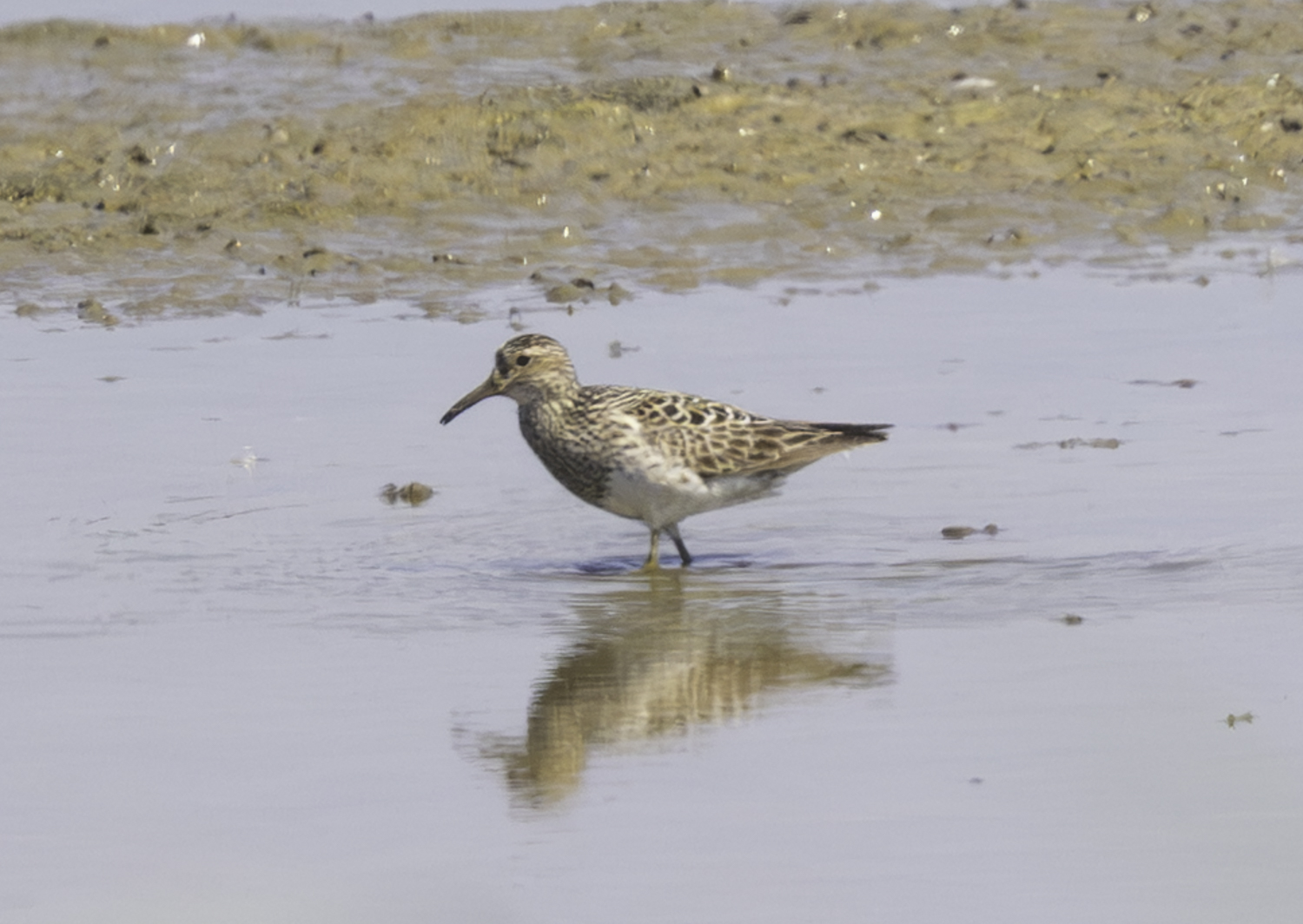
Temminck’s Stint this week were noted at Pennington Marshes (Hampshire) on 10th, at Marshside RSPB (Lancashire & North Merseyside) on 11th, and Minsmere RSPB (Suffolk) on 11th-12th.
Two Black-winged Stilt lingered at Frampton Marsh RSPB (Lincolnshire) on 10th-16th.
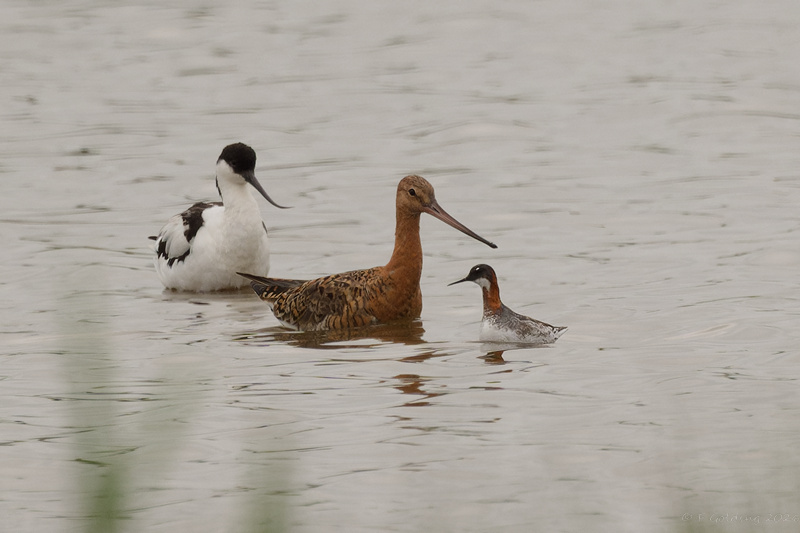
The weekly waders conclude once more with Red-necked Phalarope - one lingered at Druridge Pools NR (Northumberland) on 11th-13th; and another was seen on Sanday (Orkney) on 14th-15th.
In Kent the regular returning adult Bonaparte’s Gull remained at Oare Marshes KWT on 10th-16th.
Up in Shetland the adult Ring-billed Gull was again seen off Noss on 12th. A decidedly scarce species for Shetland, an apparently summering bird is all the more remarkable.
The Glaucous Gull remained on South Uist (Western Isles) on 12th; an Iceland Gull was seen passing Haslingden (Lancashire & North Merseyside) on 16th.
This was an excellent week for Caspian Tern, with several birds enjoyed around England, with a bias towards the south – the outlier being a bird in Cheshire & Wirral at Marbury CP on 13th-14th. Further south, birds were seen in Devon on 12th at Exminster Marshes RSPB and Bowling Green Marsh RSPB; on 14th in Kent at Stodmarsh NNR; on 15th at Abbotsbury Swannery (Dorset), and Abberton Reservoir (Essex); and on 16th at Nosterfield Quarry (North Yorkshire).
In Northumberland the female surinamensis American Black Tern remained present at Long Nanny on 10th, and was seen again on Inner Farne on 16th.
The adult White-winged Black Tern was still present at Tacumshin (Co.Wexford) on 10th, and was seen again at Ring Marsh on 14th.
We finish the terns in Ireland where, at Baltray (Co.Louth) on 11th and 14th, the adult Least Tern was once more to be seen.
In Norfolk, the summering Black-winged Kite remained at Sea Palling until 16th, with a sortie to Hempstead Marshes again on 14th.
A possible Scops Owl was reported as heard in Highland & Caithness at Sliemore on 10th, but unfortunately came to nothing further.
Our main headlining bird this week was, of course, the Blue-cheeked Bee-eater up in Orkney, but its more common brethren were also being seen elsewhere - Bee-eater were logged in recent days at Cudham (London), where one was heard on 11th; four passed over Puddington (Cheshire & Wirral) on 13th; one was seen at Mizen Head (Co.Cork) on 14th; and a final bird was reported heard over Shotley Bridge (Co.Durham) on 16th.
A Red-backed Shrike settled on Isle of May (Fife) on 13th—14th; and a possible was at Coolbeg (Co.Wicklow) on 16th.
The smart Red-backed Shrike still present on the Isle of May for its second day pic.twitter.com/ESfKd15IiM
— David Steel (@SteelySeabirder) July 14, 2026
A Golden Oriole was heard in song at Damerham (Hampshire) on 13th.
A singing Greenish Warbler was found at Bempton Cliffs RSPB on 11th.
A blast from the recent past was also again in song in Co.Durham on 13th, where the Iberian Chiffchaff was once again heard at Hardwick Hall CP.
In Shetland the male Western Subalpine Warbler remained on Fair Isle on 12th-15th.
An intriguing footnote to last week came with news this week of a reported singing male Marmora’s Warbler at Heddons Mouth (Devon) on 9th, albeit with no sign of it subsequently. Had news only broken sooner, and were it confirmed, this would have been an extremely welcome bird for many, the species remaining a tricky one to catch up with in Britain.
A couple of Scottish sightings of Rosy Starling were made this week – one on Orkney Mainland at Harray on 11th-13th; and another at Reay (Highland & Caithness) on 12th.
Shetland gave us a couple of Common Rosefinch - one on Foula on 12th, followed by another sighting on Fair Isle on 13th.
Portland (Dorset) retained its recent Serin on 10th-12th.
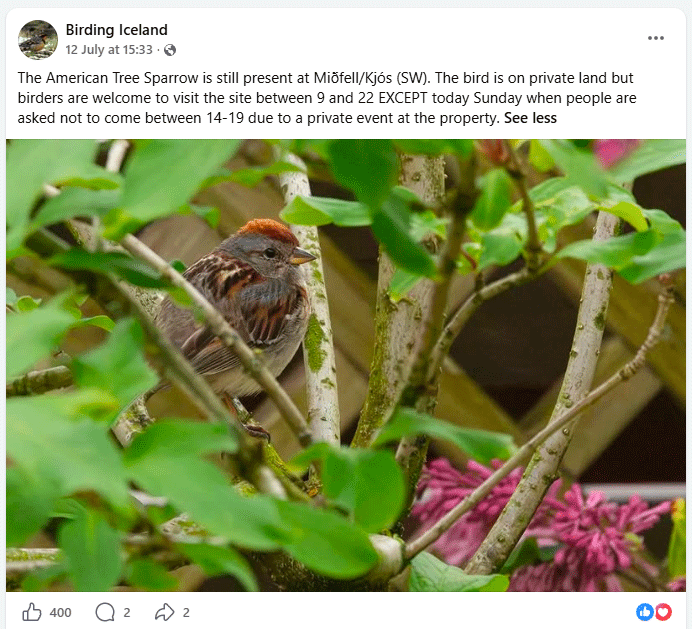
Our overseas news starts to the north of us again this week, this time in Iceland, where one’s position on ship-assistance was put to the test in recent days with the discovery of an American Tree Sparrow at Kjos on 11th-16th. This was, presumably, one and the same as that seen departing a cruise ship off Reykjavik on 3rd. Turns out cruise ships can carry surprises even bigger than legionella…
The Netherlands held onto its recent adult Great Knot on Texel on 10th; and added an Eastern Imperial Eagle to its credit, a bird being noted over Hattem on 10th.
In France, an Elegant Tern remained at Polder de Sebastopol on 11th, and the Bridled Tern was still to be seen on Ile aux Moutons on 10th.
Spain enjoyed Western Reef Heron still present on Mallorca on 13th, and another at Enseada de San Simon on 11th-12th.
As we head into the second half of July, the rarities seem to simply keep on coming – every week of summer thus far boasting something novel and exciting. Can the year maintain that kind of tempo?
On recent form, it would be unwise to bet against 2026, given its proven capacity to surprise. Nonetheless, if we’re to take a more cautious approach to what the coming week might deliver, it’s to somewhat less rare fare that our eyes are drawn. Precedent tells us the week ahead is a good one for a wayward Black Stork, always a great find and one with capacity to arrive on pretty much any local patch, be it inland or coastal. And as for waders, the week ahead is a cracker for Pacific Golden Plover, with 15 accepted records on the books.

Jon Dunn
17 Jul 2026
Many thanks to all this week's contributors for your photos and videos and to everyone who contributed throughout the year.
Get Breaking Birdnews First
Get all the latest breaking bird news as it happens, download BirdAlertPRO for a 30-day free trial. No payment details required, and get exclusive first-time subscriber offers.
Share





