Swarovski Optik launches new lightweight spotting scope
The new 21–65x75 angled scope combines a 75 mm objective lens and high maximum magnification with a simpler, comparatively lightweight design.
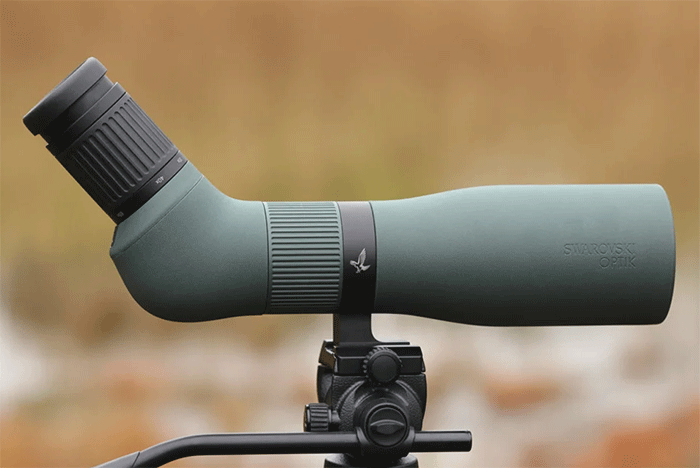
Swarovski Optik has expanded its spotting scope range with the launch of the AT Endura 21–65x75, a new angled model intended to offer premium optical performance in a relatively portable and straightforward package.
The Austrian manufacturer describes the AT Endura as the lightest spotting scope in its class. It weighs 1,510 g and measures 383 mm in length, placing it between the company’s compact travel scopes and its larger modular systems in terms of size and intended use.
At the heart of the scope is a 75 mm objective lens, combined with a continuously variable magnification range of 21x to 65x.
Swarovski states that the optical system provides clear, high-contrast images in challenging light conditions. Light transmission is given as 90%, while the exit pupil ranges from 3.5 mm at the lowest magnification to 1.2 mm at 65x. As with other high-powered scopes, the brightest and widest views will therefore be available towards the lower end of the zoom range.
The field of view is 33 m at 1,000 m when the scope is set to 21x, narrowing to 18 m at maximum magnification. The apparent field of view ranges from 40° to 65°, while the closest focusing distance is 4.1 m. The latter could prove useful when watching relatively close birds, insects or other wildlife as well as distant subjects.
Unlike Swarovski’s ATX and STX systems, which allow users to combine different objective and eyepiece modules, the AT Endura follows a deliberately simplified, complete-scope format. Swarovski summarises its approach as setting up the scope, looking through it, focusing and observing, with the emphasis on uncomplicated operation rather than modularity.
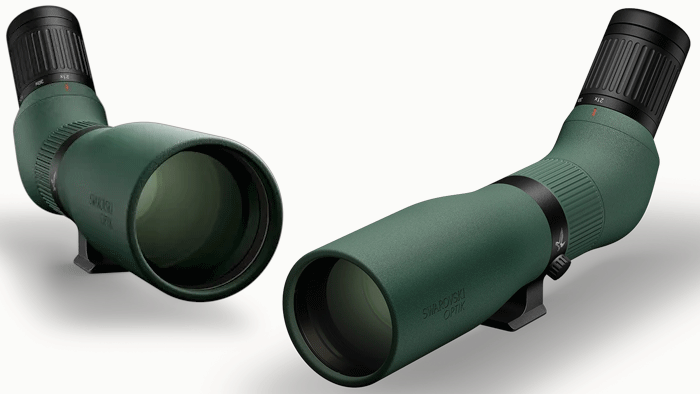
The scope is currently offered only with an angled viewing body. This format is widely used by birders because it allows people of different heights to share a scope without repeatedly adjusting the tripod and can be more comfortable when watching birds high in the sky or on cliffs.
Its housing is designed for regular outdoor use and is pressure-waterproof to a depth of four metres. Swarovski gives an operating temperature range of -20°C to 50°C, making it suitable for use in the range of wet, cold and exposed conditions regularly encountered by birders. Objective and eyepiece covers are supplied with the scope.
The AT Endura appears to be aimed at birders who want the reach and light-gathering ability of a full-sized scope but do not require the interchangeable components of Swarovski’s modular models. The 75 mm objective represents a compromise between the portability of smaller travel scopes and the greater bulk of models with 85 mm or 95 mm objectives.
Swarovski also says that the new product concept and more efficient production processes have allowed it to offer the scope at a more accessible price than some of its other premium systems. The recommended price is €2,490.
The AT Endura was launched in North America on 10 July 2026 and is scheduled to become available in Europe from 6 October. It will be supplied in Swarovski’s traditional green finish.
July 2026
Get Breaking Birdnews First
Get all the latest breaking bird news as it happens, download BirdAlertPRO for a 30-day free trial. No payment details required and get exclusive first-time subscriber offers.
Share this story