Little Egrets breed in north-east Scotland for first time
Four chicks have fledged at Forvie National Nature Reserve in what is thought to be the most northerly UK breeding record for the species.
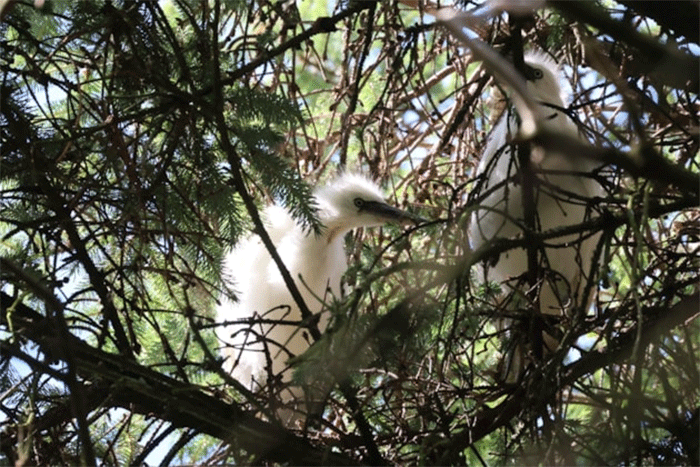
Little Egrets have bred in north-east Scotland for the first time, with four chicks fledging at Forvie National Nature Reserve this summer.
NatureScot believes the successful nest is the most northerly breeding record for Little Egret in the UK. Only one pair nested, although a second pair has also been present around the reserve and the regional count reached a record 17 birds, including the four youngsters.
The nest was discovered after a local birder noticed egrets in Forvie's heronry. Reserve staff subsequently watched the pair assemble a rudimentary nest among the trees, around two months later than the period in which the species would usually be expected to begin breeding.
Little Egrets have been seen regularly feeding around the Ythan Estuary in recent years, but staff had not previously suspected that they were nesting on the reserve. The species frequently breeds in mixed heronries, placing its stick nest in a tree or dense scrub alongside Grey Herons and other colonial waterbirds.
Once associated principally with the Mediterranean and wetlands farther south in Europe, Little Egret has undergone a striking expansion across north-west Europe. The species first bred successfully in the UK in 1996 and has since established a population estimated at around 1,500-2,000 pairs.
To our great surprise, almost before we knew it, there were four well-grown youngsters scrambling around the trees.
Its arrival as a Scottish breeding bird is much more recent. The first confirmed nesting in the country took place in Dumfries and Galloway in 2020, and the population remains small and localised. The Forvie chicks therefore represent a significant further step in the species' movement north.
NatureScot said higher temperatures and milder winters are likely to be helping the expansion by making areas farther north more suitable than they would have been several decades ago. The reduction in persecution since the 19th century, when egrets were killed extensively for their ornamental breeding plumes, may also have contributed to the species' long-term recovery and spread.
The development is not an uncomplicated conservation success. A warming climate can create opportunities for adaptable southern species, while simultaneously reducing the habitat available to cold-adapted birds. NatureScot highlighted Dotterel, which breeds in Scotland's mountains, as one species vulnerable to the same climatic changes helping Little Egrets move north.
Adult Little Egrets are readily identified by their white plumage, slender black bill, black legs and contrasting yellow feet. During the breeding season they develop long ornamental plumes on the head, chest and back. They feed in shallow water, actively pursuing small fish, amphibians, crustaceans and aquatic invertebrates.
Forvie National Nature Reserve protects the mouth of the Ythan Estuary and an extensive complex of coastal habitats. Continued monitoring of its heronry and feeding areas will reveal whether the 2026 nesting was an isolated event or the beginning of a regular breeding presence in north-east Scotland.
Further information and the photographs supplied with the announcement are available from the NatureScot media release.
28 Aug 2026
Get Breaking Birdnews First
Get all the latest breaking bird news as it happens, download BirdAlertPRO for a 30-day free trial. No payment details required and get exclusive first-time subscriber offers.
Share this story