Europe plans a new count of Great Cormorants
Coordinated wintering and breeding censuses in 2027 will inform an EU programme examining conflicts involving birds, fisheries and protected fish.
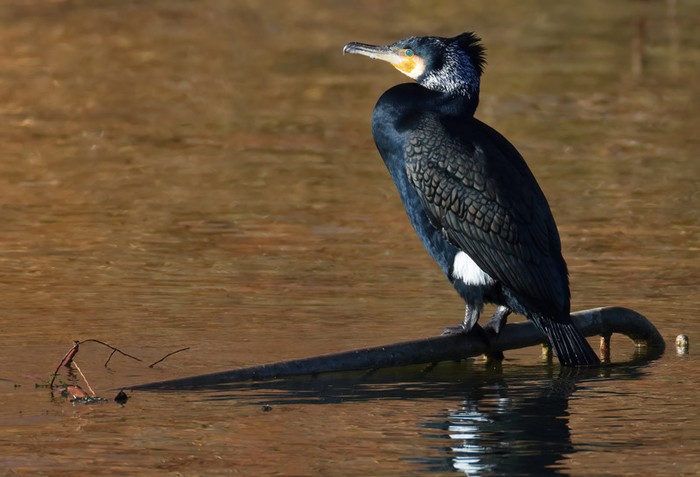
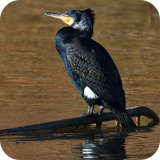
Europe's wintering and breeding Great Cormorants are to be counted in coordinated surveys in 2027, as the European Commission seeks updated evidence on the birds and their interactions with fisheries.
The planned censuses form part of CormEU, a newly contracted programme highlighted in the Commission's announcement on 18 November. They are intended to improve information on population size and dynamics, alongside work on fisheries, aquaculture and protected fish species.
The announcement coincides with a second structured dialogue on Great Cormorant conflicts, taking place on 18 and 19 November. Member State authorities and stakeholders are discussing practical experience and possible further EU support.
Commissioner Jessika Roswall framed the discussions around the need for a common evidence base:
Managing conflicts involving Great Cormorants requires dialogue, cooperation and a shared understanding of the challenges faced by different stakeholders.
Jessika Roswall, European Commissioner
The Commission's Birds Directive information identifies Aarhus University in Denmark as the lead for CormEU, which began in October. The 2027 counts are therefore a future component of the programme, not newly released estimates of how many Cormorants Europe currently holds.
Counting both wintering and breeding populations is important to the scope of the exercise. The announcement covers two seasons rather than a single snapshot, and specifically links the population work to an examination of interactions with fish. It does not provide a new continent-wide estimate of fish losses attributable to Cormorants.
Great Cormorants remain within the EU's wild-bird protection framework. The Birds Directive establishes general protection against activities including deliberate killing and capture, and the destruction of nests and eggs, while providing for derogations under specified conditions. The Commission's meeting announcement is not itself a derogation or a permission for a new cull.
A separate EU-funded research initiative, ProtectFish, is also contributing to the discussions. That project focuses on river fish conservation and, in particular, the relationship between Cormorants and Grayling. Its work should not be confused with the newly announced census contract.
ProtectFish describes freshwater ecosystems as subject to several pressures, including physical barriers, chemical and organic pollution, and predation. Its stated programme includes field studies, the assessment of existing monitoring and protection measures, and work with stakeholders to develop management recommendations.
That combination matters when interpreting claims about fish declines. Establishing that birds consume fish is not the same as determining the relative contribution of predation, habitat conditions and other pressures to a particular population's status. The project's purpose is to investigate management options and evidence gaps, rather than to assume one explanation applies to every river.
Coordinated by the Technical University of Denmark, ProtectFish runs from June 2024 to May 2028. Its planned outputs include recommendations drawing on EU-wide information, field experiments and discussions with local stakeholders. Those are project objectives, not findings already established by the November meeting.
At the time of the Commission's announcement, the 2027 census results still lay ahead. No final outcome of the two-day dialogue was set out in that release.
20 November 2026
Get Breaking Birdnews First
Get all the latest breaking bird news as it happens, download BirdAlertPRO for a 30-day free trial. No payment details required and get exclusive first-time subscriber offers.