For forest birds, what lies beyond a national park matters too
Seventeen years of counts in eight small US parks reveal how differently birds respond to woodland at the nest, park and county scales.

A Brown Creeper working its way up a trunk in a national park might seem a straightforward endorsement of the woodland under protection. Yet a study in the north-eastern United States found that its presence was more closely associated with the forest in the surrounding landscape. In this analysis the structure of the forest inside the park boundary had no significant effect on whether the species occurred there.
Bruna Amaral and colleagues used 17 years of breeding-season bird counts from eight national parks. Observers returned to fixed locations and recorded birds by sight and sound. The researchers chose 16 forest birds and compared their occurrence with information about the trees and undergrowth. Their study in Landscape Ecology asked a separate question for each habitat feature: at what distance from the observer did it best explain which birds were present?
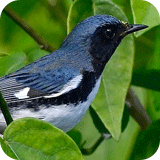
That distinction is easy to miss on the ground. A Black-throated Blue Warbler has an immediate use for dense bushes, while a Red-eyed Vireo is associated with stands containing larger trees. But the patch an observer can see and hear from a single point might be typical of miles of surrounding woodland, or it might be the last such stand for some distance. A count alone cannot distinguish the two situations.
In other words, you can have a perfectly healthy park, but if it's sitting in a degraded landscape, the birds simply might not be there.
Bruna Amaral, Michigan State University
To separate those effects, the researchers combined park monitoring with forest inventory data. They compared the immediate area, within about 400 metres of a count location, with the park as a whole and the county around it. The surrounding forest emerged as the most informative scale for 19 combinations of species and habitat feature; the immediate vicinity did so for 16, and the whole park for five. These are comparisons of variables, not a tally of 40 different birds.
For 12 of the 16 species, at least one aspect of county-level forest structure was important. Brown Creepers, for example, were more likely to occur in parks surrounded by mature trees with a relatively open understorey. That result does not make local habitat unimportant. It identifies a piece of the explanation that a survey restricted to conditions inside the park would miss.
The study measured presence, not nesting success, and did not follow young birds as they dispersed. How easily a fledgling can reach suitable cover beyond a park is one possible explanation raised by the team, not something observed in the counts. Nor did the analysis find a consistent effect of park size. The eight parks were all relatively small, limiting what this comparison can say about much larger reserves.
19 November 2026
Get Breaking Birdnews First
Get all the latest breaking bird news as it happens, download BirdAlertPRO for a 30-day free trial. No payment details required and get exclusive first-time subscriber offers.