Spring songbirds may help pollinate UK trees
Research at Wicken Fen found pollen on 89% of sampled birds, with Blue Tits, Blackcaps and Chiffchaffs among species helping some spring-flowering trees set fruit.
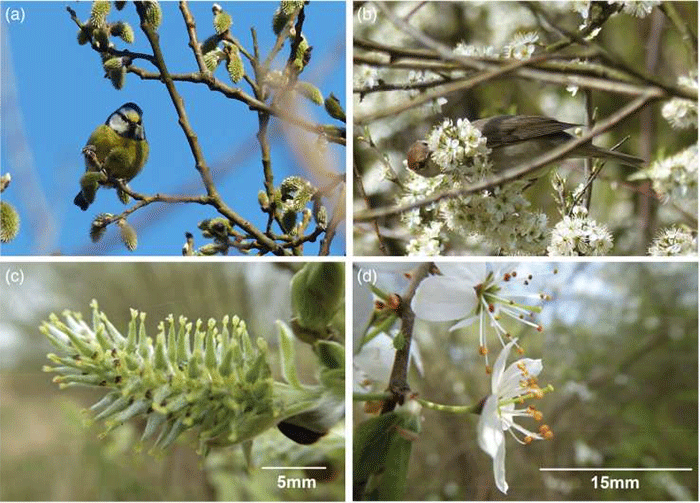
Songbirds may be playing a previously overlooked role as pollinators of native trees and shrubs in the UK, according to new research published in Journal of Ecology.
The study, led by researchers from the University of Auckland and the University of Cambridge, found that many generalist passerines visiting flowers at Wicken Fen in Cambridgeshire were carrying pollen, and that excluding birds from some flowers reduced fruit-set in several plant species.
Pollination in Europe is usually thought of as a job carried out mainly by insects. Birds are known to be important pollinators in many parts of the world, but their role in temperate Europe has generally been dismissed because European birds and flowers lack the obvious specialisations seen in classic bird-pollinated systems.
The new study challenges that assumption. Researchers sampled 29 bird species at the National Trust’s Wicken Fen reserve and found that 89% of individuals carried pollen. At least one individual of every sampled species carried some pollen, while nine bird species regularly transported significant pollen loads.
The main pollen-carrying species included Blue Tit, Blackcap, Chiffchaff, Wren, Redpoll, Bullfinch, Whitethroat, Garden Warbler and Willow Warbler. These birds represented a mix of resident species, short-distance migrants and longer-distance migrants arriving in spring.
The strongest bird–plant links involved early-flowering trees and shrubs, especially Goat Willow, Blackthorn, Hawthorn and Buckthorn. These species flower in spring, when temperatures can still be too low or variable for many insects to be consistently active.
Birds were recorded visiting flowers at relatively low but regular rates, and insects still outnumbered them at all focal plants. However, the research found that birds could nevertheless make a measurable contribution to plant reproduction.
In experimental trials, researchers enclosed some flowers in mesh that excluded birds but still allowed insects to visit. Fruit-set was significantly lower in bird-excluded flowers of Blackthorn, Hawthorn and Buckthorn than in flowers left open to both birds and insects.
The effect was strongest in plants where pollen must be transferred between individuals, including dioecious or self-incompatible species. This suggests that even occasional bird visits may be valuable if they move pollen between shrubs or trees more effectively than some insect visitors.
The timing of the interaction appears to be important. Pollen transport by birds peaked in April, when early-flowering trees were in bloom, spring migrants were arriving or passing through, and mean temperatures remained below levels that restrict many insects other than bumblebees.
Because birds are warm-blooded, they can remain active in cool spring conditions when insects may be less reliable. The study suggests that passerines may help fill a seasonal pollination gap for some native woody plants, while also gaining access to nectar or other food at a time when insect prey may be scarce.
The study did not show that all songbirds are major pollinators, or that birds replace insects as the main pollinating group. Instead, it suggests that their contribution has been underestimated because most pollination studies in Europe have not been designed to detect the role of generalist birds.
The plants involved also lack the classic features often associated with bird pollination, such as large red tubular flowers. Instead, they have small, pale, open-access flowers, often produced in dense clusters that can be reached from a perch.
The findings suggest that bird pollination in temperate Europe may be less about specialised bird-and-flower pairings and more about flexible generalists taking advantage of seasonal resources. Blue Tits, warblers, finches and Wrens may not look like typical nectar-feeding birds, but they can still carry pollen between flowers.
The authors say the ecological relevance of these interactions deserves more attention, particularly as climate change and biodiversity loss alter the timing and reliability of pollination networks.
July 2026
Get Breaking Birdnews First
Get all the latest breaking bird news as it happens, download BirdAlertPRO for a 30-day free trial. No payment details required and get exclusive first-time subscriber offers.
Share this story