Weekly birding round-up: 8 - 14 August 2025

It began to feel a little bit like autumn this week, with some passerines on the move – plenty of Pied Flycatcher, and some rarer fare besides. The year’s moving on apace and, while the sea-watching hasn’t caught fire yet in August, the past week served as a timely reminder that we’ve plenty to look forward to that doesn’t involve staring out across featureless waves more in hope than anticipation.
Suffolk’s first Zitting Cisticola remained in song this week at Walberswick on 8th-14th, allowing both local birders who’d been absent from the county in the week of its discovery ample time to catch up with it, and those from further afield the opportunity to make their pilgrimage east to see it. Surely, in the fullness of time, this is a species that will gradually lose some of the rarity lustre it currently enjoys but, for now, it remains a top drawer bird.

Speaking of warblers with changing fortunes (and yes, birders of a certain vintage still habitually think of Zitting Cisticola as Fan-tailed Warbler), time was in living memory when Aquatic Warbler were a given fixture of August, sometimes in fair numbers too.
Their fortunes have not fared well in the intervening decades. While still pretty much annual, we’re very much in the single figures stakes nowadays, and in some years since the turn of the century we’re looking at just one or two birds recorded in Britain as a whole.
Norfolk, as we all know, enjoys one of the finest county pedigrees where rarities are concerned, but even such illustrious locales have their Achilles heel – and it seems like Aquatic Warbler is just that, with the last multi-observed and occasionally outrageously showy record being that seen around the Cley beach carpark and Half Moon Pit on 11th October 1994. News this week of a juvenile at Burnham Norton on 13th would therefore have quickened many a Norfolk birder’s pulse but, alas, the bird was seen only briefly that morning and not subsequently.
It’s been an excellent summer where Black-winged Pratincole is concerned, with a tenure in Shetland in June and July followed by appearances in the Western Isles in the latter half of July. Does this Scottish bird account for that seen this week on the east coast of England, or have we a second individual on our hands?
First seen in Lincolnshire at Saltfleetby Theddlethorpe Dunes NNR on 11th, the bird in question was heading south. It seems to have had a change of heart, for on 12th a pratincole sp at East Chevington NWT (Northumberland) transpired, the following day, to be a Black-winged.
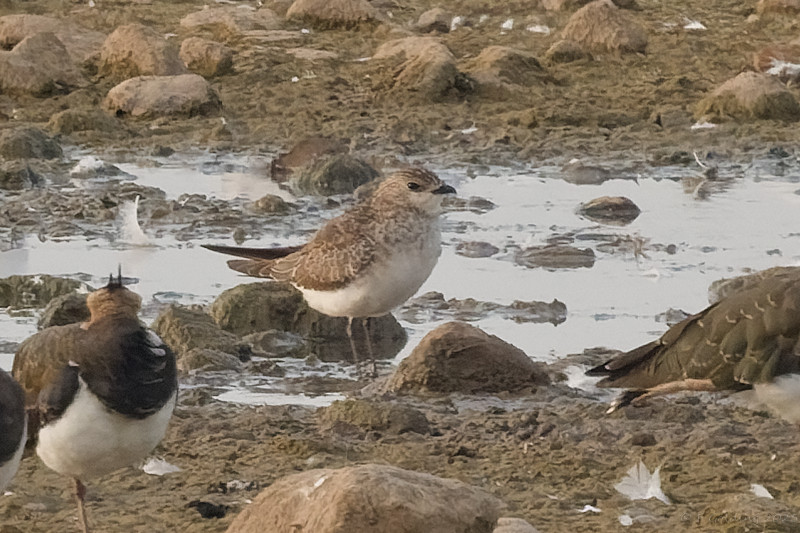
Lincolnshire can only boast two prior records of the species, in 2014 and 2019 respectively, while Northumberland also has but two prior records, dating to 2014 and 2015. For birders of either county, another chance to catch up with one would doubtless be very welcome – as it transpired, that opportunity was afforded only to Northumberland birders as the week just gone drew to a close, albeit the bird had moved on by 14th.
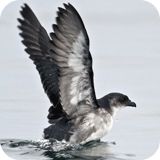
Another week elapsed with a strong showing of Wilson’s Petrel in British and Irish waters – overall, some 190 birds were recorded. The Scilly pelagics continued to perform well, with a peak count of 41 birds on 9th; while a pelagic off Dungarvan (Co.Waterford) on 13th notched up at least 25 birds. Notable were two in the far north, seen some 30 miles northwest of Fethaland (Shetland) on 12th.

Night-time ringing sessions caught Leach’s Petrel this week in Shetland at Sumburgh on 12th, and Fair Isle on 13th. As ever, one suspects the prospect of a Swinhoe’s won’t be far from anybody’s mind during those warm August nights… Further sightings of a single bird came on 11th and 12th from the ferry between Ullapool and Stornoway (Highland & Caithness / Western Isles).
A probable Fea’s Petrel sp was seen heading north past Spurn (East Yorkshire) in the morning of 12th.

Around 850 Cory’s Shearwater were logged this week, with a peak count of 424 seen from Galley Head (Co.Cork) on 11th. Around 350 Great Shearwater meanwhile represented something of a drop on the preceding week’s total.

Numbers of Balearic Shearwater were well down, with barely 100 birds seen during the week.
Some 25 Pomarine Skua also represented a drop on the prior week’s storm-driven tally. A handful of Long-tailed Skua were also seen in recent days – two from the Scilly pelagic of 8th; two off Porthgwarra (Cornwall) on 11th; one from St Ives (Cornwall) on 10th; singles from St Ives (Cornwall) and Spurn (East Yorkshire) on 14th; and a probable on 13th at Gibraltar Point NNR (Lincolnshire).

Still heading up the long-legged beasties for another week, the juvenile Black Stork remained settled in Suffolk, present at Boyton Marshes RSPB on 8th-14th.

The recent Night Heron remained at Marden Quarry (Northumberland) on 9th-13th. Additional sightings came from The Gearagh (Co.Cork) on 11th, and Nunnery Lakes (Norfolk) on 12th.
Also present in Norfolk this week, a Purple Heron was seen at Thetford on 11th. One remained in Cambridgeshire at March Farmers on 8th; and another was seen in Kent at Grove Ferry NNR on 9th.

Lincolnshire continued to be the locus for a lot of Glossy Ibis sightings this week – one remained at Deeping Lakes LWT on 11th; further sightings came from Middlemarsh Farm on 8th and 10th, Gibraltar Point NNR on 9th-10th, and Whisby Nature Park on 11th. Hampshire gave us records at Hook-with-Warsash LNR on 12th, and Titchfield Haven NNR again on 13th-14th. Lingering birds remained at Fremington (Devon) on 8th-12th; Otmoor RSPB (Oxfordshire) on 8th-10th; at Misson (Nottinghamshire) on 13th-14th; and at Etton-Maxey Pits (Cambridgeshire) on 13th. In the north, one was seen passing Far Arnside (Cumbria) on 10th.
The weekly quackers remained pretty much unchanged in recent days. Top of the class remained Lesser Scaup, with the two drakes still at Belvide Reservoir (Staffordshire) on 9th-14th, and the drake at Audenshaw Reservoirs (Greater Manchester) still on 12th-14th.
The eclipse drake Ring-necked Duck remained at Ogston Reservoir (Derbyshire) on 9th-10th, while the recent drake remained at Fen Drayton Lakes RSPB (Cambridgeshire) on 8th-13th. Two were present on Lough Gara (Co.Sligo) on 13th.
Fen Drayton RSPB (Cambridgeshire) also retained a drake Ferruginous Duck on 13th.
Finally, in Scotland the immature drake White-winged Scoter was still at Musselburgh Lagoons (Lothian) on 8th-10th, with the recent drake Surf Scoter also still there on 8th-14th.
The pace continued to quicken for waders this week, with some new faces providing some variety.
A Pacific Golden Plover found in Suffolk at Boyton Marshes RSPB on 13th presumably also accounted for the individual seen briefly the previous evening at nearby Butley. A further possible was reported over the ferry west of Shapinsay in Orkney on 12th.
Scotland accounted for a couple of American Golden Plover during the week – one on North Ronaldsay (Orkney) on 11th-14th, and another at Peterhead (Aberdeenshire) on 8th-9th. English birds were seen at Longhoughton Steel (Northumberland) on 12th, and at Porth Joke (Cornwall) on 13th. The recent Irish example was still present on Rogerstown Estuary (Co.Dublin) on 8th-14th.
Numbers of White-rumped Sandpiper picked up nicely. One remained at Beacon Ponds NR (East Yorkshire) on 8th-14th, with a second individual present on 10th-14th; one remained at Gibraltar Point NNR (Lincolnshire) on 9th-12th, with two also there on 10th. Further single birds were seen at Snettisham RSPB (Norfolk) on 11th-14th still; on Wyre Estuary (Lancashire & North Merseyside) on 8th; at Tramore Backstrand (Co.Waterford) on 9th-14th; on Achill Island (Co.Mayo) on 11th; at Skinflats Lagoons RSPB (Forth) on 10th-13th; at Thorntonloch (Lothian) on 13th-14th; and Frampton Marsh RSPB (Lincolnshire) on 14th.

The Western Sandpiper remained at Maidens (Ayrshire) on 8th.
A Buff-breasted Sandpiper was found at Myroe Levels (Co.Derry) on 13th-14th.
Pectoral Sandpiper put in a good shift this week, not least in Lincolnshire where the sightings came thick and fast – one remained at Freiston Shore RSPB on 8th-10th, with additional sightings at Saltfleetby Theddlethorpe Dunes NNR on 11th, Frampton Marsh RSPB on 12th, and Alkborough Flats NR on 12th-14th. A bird remained in Norfolk at Snettisham RSPB on 11th; one was seen in West Yorkshire at St Aidan’s RSPB on 9th-12th; another in North Yorkshire at Wheldrake Ings YWT on 10th; one remained in Cleveland at Margrove Ponds on 8th-14th; and Irish sightings at Aughinish (Co.Clare) on 13th-14th, and Ring Marsh (Co.Wexford) on 10th.

A couple of Temminck’s Stint dropped in this week – one in Cornwall at Gwendreath on 10th-11th, and another in Co.Wicklow at Vartry Reservoir on 10th-12th; and a final bird on 14th at Low Newton (Northumberland).
The Long-billed Dowitcher remained at Tacumshin (Co.Wexford) on 8th-12th; further Irish sightings came from Lady’s Island Lake (Co.Wexford) on 8th, and The Cunnigar (Co.Waterford) on 10th.
In Lancashire & North Merseyside the Lesser Yellowlegs was again seen at Leighton Moss RSPB on 9th-12th; one was seen briefly at Stanpit Marsh (Dorset) on 11th, preceding the Hampshire bird again turning up at Keyhaven on 13th; and one was found in Scotland at Nairn (Highland & Caithness) on 9th.
Lastly, single Grey Phalarope were seen from the Scillonian on 11th, and the Scilly pelagics of 10th and 11th; at sea off the Blasket Islands (Co.Kerry) on 9th; and from Galley Head (Co.Cork) on 10th. A Red-necked Phalarope was noted passing Annagh Head (Co.Mayo) on 8th; and another on North Ronaldsay (Orkney) on 14th.
Best of the gulls this week was once more the first-summer Laughing Gull, seen again at Trabeg (Co.Kerry) on 13th.
In Kent the adult Bonaparte’s Gull remained happily ensconced at Oare Marshes KWT on 8th-14th; one was seen again on the Add Estuary (Argyll & Bute) on 11th; and another at Iverallochy (Aberdeenshire) on 12th-14th.
Around a dozen Sabine’s Gull were noted in the course of the week, with a couple of sites enjoying multiple birds – three apiece for Annagh Head (Co.Mayo) on 8th, and Bridges of Ross (Co.Clare) on 8th.
The recent adult Ring-billed Gull remained on St Kilda (Western Isles) on 12th.
Finally, an adult White-winged Black Tern was present at Eyebrook Reservoir (Leicestershire) on 12th.
A Black Kite was reported from Farnham (Surrey) on 9th.
It must be autumn now. There’s no surer sign than having enough notable warblers seen in the past week to warrant starting the passerines section of proceedings with them…
Two Western Bonelli’s Warbler were found this past week – one at Galley Head (Co.Cork) on 11th, and another on St Mary’s (Scilly) on 13th-14th.
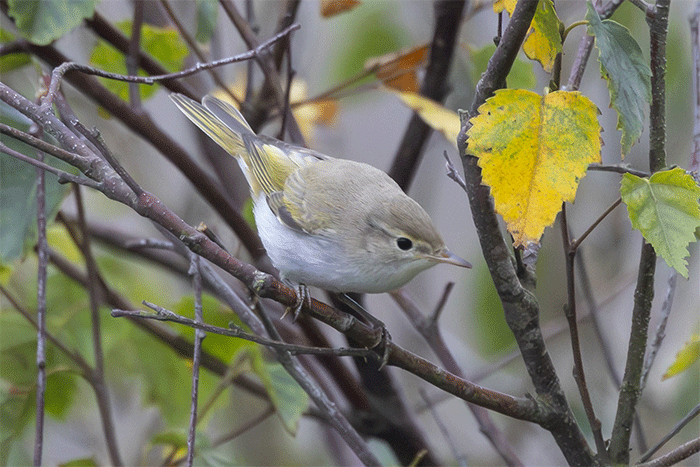
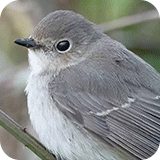
Melodious Warbler continued to arrive lately – birds trapped and ringed on Portland (Dorset) on 9th, and Skokholm (Pembrokeshire) on 13th; and seen on the Scillonian on 12th, and St Mary’s (Scilly) on 13th.
An Icterine Warbler was found on Whalsay (Shetland) on 13th.
Also in Shetland, the male Eastern Subalpine Warbler was still present on Fair Isle on 11th-12th.
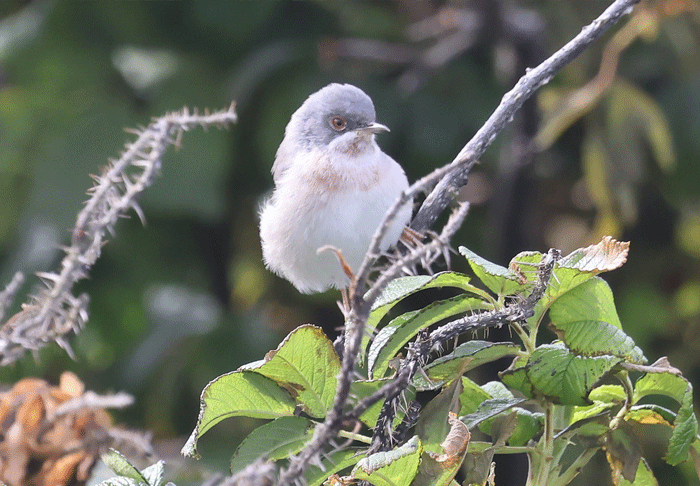
A possible Barred Warbler was reported from Thorpeness (Suffolk) on 13th.
Further signs of the imminence of autumn came in the form of Wryneck on 13th at Bibury (Gloucestershire), Chandlers Ford (Hampshire), and Walmer (Kent).
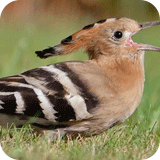
A Hoopoe was seen in an area with no general access at St Mawgan (Cornwall) on 10th.
Two Bee-eater were heard over North Point Pools (Norfolk) on 8th.
In Kent, a Short-toed Lark flew over Marden on 11th.
Shetland’s family of Red-backed Shrike remained at Aith Meadows SSSI in full force on 10th-11th, with at least two birds still present there on 13th-14th.
An early Bluethroat was found on Out Skerries (Shetland) on 12th.
Also on 12th, and sadly not coming to anything further, we had an unconfirmed report of a possible White-throated Robin at Barns Ness (Lothian).
A couple of Serin were noted this week – one over Pendennis Point (Cornwall) on 8th, and the other over Portland (Dorset) on 10th.
And, in a final autumnal flourish, a Common Rosefinch was found on Shetland at Sumburgh on 14th.
In Spain, the resident Cape Gull remained at Laredo on 13th; while a Grey-headed Gull was present at Cadiz on 10th, and two Elegant Tern at Playa de Montijo on 13th.
We’re firmly in peak Fea’s Petrel sp territory now as we head into the third week of August, and surely one or two will be seen from southwest Britain or Ireland in the comings days.
As invoked last week, it’s also prime time for White-winged Black Tern and surely any day now, a Greenish Warbler. But what about a wader? The week ahead is a solid one for Baird’s and White-rumped Sandpiper, and a stand-out week for Wilson’s Phalarope - 16 past records for the coming week speak volumes about its potential in their regard.

Jon Dunn
8 August 2025
Many thanks to all this week's contributors for your photos and videos
Share