Suffolk's wader partners report a halt to coastal declines
Ten years of work across reserves and farmland have helped stabilise Lapwing and Redshank numbers, according to the organisations managing the marshes.

A shallow channel across a grazing marsh can be more useful to a Lapwing brood than a broad expanse of open water. It keeps soft mud and invertebrates within reach of chicks that must find food on foot. On the Suffolk coast, land managers have been creating just such feeding places on both sides of nature reserve boundaries.
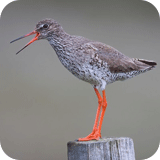
In its ten-year account of the Suffolk Wader Strategy, the RSPB reports that the decline in coastal wader populations has halted. Ben McFarland, Suffolk Wildlife Trust's director of wildlife conservation and recovery, identifies Lapwing and Redshank in particular as no longer declining locally. Neither organisation is claiming a return to former numbers.
The partnership began in 2016, when the two charities joined landowners, Natural England, the National Trust, the National Landscape and the Water Management Alliance. Its work takes in east Suffolk wetlands from Boyton and Hollesley Marshes near Woodbridge to Carlton and Oulton Marshes near Lowestoft. A flock moving between feeding and roosting sites can cross several holdings in a day; managing water on just one of them only solves part of the problem.
One piece of shared machinery gives a sense of the scale. In its project update, the partnership describes using a specialist spoil spreader with the National Landscapes team to create nine kilometres of wetland features through Defra's Farming in Protected Landscapes programme. The shallow channels, known as footdrains, give wet grassland a much longer margin of damp feeding habitat than its main ditches alone can provide.
The timing matters as much as the area of wetland. A site that attracts winter flocks may be too dry by the time local birds have young. The partnership reports that breeding numbers held steady across its network in 2025, yet the dry spring put breeding success under pressure. Stable numbers of returning pairs and a difficult year for their chicks can both be true.
The scheme includes Oystercatchers and Avocets as well as Lapwings and Redshanks. Its brief takes in the places these birds roost and feed outside the breeding season, not just the fields on which they lay their eggs.
Working groups also monitor birds, advise on predator management for ground-nesting species, and help farmers access agri-environment support. The partners' aim is to keep sites connected across five river valleys, giving nesting adults and broods a choice of feeding places as water levels change.
The anniversary account does not provide a ten-year series of pair counts or fledging rates for individual sites. Its claim of stability is the partners' assessment for the Suffolk coast, not evidence of a wider reversal. The RSPB's national comparison remains a sobering one: it reports declines since 1975 of 50% for Lapwing and 59% for Redshank.
11 November 2026
Get Breaking Birdnews First
Get all the latest breaking bird news as it happens, download BirdAlertPRO for a 30-day free trial. No payment details required and get exclusive first-time subscriber offers.