RBA Round-up: 18 - 24 Sept
Westerly winds continued to somewhat subdue the potential of autumn this week, and while some decent waders and passerines blew in off the Atlantic, the daily newsfeeds were predictably generally rather quiet, particularly where birds of an eastern origin were concerned. But there are always seabirds to fall back upon, and while some land-based birders were seeing red this week, those who’d ventured far from the sight of land found one of the Holy Grails of the British list…
It seems this early autumn period is one in which the mythical birds are set to be unblocked by those fortunate enough to be in the right place at the right time. Shetland birders, and those quick out of the blocks the following day, have already enjoyed the Egyptian Nightjar that settled on the shore of Pool of Virkie recently – a bird initially on the British list courtesy of a frankly somewhat questionable historic record dating from Nottinghamshire in 1883.
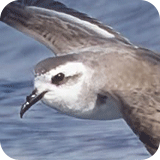
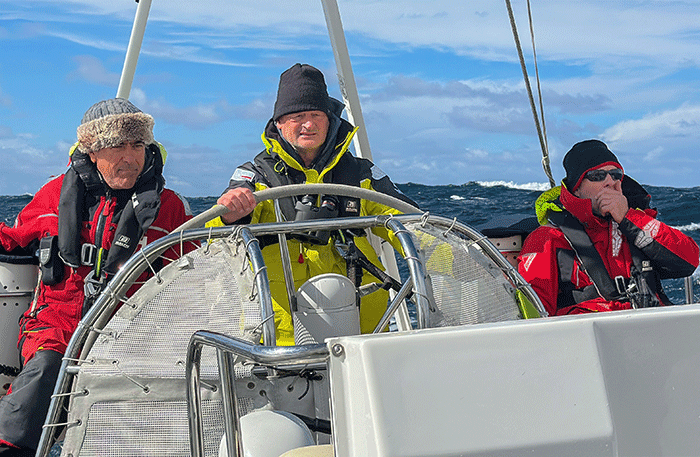
However, this year’s Egyptian Nightjar however is utterly eclipsed in terms of outrageous fortune by the White-faced Storm Petrel found during the past week by Scott Reid, the pioneering organiser of the now annual Challenger Expedition, an intrepid quest on a 72ft ocean-racing yacht to the furthest south-westerly extremes of British waters to see what can be found over ‘The Canyons’ on the continental shelf edge 300 kilometres southwest of Scilly.
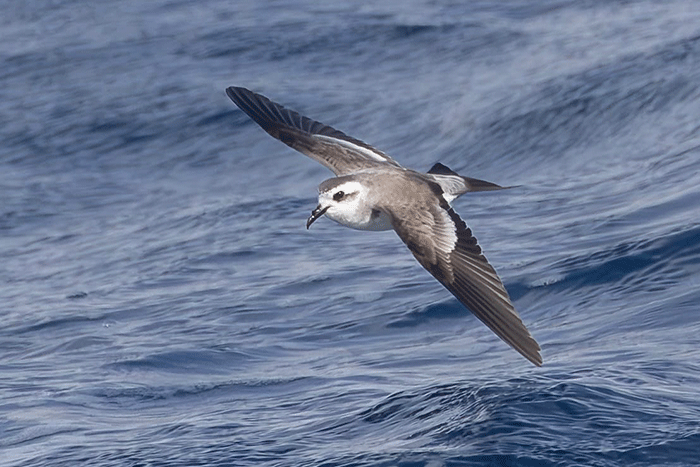
Last year, memorably, the 2025 Challenger team encountered a remarkable 95+ Band-rumped Storm Petrel sp. This year they bumped into just one of those, on 19th, which by comparison was perhaps a little disappointing… though nobody present on the boat that day would have been complaining in the wake of Scott’s White-faced Storm Petrel which, judging by the images taken of it, was showing cripplingly well. An incredible bird.
Which brings us back to Britain’s first and only record of White-faced Storm Petrel, incredible too in its own way. This was an immature female captured alive at the edge of a stream on Colonsay (Argyll & Bute) on 1st January 1897. Precisely who caught it is unrecorded but, by 4th January, its corpse had been acquired by Small & Son, the principal Edinburgh taxidermist of the day.
By March of that year the Edinburgh Museum of Science and Art had purchased the now mounted specimen from Small & Son for £2.10.00 (approximately £420 in today’s money) and, to this day, the specimen remains in the collection of the National Museum of Scotland.
Writing at the time in Annals of Scottish Natural History (1897) William Eagle Clarke – who examined and dissected the corpse – provided some context to the record, stating:
‘The weather immediately preceding this bird's visit to the West Coast of Scotland was characterised by severe gales from the south-west, and these may, perhaps have been instrumental in driving it from its accustomed haunts’
Eagle Clarke’s involvement with the record certainly helped to bolster its credibility, for he was a prominent and respected contemporary ornithologist. A BOURC review of the record (alongside a great many other species) in 2003 concluded it was still ‘found to be acceptable’. A few years later, The Birds of Scotland (SOC, 2007) dryly noted that, those gales notwithstanding, the midwinter date was ‘unusual’. Indeed it was – Scotland is hardly a stranger to severe south-westerly winter gales, and it’s striking how few rare seabirds they have delivered in the subsequent 125 years.
Does that 1897 record still stand the test of time? A little over 20 years ago, BOURC certainly thought so. Nonetheless, this past week’s record of a bird exuberantly alive and well at sea in September rather than beside a stream one New Year’s Day certainly has rather more of a feel-good factor about it, and should serve to elevate White-faced Storm Petrel in due course to Category A of the British List.
One of these days we’re going to be blessed with a Red-billed Tropicbird that truly gives itself up to the masses, perhaps a bird that lingers somewhere just offshore for a day or two, allowing twitchers that keenly anticipated opportunity to connect with one of the truly achingly rare seabirds on the British list.
This week wasn’t the week with one of those days.
But we did have a sighting of a Red-billed Tropicbird, which was nice. Presumably one and the same individual as that enjoyed a few miles off the Cornish coast a fortnight earlier in the month, this week’s sighting owed itself to a dogwalker noticing a smaller white bird flying with Northern Gannet off Porthgwarra on 20th, and taking an opportunistic photo – which proved to be something rather significant.
Wow! P Hall's image of Red-billed Tropicbird off Porthgwarra this morning #ukbirding
— Andy Stockhausen (@andy-1963.bsky.social) 20 September 2026 at 16:33
[image or embed]
They say it’s the hope that kills you, and that’s as true for birding as it is for football – so we should probably temper our yearning despite this glimmer of hope that the tropicbird may yet re-appear in a Cornish bay in the days to come.
Speaking of tropical seabirds lingering in Cornish inshore waters, Cornwall wasn’t done with us this week, for an immature Red-footed Booby was reported, a day after the event, lingering off St Ives’ Porthmeor Beach for a couple of hours in the late morning and early afternoon of 20th.
Given the rarity of the species in a British context as a whole, and given it would if confirmed represent a first for Cornwall in particular, the belated reporting of this bird will have particularly stung for Cornish birders. It’s another one to dare to hope for a repeat performance sometime soon.
Coming right on cue, shortly after we’d invoked Least Sandpiper as a bird to watch out for in the coming days, Co.Kerry pulled one out of the bag on 19th, in the form of a bird found at Ventry.
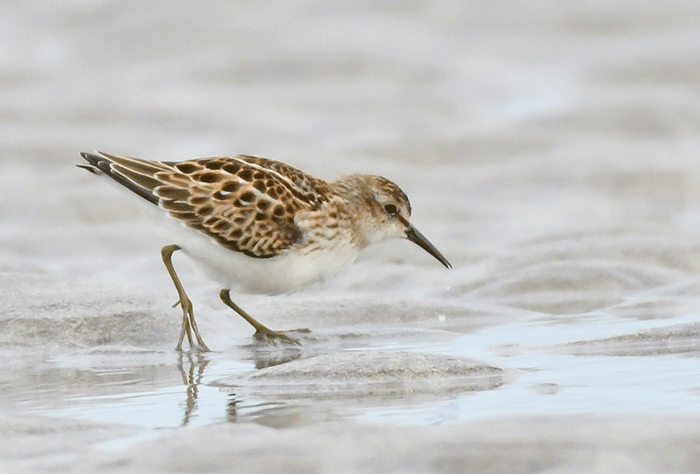
There was quite the pause in proceedings for Co.Kerry after their first record of Least Sandpiper, a bird found at Akeragh Lough on 15th August 1965 – decades elapsed until two records came in quick succession at Carrahane on 26th September – 3rd October 2011, and Black Rock Strand on 21st November – 17th December of the same year. Only the following year, another bird – this time another one-day, late summer bird at Carrahane on 13th August 2012. But since then, nothing…
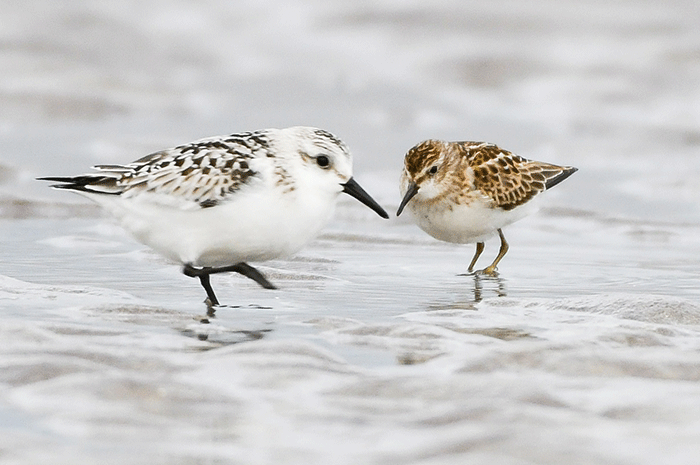
This week’s bird, another one-day bird, at least did the decent thing and lingered at Ventry through the afternoon and into the evening of 19th, allowing some time for those interested to make the journey there.
Our final headline bird of the week wasn’t in any way thus obliging, being a fly-over bird that was firmly not for lingering. We’ve discussed at length in past Rarity Round Ups the journey Booted Eagle has made both from officially scorned Category D ‘escapee’ to it’s rightful place as a popularly accepted Category A inhabitant of the British List; and from cynically dismissed single observer report species to a place where a report nowadays elicits a wry shrug at the observer’s good fortune.
And it’s the latter reaction that greets the news this week that a pale morph Booted Eagle had been seen passing high over East Soar (Devon) on 18th. It’s not even the first time this year that such has happened in the area – a pale morph was reported high over West Soar on 21st June, quickly followed by another sighting at Torquay on 24th June. Not to mention a probable pale morph seen in Cornwall near Redruth on 8th July. Has one been lurking around Devon and Cornwall this summer? It’s certainly not implausible.
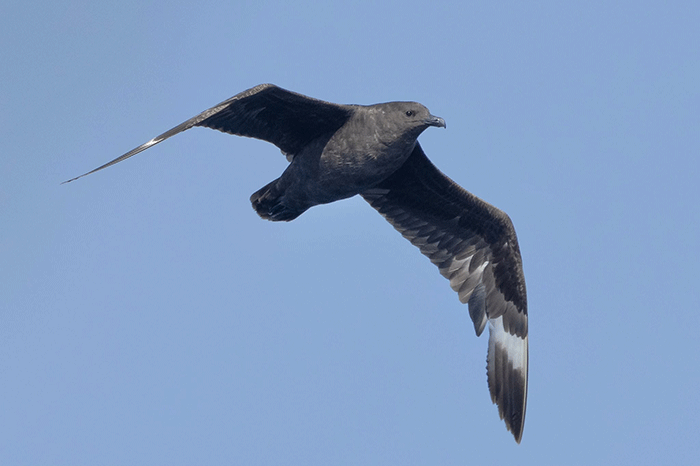
Seabird records this week were, understandably, very much skewed by the sightings made by the Challenger team who, on 19th alone, in addition to the headlining White-faced Storm Petrel, also logged single Band-rumped Storm Petrel sp, Fea’s Petrel sp, Scopoli’s Shearwater, Barolo Shearwater, and South Polar Skua. Barolo Shearwater was also encountered on 20th and 21st while 102 Wilson’s Petrel in the course of the expedition certainly won’t have gone amiss either.
- 3Leach’s Storm-petrel
- 102Wilson’s Storm-petrel
- 191European Storm-petrel
- 707Great Shearwater
- 1,457Cory’s Shearwater
- 63Sooty Shearwater
- 106Manx Shearwater
- 81Fulmar
- 233Gannet
- 18Great Skua
- 15Pomarine Skua
- 1Arctic Skua
- 8Long-tailed Skua
- 5Small skua sp.
- 4Sandwich Tern
- 8Arctic Tern
- 42Razorbill
- 6Guillemot
- 3Cormorant
- 6Great Black-backed Gull
- 7Yellow-legged Gull
- 1Herring Gull
- 155Lesser Black-backed Gull
- 14Grey Phalarope
- 6Whimbrel
- 5Ringed Plover
- 2Turtle Dove
- 1Wheatear
- 1Reed Warbler
- 1Willow Warbler
- 1Leatherback Turtle
- 3+Fin Whale
- 1Northern Bottlenose Whale
- 1Risso’s Dolphin
- 1Bottlenose Dolphin
- 210Short-beaked Common Dolphin
- 10Blue Shark
- 1Swordfish sp.
- 3Ocean Sunfish
- 1Portuguese Man o’ War
- 5Hummingbird Hawkmoth
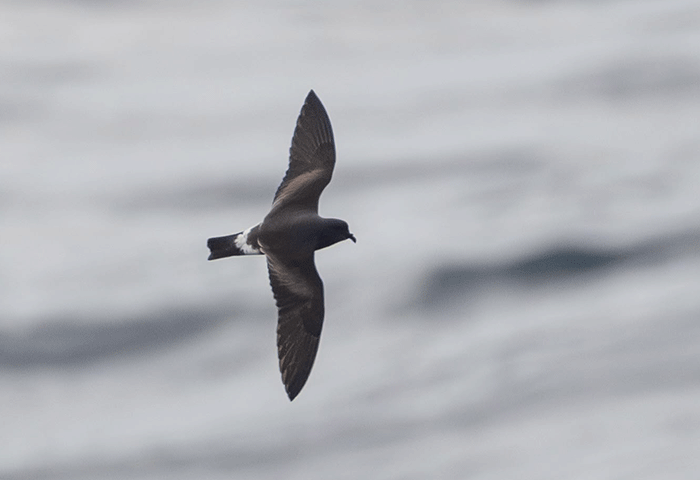
Closer to home, a handful more Wilson’s were noted this week – on 19th from the Scillonian (remember when that was your only way to see one?!), Lavernock Point (Glamorgan), and Brandon Point (Co.Kerry); on 20th at sea off Cape Clear (Co.Cork); and on 22nd at St Ives (Cornwall).
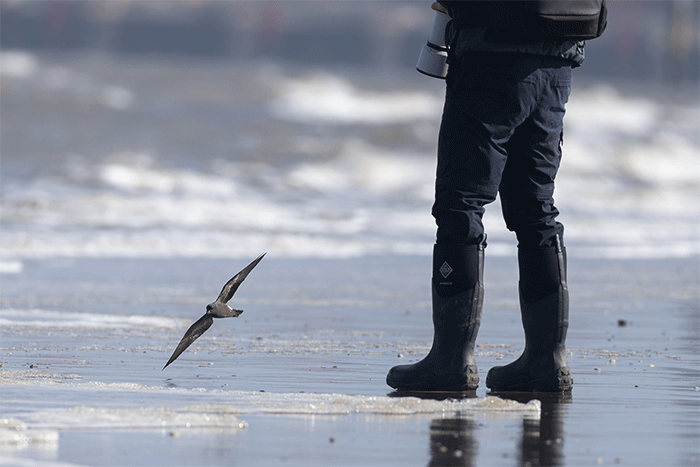
But for the land-based birder, the week belonged just the one petrel, and that was Leach’s - high numbers were displaced to within sight of land, particularly over the weekend, with in excess of 650 birds logged, albeit inevitably with some duplication of records in the well-watched English northwest.
In addition to 1,457 birds seen from the Challenger, around 1,600 Cory’s Shearwater were noted during the week – a peak count of their kind being 300 seen from the Scilly pelagic of 22nd. Around 800 Great Shearwater were logged regionwide during the week, with nearly the same total again seen by the Challenger team. Some 360 Balearic Shearwater were logged, mainly in the English southwest, where the week’s peak count of 72 birds were seen in West Bay (Dorset) on 21st.
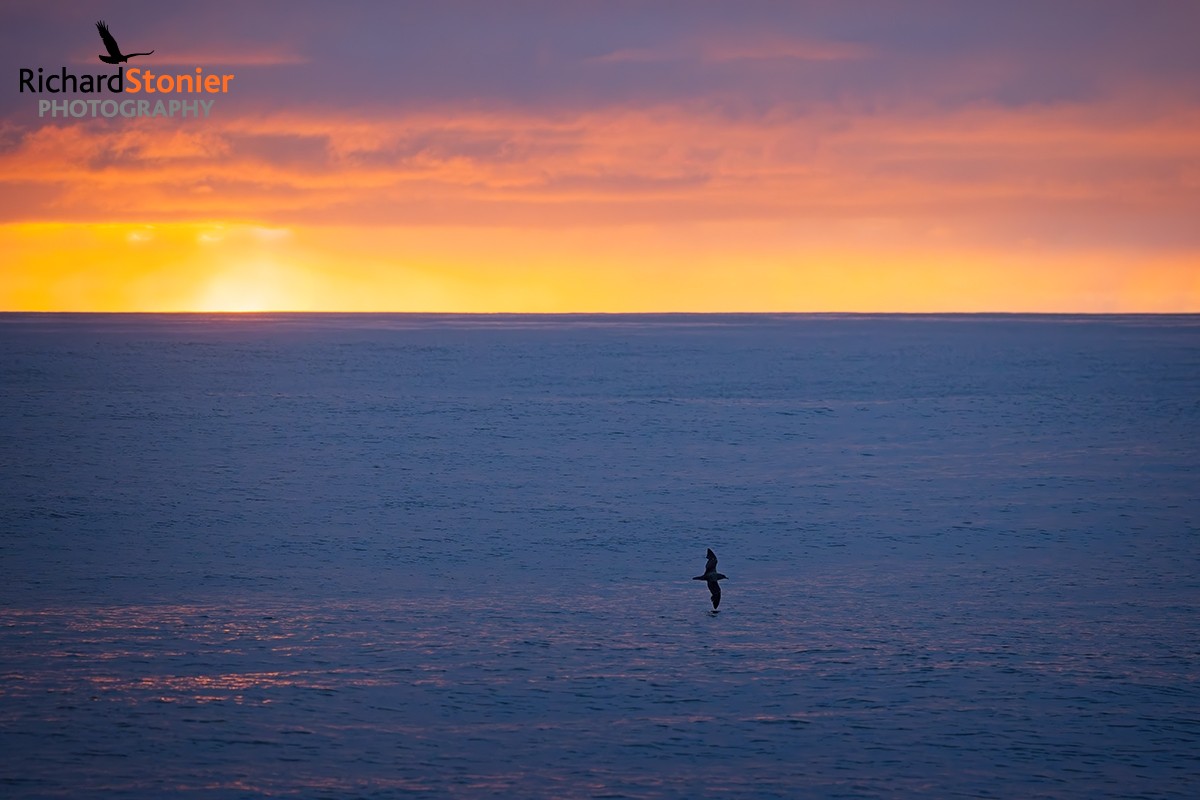
Finally, skuas – numbers held firm, with some 85 Pomarine Skua and 95 Long-tailed Skua recorded as a whole across the region during the week -
The headlines would have written themselves again had the possible dark morph Western Reef Heron at Point of Ayr (Flintshire) on 20th only firmed up. The last confirmed sighting of this year’s prior bird was on Pembrokeshire’s Gann Estuary on 11th July – nobody would be betting against that bird having summered unseen somewhere in Wales, and cropping up again before the year’s out.
Black Stork sightings continued to come from Suffolk for still another week – a single bird seen at Orford Ness and Snape on 20th; two reported over Ipswich on 21st; and a singleton again at Snape on 22nd-24th.
In Kent the Purple Heron remained at Stodmarsh NNR on 23rd; and one was seen again in Somerset at Ham Wall RSPB on 24th.
Winter is coming. And there’s no surer sign of that than the weekly rarity duckpond being adorned with both honkers and quackers. A couple of the former returned to the dailies this past week, with an interior Todd’s Canada Goose at Loch Leven (Perth & Kinross) on 21st, a Snow Goose seen at Lough Bofin (Co.Roscommon) on 20th, and a Black Brant at Budle Bay (Northumberland) on 23rd-24th.
Sticking with Ireland a moment, a drake American Wigeon was lingering on 19th-20th at Inch Island Lake (Co.Donegal); while an eclipse drake was present at Cley NWT (Norfolk) on 23rd; and two on South Uist (Western Isles) on 24th.
Also in Co.Donegal, a Lesser Scaup was found on 20th at Blankety Nook; while the Ring-necked Duck still on Inch Island Lake on 19th-24th was joined there by a second individual on 22nd. The drake Ring-necked Duck also remained on Lough Beg (Co.Derry) on 18th.
A Ferruginous Duck remained in Oxfordshire at Dix Pit on 18th still; two birds were present at Abberton Reservoir (Essex) on 23rd, with one still present there on 24th; and a drake at Draycote Water (Warwickshire), also on 23rd.
A drake White-winged Scoter was to be seen on 23rd in Lunan Bay (Angus). A Surf Scoter was seen from Annagh Head (Co.Mayo) on 19th.
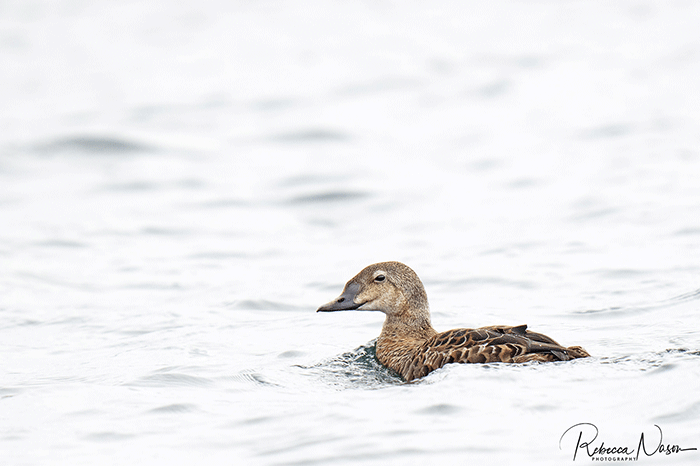
The faithful female King Eider, ‘Queenie’, remained off Lerwick (Shetland) on 19th-24th.
We’ve an awful lot of waders to, er, wade through this past week, and perhaps we’d best start with the commonest of the lot, Grey Phalarope elevated to open the batting on account of the mighty, loose flock of some 241 or more birds seen off Land’s End (Cornwall) on 20th, making up a significant proportion of the overall 380 or so birds noted around Britain and Ireland across the week as a whole.

Red-necked Phalarope continued to be seen, albeit just a handful of them – individuals at Holkham Freshmarsh (Norfolk) still on 18th-19th; Blennerville (Co.Kerry) still on 18th-24th; and at Huntspill (Somerset) on 19th.
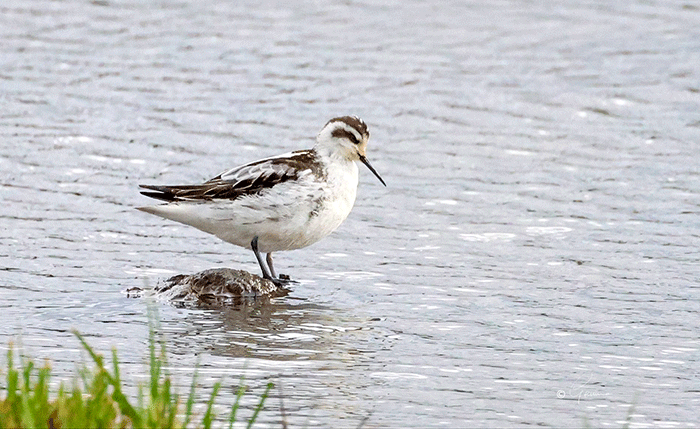
In Aberdeenshire the recent Wilson’s Phalarope remained at Meikle Loch on 18th-19th.
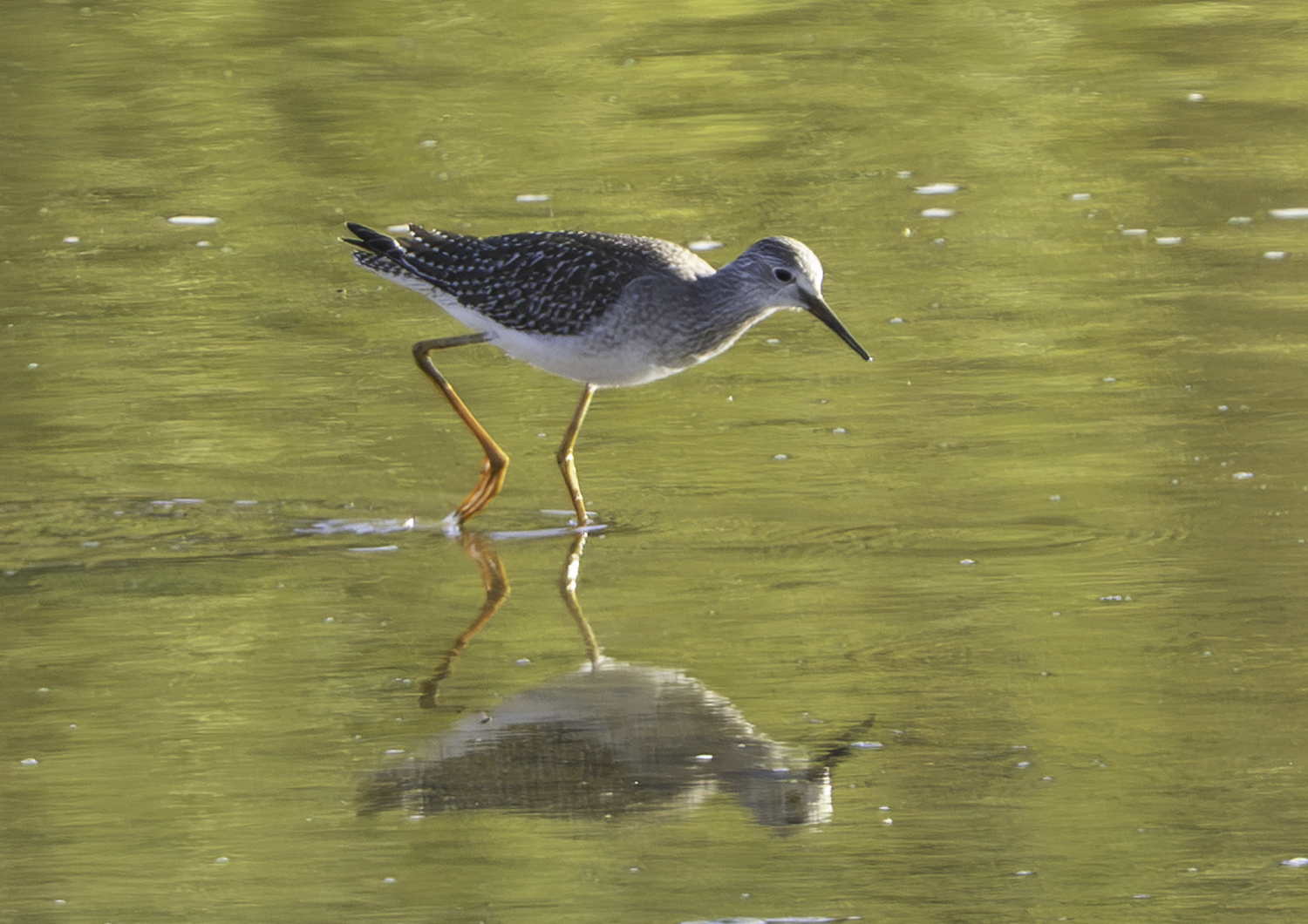
A county first is always big news, and Bedfordshire birders enjoyed one such this week in the elegant form of the first Lesser Yellowlegs for the county, seen at Broom South Quarry on 19th-23rd. The week was a good one again as a whole for the species, with additional birds logged at Cowpen Marsh (Cleveland) still on 18th, Rutland Water (Leicestershire) still on 18th-24th; Chew Valley Lake (Somerset) still on 19th-24th; on Barra (Western Isles) on 19th-20th; on South Uist (Western Isles) on 20th and again on 24th; at Whitehills (Aberdeenshire) on 20th; at Manningtree (Essex) on 21st-22nd; and on the Eden Estuary (Fife) on 24th.
Buff-breasted Sandpiper continued to enjoy their moment of glory, with some 35 birds in total noted in Britain and Ireland as a whole during the week – a peak count of four were seen on South Uist (Western Isles) on 19th; and trios in Ireland at Loop Head (Co.Clare) still on 19th, and at Tacumshin (Co.Wexford) on 19th also.
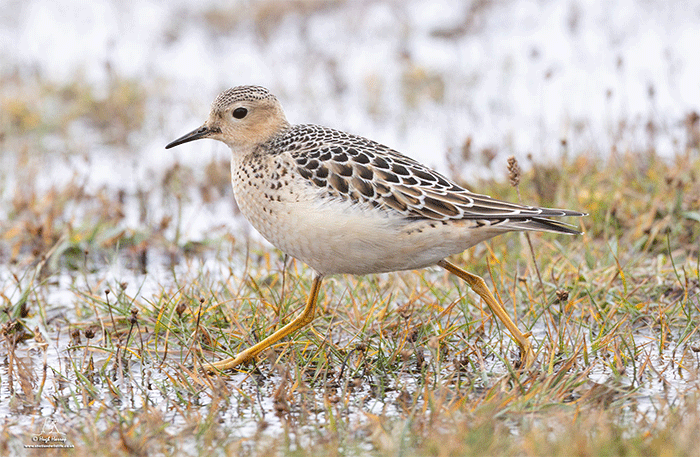
There was no keeping Pectoral Sandpiper down either, with around 45 birds noted during recent days, length and breadth of the region, with a number of birds as far east as Kent, Norfolk, and Suffolk – best of the lot being four still present at The Gearagh (Co.Cork) on 24th, and duos seen at Carsington Water (Derbyshire) on 18th-20th still, on Lough Beg (Co.Derry) on 19th, and at Tacumshin (Co.Wexford) on 22nd.
Numbers of Baird’s Sandpiper fell somewhat, albeit there were still 19 birds logged in Britain and Ireland as a whole. Just one White-rumped Sandpiper was seen – this being a bird on North Ronaldsay (Orkney) on 22nd.
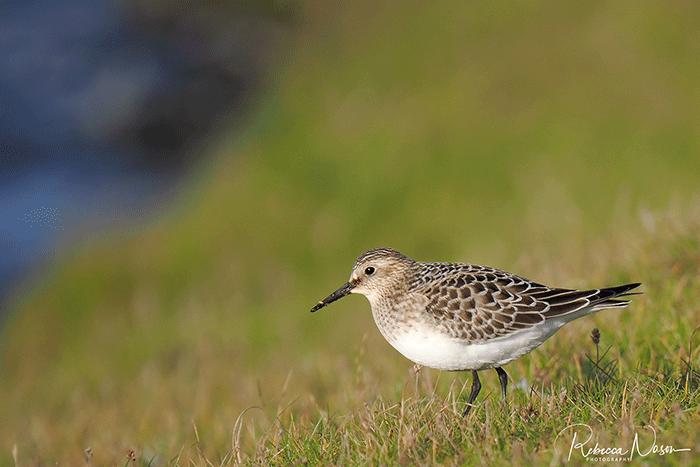
The recent Semipalmated Sandpiper remained at Blennerville (Co.Kerry) still on 20th-23rd; while another was present at Seafield (Co.Clare) on 20th-21st. 23rd was marked by British discoveries at Keyhaven and Pennington Marshes (Hampshire), and on Orkney on Westray – the Hampshire bird remained there the following day.
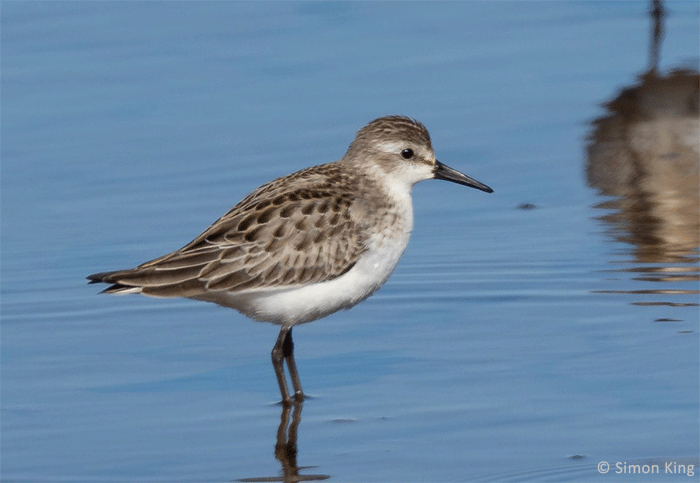
The Temminck’s Stint remainerd at Seaforth LWT (Lancashire & North Merseyside) on 18th-19th.
A Spotted Sandpiper made a brief appearance on Shetland at Voxter on 23rd.
Up on North Ronaldsay (Orkney), the Long-billed Dowitcher was still to be seen on 18th-23rd; another was reported on Lewis (Western Isles) on 19th; and a dowitcher sp was seen heading north past Whitley Bay (Northumberland) on 21st.
American Golden Plover threatened double figures during the week as a whole. In Ireland, lingering birds remained on 18th at Myroe Levels (Co.Derry) and Blanket Nook (Co.Donegal); another was found on 18th at Rossan Point (Co.Donegal); and on 23rd one was present at Leam Lough (Co.Mayo). British birds including one again at Jury’s Gap (East Sussex) on 19th; and additional sightings on Unst (Shetland) on 22nd, on Tiree (Argyll & Bute) on 20th-21st, Lewis (Western Isles) on 21st, St Kilda (Western Isles) on 20th-23rd, and a probable over Dale Airfield (Pembrokeshire) on 21st.
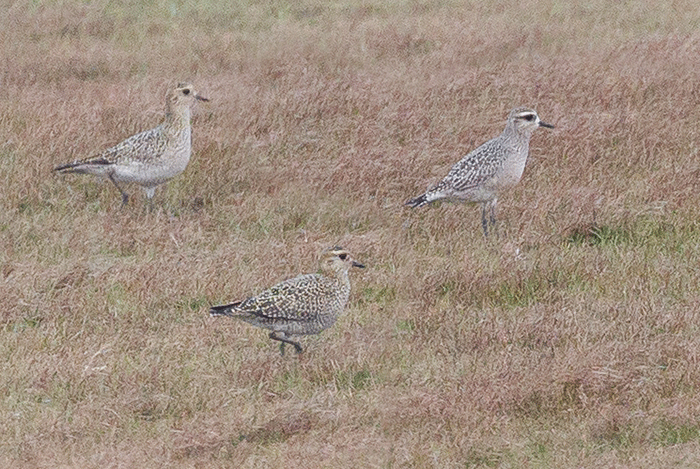
A Dotterel was seen in Glamorgan at Fan Brycheiniog on 19th; one was sound-recorded over Lytchett Matravers (Dorset) early on 23rd; and one was on North and Table Hills (Warwickshire) on 24th.
Providing some relief from our usual staple diet of scarce and rare gulls this week was an adult Laughing Gull on Bardsey (Gwynedd) on 20th.
Co.Galway enjoyed a trio of Bonaparte’s Gull, with two first-winter birds present on 19th on Mutton Island, and an adult on 21st at Ballyconneely; on 23rd a further bird was present at Newcastle (Co.Down). A further first-winter was present on 20th at Dunnet Bay (Highland & Caithness).
The second-winter Ring-billed Gull remained at Doorly Park (Co.Sligo) on 18th-23rd; and an adult at Rosscarbery (Co.Cork) on 23rd.
A Glaucous Gull was present on the Lossie Estuary (Moray) on 23rd, and another at Ullapool (Highland & Caithness) on 24th. A juvenile Iceland Gull was seen on Lewis (Western Isles) on 21st. In Co.Louth the recent Kumlien’s Gull remained at Port Oriel on 20th still.
A little over 70 Sabine’s Gull were recorded during the week.
In Shetland the surinamensis American Black Tern remained faithful to Loch of Tingwall on Mainland right through the week until 24th.
Finally, down in Kent the juvenile White-winged Black Tern remained at Dungeness on 18th-19th, and an adult was seen in Co.Dublin at Sandymount Strand on 18th and Merrion Strand on 19th-20th.
A high quality bird for Wiltshire, a juvenile Pallid Harrier was to be found at Everleigh on 20th-21st. Another continued to haunt Shetland’s South Mainland this week, seen at Loch of Brindister on 20th, while a bird was seen up on Unst on 24th.
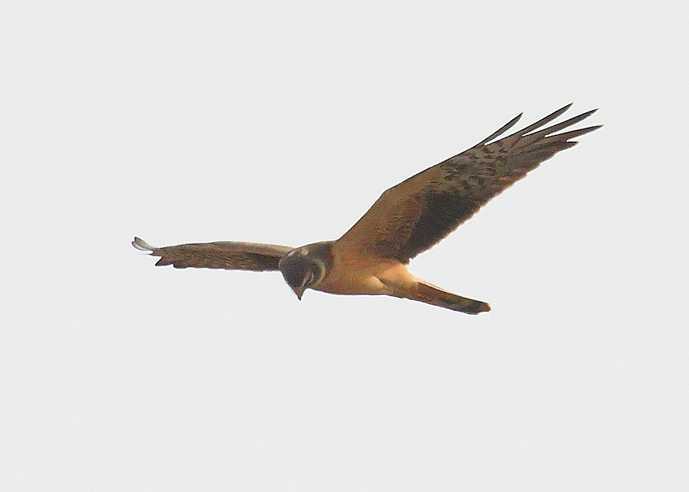
Suffolk continued to be the place to see Montagu’s Harrier, with a juvenile seen on 18th-22nd at Havergate Island RSPB and Gedgrave Marshes, on 18th at Orford Ness, and on 20th at Boyton Marshes RSPB. Breaking the mould, one was seen in Kent on 24th at Stodmarsh NNR.
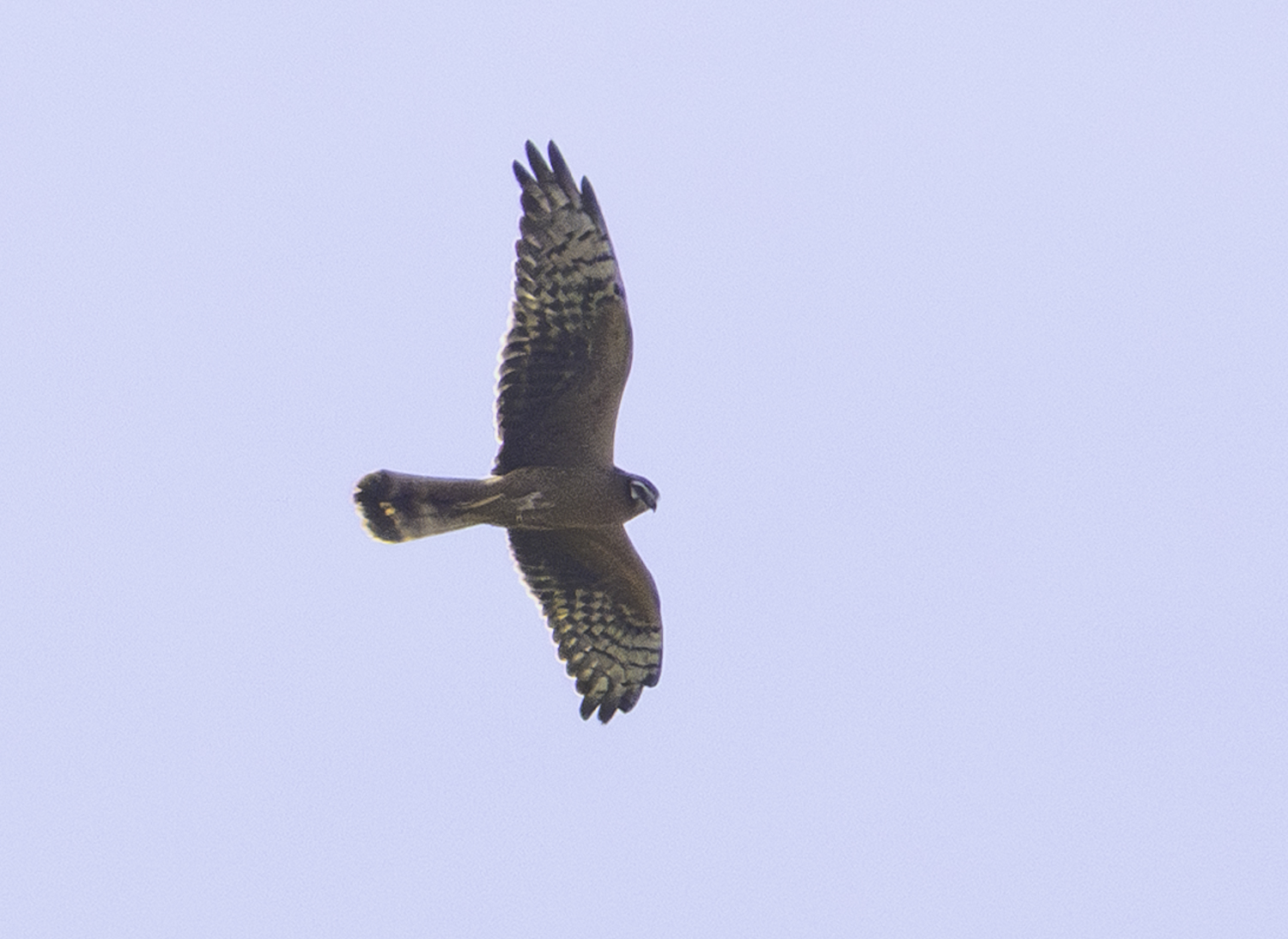
A possible Eleonora’s Falcon was seen on 17th in Lincolnshire heading south past Anderby Creek.
Norfolk held onto the resident Black-winged Kite in the Sea Palling area on 18th-24th.
Settling firmly into our autumn routine this week, let’s start the final section of proceedings as is our wont with warblers…
As the week was drawing to a close a Booted Warbler was found on 23rd-24th at Zennor (Cornwall).
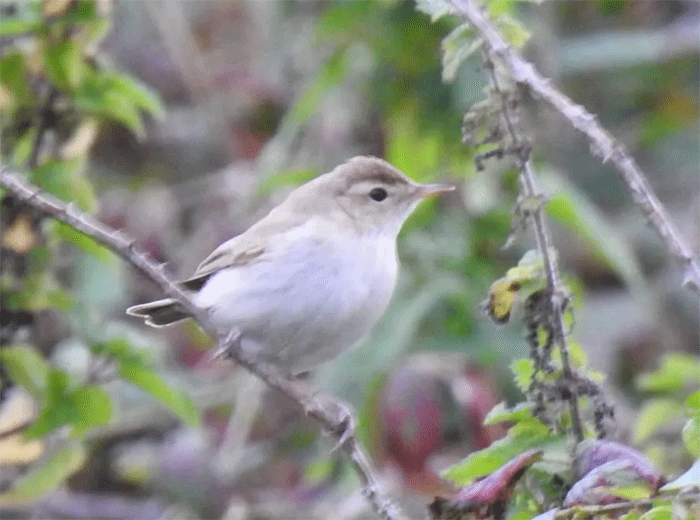
Over the water on Scilly, the recent Eastern Olivaceous Warbler remained a fixture on Gugh on 18th-22nd.
A Marsh Warbler was present on Fair Isle (Shetland) on 22nd.
Proving that increased observer effort can only be a good thing for further finds, a possible Blyth’s Reed Warbler was seen briefly on Gugh on 18th.
Gugh also held onto its recent Greenish Warbler on 18th-21st.
A Western Bonelli’s Warbler was found on Shetland at Ocraquoy on 23rd, and a further possible that day also down in Kent in Seasalter.
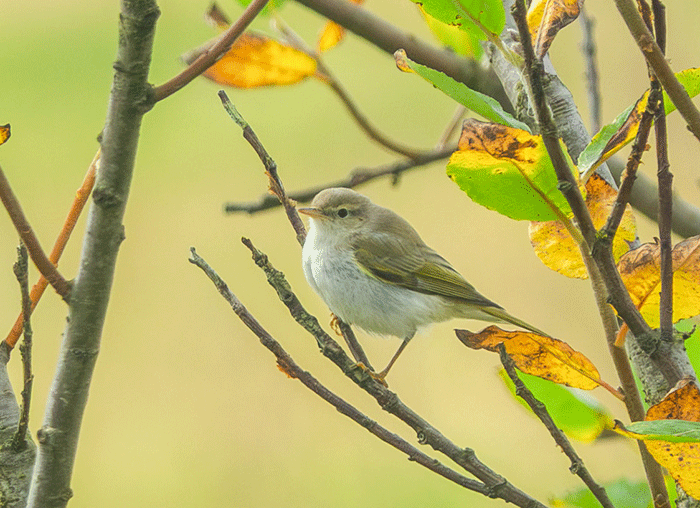
Numbers of Yellow-browed Warbler were frankly a little bit pitiful given the time of year, scraping towards 25 over the entire week across the region. A notable bird however was that found in London at Fairlop Waters CP on 19th-20th, a timely reminder that these lovely birds can and do turn up almost anywhere, even inland and on the outskirts of a large city.
A Melodious Warbler was present on Cape Clear (Co.Cork) on 21st.
A little over half a dozen Barred Warbler weren’t much of an improvement on the preceding week’s tally. Recent days yielded birds in Shetland on Unst on 19th-23rd and Fair Isle on 21st-24th; on Orkney’s Papa Westray on 22nd; in the Western Isles on Barra on 18th-19th; on Tiree (Argyll & Bute) on 21st-23rd; in Co.Mayo on 22nd at Blacksod and Fallmore, the former bird still present the following day; and on 24th at Spurn YWT (East Yorkshire).
Three Zitting Cisticola remained at Walberswick NNR (Suffolk) on 21st.
A Woodchat Shrike was found on 23rd at Durness (Highland & Caithness).
Four Red-backed Shrike were seen during the week, all bar one in the south – the exception being a bird on on Westray (Orkney) on 20th-24th. In England, one was present at Trewellard (Cornwall) on 21st-23rd; another at Lydd (Kent) on 22nd; and a bird on St Agnes (Scilly) on 22nd-24th also.
Some 25 Wryneck logged meant the species more or less held its ground on the preceding week’s cumulative tally.
A Hoopoe was present on Eigg (Highland & Caithness) on 23rd; on 24th birds were found at Llandudno (Conwy) and on St Martin’s (Scilly).
A flyover Bee-eater was seen near Martlesham (Suffolk) on 24th.
No autumn would be complete without a Short-toed Lark on St Mary’s (Scilly), and this year’s bird duly checked in, present on the island on 20th-24th.
The recent Rose-coloured Starling was again seen on Orkney Mainland at Harray on 20th-21st; another was reported from Clogheen Marsh (Co.Cork) on 18th; and a further bird found on 23rd-24th at Moelfre (Anglesey).
A Western Black-eared Wheatear added further lustre to the already excellent autumn of Dursey (Co.Cork), found there on 23rd.
A Citrine Wagtail was reported from Stithians Reservoir (Cornwall) on 21st, followed by confirmed birds on Lewis (Western Isles) on 22nd, at Grutness (Shetland) on 23rd, and not a million miles from the latter site at Quendale on 24th.
The prior week’s American Pipit remained on Skellig Michael (Co.Kerry) on 21st, and proved to be but the vanguard for more – two were found on St Kilda (Western Isles) on 19th, where the species is all but a guaranteed annual event these days; another island bird was present on Fair Isle (Shetland) on 21st-24th; one on North Ronaldsay (Orkney) on 24th; and a good bird for the Scottish mainland was that found at Saltcoats Harbour (Ayrshire) on 21st-23rd.
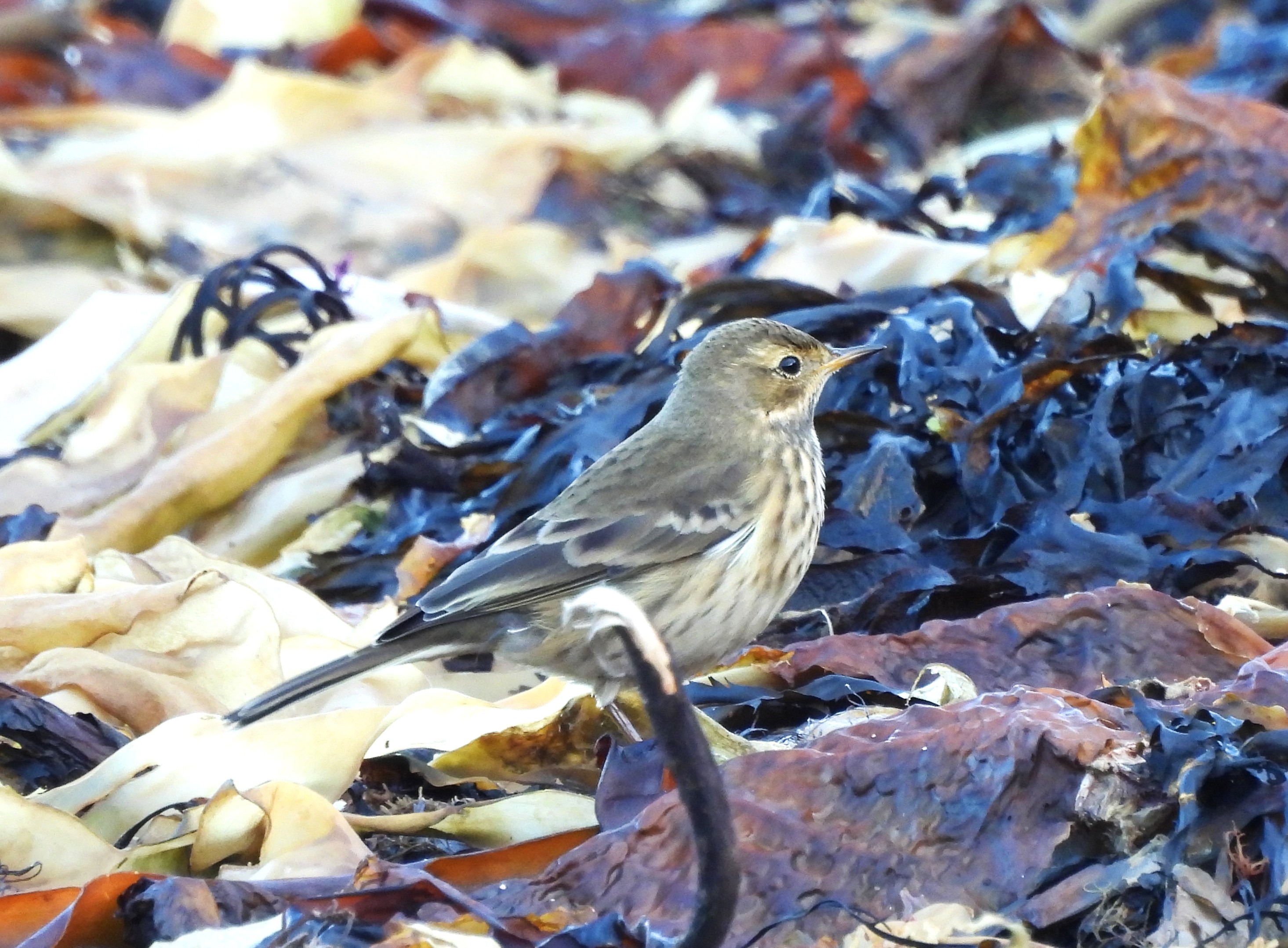
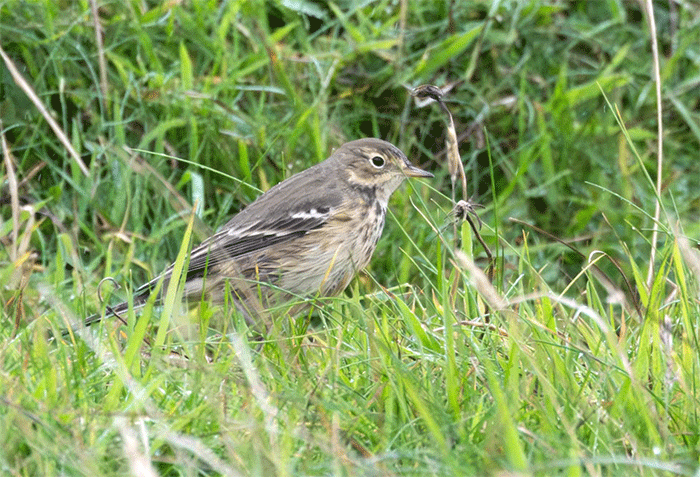
A Swainson’s Thrush was proving a little elusive at times on Inishbofin (Co.Galway) on 21st-24th.
A couple more Red-eyed Vireo for the autumn checked in – one at Blacksod (Co.Mayo) on 19th and, more remarkably, one trapped and ringed at Kenfig Pool NNR (Glamorgan) on 20th.
A dozen Common Rosefinch were reported during the week, with a peak count of four still present on Fair Isle (Shetland) on 20th. In Ireland one remained on Inishbofin (Co.Galway) on 21st-22nd.
And finally, the enduring White-throated Sparrow reappeared once again on Isle of May (Fife) on 22nd. Surely that’s moving on someday soon?
In a week in which our domestic news is headlined by a startlingly rare petrel, it’s fitting that our overseas news should start with one too – and once again, we’re kicking off in Norway, where a Black-capped Petrel was a remarkable sighting going north past Lista Fyr on 19th. As the petrel flies, that’s not a million miles from Scotland – surely there’ll have been some concerted and wishful straining of eyes off North Ronaldsay (Orkney), hoping to catch this wanderer heading out of the North Sea?!
Up on Iceland, events somewhat mirrored Britain this week with a small arrival of American Pipit, with two birds at Garour on 18th rising to four present there by 19th.
Down in Spain the Cape Gull remained at Laredo on 18th.
Further afield, on Cape Verde a Lesser Moorhen was seen on Sal on 22nd-23rd.
And finally, right out there across the Atlantic, a Common Nighthawk was taken into care on Pico on the Azores on 19th.
Whatever next? Well, the final week of September, that’s what. As the forecast stands at the time of writing, this could be the classic game of two halves – the first half of the week featuring a conveyor belt of westerlies coming straight across the Atlantic towards Ireland, and the latter half of the week suggesting some easterlies hitting Britain at last.
Which surely means we’re due a decent passerine from both east and west in the week. Surely still more Red-eyed Vireo and American Pipit are inbound, and perhaps it’s about time we landed something chunkier – the coming week features, in the past half century, eight records of Bobolink and seven of Rose-breasted Grosbeak.
Looking to the east, it’s easy to get carried away. The coming week does, after all, boast records of Pale-legged Leaf Warbler and Red-throated Thrush. But if we’re being realistic, it’s also a fine time to self-find that Rustic Bunting you promised yourself...
Jon Dunn
25 Sept 2026
Many thanks to all this week's contributors for your photos and videos.
Get Breaking Birdnews First
Get all the latest breaking bird news as it happens, download BirdAlertPRO for a 30-day free trial. No payment details required, and get exclusive first-time subscriber offers.
Share this round-up