Record 13 Hen Harrier chicks fledge at RSPB Geltsdale
Three nests produced 13 young at the Cumbrian reserve, delivering its best breeding season for Hen Harriers in more than a century.
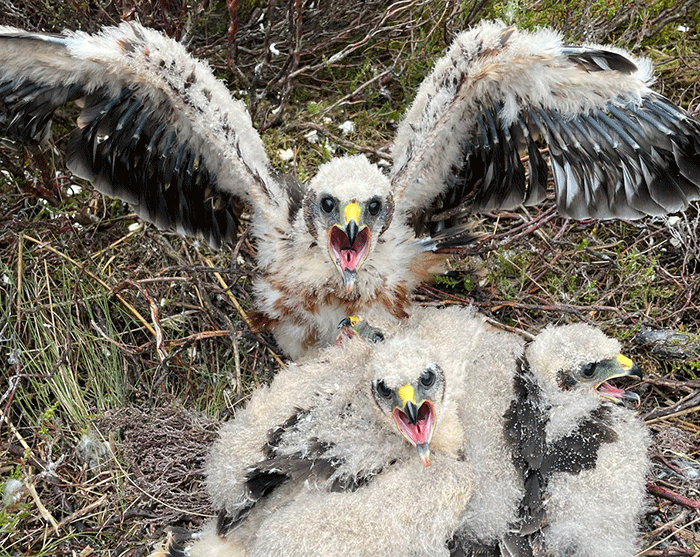
Thirteen Hen Harrier chicks have fledged from three nests at RSPB Geltsdale in Cumbria, setting a new breeding record for the reserve.
The RSPB said it was the largest number of young produced at Geltsdale in a single season since records began more than a century ago. Reserve staff and volunteers monitored the nesting areas day and night, working to minimise disturbance and support the breeding adults.
Natural England-licensed diversionary feeding stations were established during the breeding season. The established technique provides food close to active nests, reducing the likelihood that adults provisioning their young will take Red Grouse on neighbouring shooting estates.
Several of the fledglings have been fitted with tags so that their movements and survival can be followed after they disperse from the reserve.
By supporting both parents we have seen three nests thrive and 13 chicks fledge, the most for at least a century in this part of the world.
Ian Ryding, reserve manager at RSPB Geltsdale
Hen Harriers were persecuted to extinction as a breeding species in England by 1900, before returning to the North Pennines during the 1950s. Their English breeding distribution remains restricted, despite the potential extent of suitable upland habitat.
The RSPB cited government estimates that the English uplands could support at least 300 breeding pairs. The species nevertheless remains Red-listed in the UK and its population is still far below that potential.
According to the organisation, evidence gathered over many years shows that illegal persecution remains one of the principal barriers to recovery, with tagged birds continuing to disappear in and around areas managed for grouse shooting.
The RSPB is calling for gamebird shooting to be licensed across the UK. It argues that a system comparable with the licensing of grouse-moor management introduced in Scotland in 2024 would help deter wildlife crime and strengthen protection for Hen Harriers.
Ryding said the hope was that the Geltsdale fledglings would survive and return to breed in future years, but warned that further action against illegal killing would be needed if local successes were to contribute to sustained recovery.
For now, thirteen young Hen Harriers taking to the skies above Geltsdale is a reason to celebrate. The challenge is ensuring they survive long enough to return and raise families of their own.
Ian Ryding
17 Sep 2026
Get Breaking Birdnews First
Get all the latest breaking bird news as it happens, download BirdAlertPRO for a 30-day free trial. No payment details required and get exclusive first-time subscriber offers.