


Birders’ support at Global Birdfair 2026 funds São Tomé conservation
US$150,000 raised through Global Birdfair will support work to protect three Critically Endangered birds found only on São Tomé.

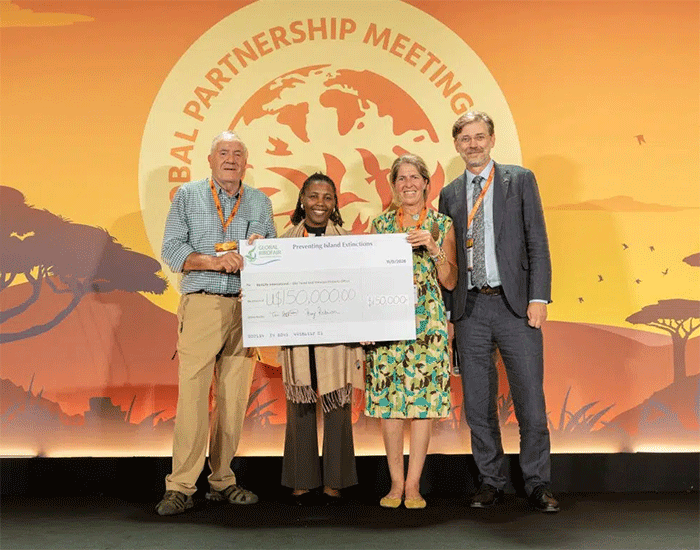
A US$150,000 donation from Global Birdfair is to support BirdLife International's work to prevent the extinction of three of São Tomé's rarest endemic birds.
The funding, announced by BirdLife International on 9 September, will be directed towards the Dwarf Ibis, São Tomé Grosbeak and Newton's Fiscal. All three are classed as Critically Endangered and occur nowhere outside the forests of the Gulf of Guinea island.
The scale of the challenge is particularly stark for the São Tomé Grosbeak and Newton's Fiscal. The Grosbeak was known only from a small number of museum specimens for more than a century before being rediscovered in 1991, and BirdLife says possibly fewer than 250 mature birds now survive. Newton's Fiscal is also thought to number fewer than 250 individuals. The Dwarf Ibis is less scarce, but its remaining population is still believed to be below 2,000.
The new programme is intended to close some of the major gaps in knowledge surrounding the birds. Researchers, park rangers and local communities will work together to improve information on where the species occur, how their populations are changing and which threats are having the greatest effect. Better surveys and monitoring should in turn allow conservation measures to be targeted more precisely.
São Tomé's endemic birds are concentrated in a small area of forest, making them especially vulnerable to local changes. Agricultural expansion and timber extraction continue to reduce and fragment habitat, while hunting, disturbance and invasive mammals add further pressure.
BirdLife's work on the island has increasingly involved the people who know those forests best. A programme run between 2022 and 2024 worked directly with hunters, with 75 becoming 'Agents of Change' who combined their knowledge of the forest with conservation training. Participants have since helped locate rare birds, including Dwarf Ibis, and report illegal hunting.
The same initiative also brought hunters together with national authorities, biologists and civil society during a review of hunting legislation. Twenty-five participants received mentoring to explore alternative livelihoods, with five business ideas subsequently receiving technical and financial support.
This support gives us the opportunity to discover more about these remarkable birds and, most importantly, to turn that knowledge into action.
Marquinha Martins, BirdLife International
The US$150,000 contribution comes from the 2026 Global Birdfair, held at Rutland Water in July. Organisers Tim Appleton MBE and Penny Robinson selected BirdLife's 'Preventing Island Extinctions in São Tomé and Príncipe' programme as the event's conservation project, linking money raised by visitors, exhibitors, sponsors and volunteers directly with work on the island.
For the three species involved, the funding does not yet represent a recovery result. Instead, it provides resources to establish a clearer picture of their status, identify the most urgent threats and strengthen the local partnerships that will be needed if the remaining populations are to be secured.
24 Sep 2026
Get Breaking Birdnews First
Get all the latest breaking bird news as it happens, download BirdAlertPRO for a 30-day free trial. No payment details required and get exclusive first-time subscriber offers.




