Anting gives Japanese Thrushes a chemical defence
Experiments in Japan show that ants can add repellent compounds to plumage and remove louse flies, providing direct evidence for a long-debated bird behaviour.
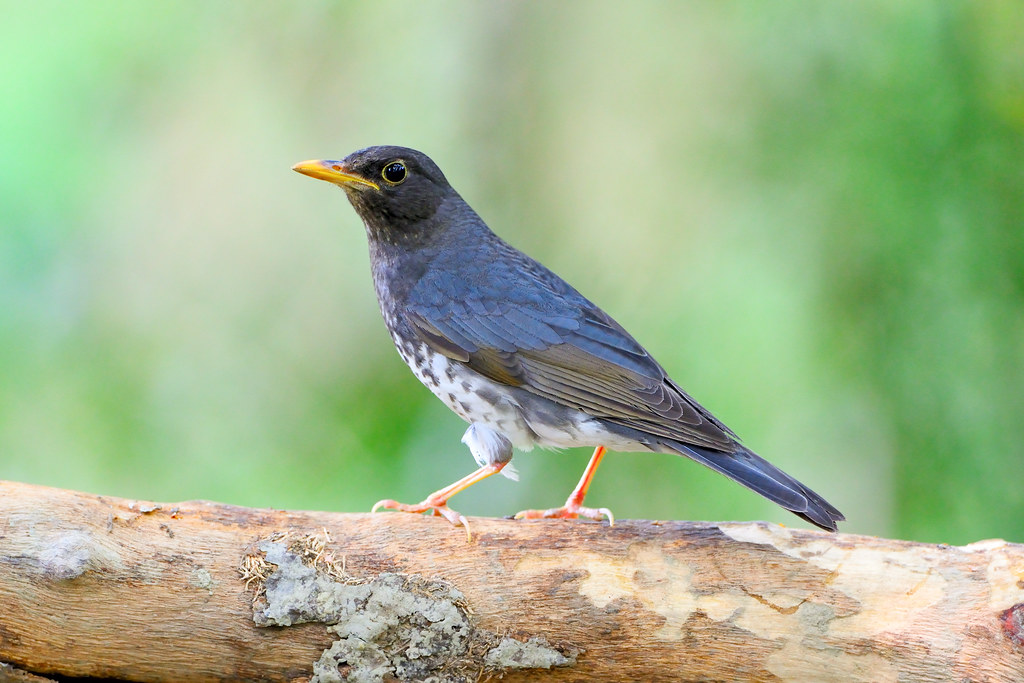
Japanese Thrushes may use ants as both a chemical treatment and a tool for dislodging parasites, according to experiments that supply direct support for one of the leading explanations of anting behaviour.
Anting occurs when a bird rubs ants through its plumage or allows the insects to crawl among its feathers. It has been reported in more than 200 bird species, yet its function has remained disputed. Suggestions range from parasite control and feather maintenance to food preparation or simple sensory stimulation.
In the Scientific Reports study, researchers worked with Japanese Thrushes, Turdus cardis, and the ants Lasius spathepus and Lasius nipponensis. Artificial anting treatments allowed the team to separate the insects' physical and chemical effects, while gas chromatography was used to identify volatile compounds transferred to the birds' body surfaces.
The analysis found dendrolasin, an ant-derived volatile, on treated plumage. Experiments also showed that dendrolasin and other ant compounds repelled dipteran insects. That provides a plausible chemical mechanism by which rubbing ants through feathers could make a bird less attractive or hospitable to flies.
The authors also recorded a direct reduction in external parasites after treatment.
The anting treatments were significantly effective in removing ectoparasites, louse flies and dipteran insects.
Ohkawara and colleagues, Scientific Reports
Louse flies are blood-feeding parasites that spend much of their adult lives on birds and can carry other organisms, while additional flies and ectoparasites may irritate hosts or impose energetic costs. Removing them could therefore offer an immediate benefit. Repellent chemicals remaining on feathers might provide a second, preventive effect after the ants themselves have gone.
The researchers suggest that this chemical defence could help exclude harmful flies and might reduce exposure to vector-borne infections such as avian malaria. That disease implication is a hypothesis from the demonstrated repellent mechanism, not evidence that anting reduced infection rates in the birds studied.
The work also does not establish that all ants are useful. Ant species differ widely in their defensive secretions, and birds may select particular species or life stages. A compound that deters one parasite may have little effect on another. The quantity transferred during natural behaviour could also differ from an artificial treatment.
Japanese Thrushes are migratory East Asian songbirds that breed in Japan and parts of eastern China before moving south for winter. The study focuses on a particular host and two ant species, so experiments across other bird lineages will be needed before the mechanism can be generalised to the hundreds of species reported to ant.
Even with those limits, the research connects three previously separate observations: birds deliberately handle ants, ant chemicals can remain on the body surface, and treatment can remove or repel external parasites. It turns an old natural-history puzzle into a testable form of self-medication, while leaving open how often birds use it, how they choose their ants and whether it improves fitness in the wild.
3 Nov 2026
Get Breaking Birdnews First
Get all the latest breaking bird news as it happens, download BirdAlertPRO for a 30-day free trial. No payment details required and get exclusive first-time subscriber offers.