Blood parasites found in Red-footed Falcons for the first time
Hungarian sampling finds very low infection prevalence in the migratory raptor compared with sympatric Common Kestrels.
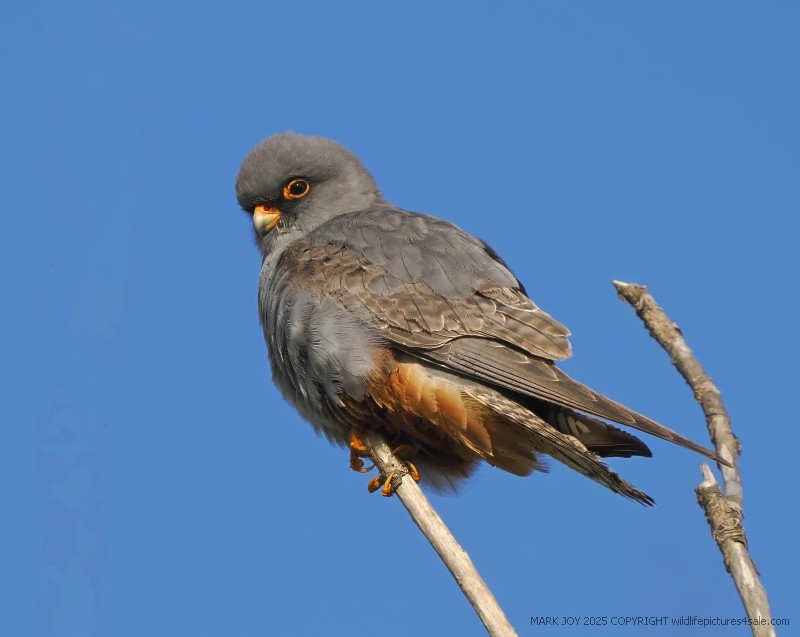
Researchers have produced the first molecular evidence of avian malaria-related parasites in Red-footed Falcons, but found infections were rare and far less diverse than in Common Kestrels sharing the same Hungarian colonies.
The Scientific Reports study screened blood from 139 Red-footed Falcons, 468 Common Kestrels and 40 Eurasian Jackdaws. Samples came from mixed breeding colonies and pre-migratory roosts, allowing long-distance migrants and largely resident birds to be compared within part of the same landscape.
PCR tests targeted mitochondrial DNA from Plasmodium and Haemoproteus, groups of blood parasites transmitted by insects. Red-footed Falcons carried only two detected lineages: Haemoproteus FALAMU02 in roosting birds and the widespread Plasmodium lineage SGS1 in a single nestling.
No Haemoproteus infection was detected in Red-footed Falcon nestlings. Common Kestrels showed higher prevalence and substantially greater parasite diversity, while infections in the smaller Eurasian Jackdaw sample were confined to one brood.
Age offered one possible part of the explanation. Older birds have had more time to encounter infected vectors, and low-intensity infections may be easier to detect after cumulative exposure. Differences between nestlings and birds at roosts therefore cannot be interpreted only as a species effect.
Migration may also shape exposure. Red-footed Falcons travel between Eurasian breeding grounds and sub-Saharan Africa, moving through different climates and vector communities, whereas Common Kestrels in the study area are much more sedentary.
The authors present that possibility cautiously rather than claiming migration protects the falcons.
The contrasting migratory strategies of the two falcons may represent an ecological trait contributing to these differences.
Takacs and colleagues, Scientific Reports
A migratory bird could encounter more parasite lineages across its route, but it might also leave local transmission areas before infections build, use habitats with fewer suitable vectors or suffer selective mortality that removes heavily infected individuals. The present data cannot distinguish those mechanisms.
Detection of parasite DNA is not equivalent to a diagnosis of clinical malaria. The paper identifies host-parasite associations and lineage diversity; it does not show that the infected Red-footed Falcons were ill or that infection affected breeding success or survival.
Sample sizes were also unequal, with more than three times as many Common Kestrels as Red-footed Falcons and only 40 Jackdaws. Birds were sampled at different ages and seasonal contexts, and a negative result can reflect infection intensity below the test threshold.
Red-footed Falcon is globally Vulnerable and most of its European population breeds in the east of the continent. Because the detected lineages also occur in other hosts, their presence does not establish a parasite unique to this falcon. Microscopy and repeated molecular testing could show whether infections develop fully and persist through migration. The new baseline gives conservationists a starting point for disease surveillance, but repeated sampling across migration, wintering areas and years will be needed to establish where infections are acquired and whether prevalence changes with climate or vector distribution.
5 Nov 2026
Get Breaking Birdnews First
Get all the latest breaking bird news as it happens, download BirdAlertPRO for a 30-day free trial. No payment details required and get exclusive first-time subscriber offers.