Spain begins bid to restore its lost Andalusian Hemipode
The chicks will form the foundation of a breeding programme, but releases cannot be considered until numbers grow and suitable insect-rich farmland is secured.
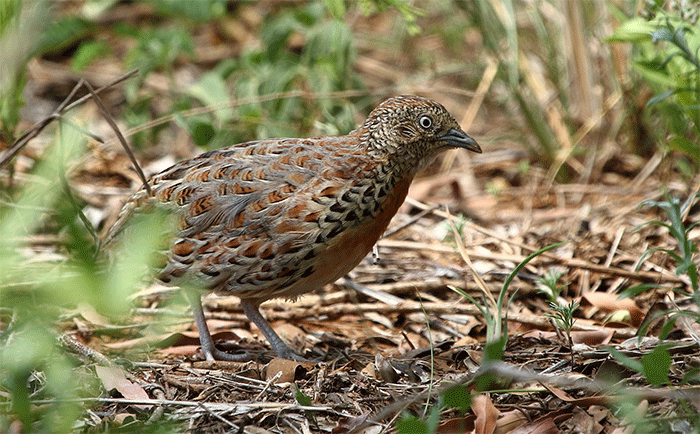
Spain has begun an ambitious attempt to restore the Andalusian Hemipode, more than four decades after the western Mediterranean bird disappeared from the country.
Eighteen chicks were transferred from Morocco to Jerez Zoo on 9 September to establish an ex-situ breeding nucleus. The birds belong to Turnix sylvaticus sylvaticus, the Mediterranean subspecies of Common Hemipode often known as the Andalusian Hemipode.
Spain's last documented record was a bird shot near Doñana in 1981. The subspecies has also disappeared from Portugal, Sicily and several North African countries, leaving a narrow stretch of the Moroccan coast as its final wild refuge.
Finding and moving the chicks required cooperation between the Moroccan, Spanish and Andalusian authorities. Project workers used portable incubators and heat lamps near the surviving population, then transported the birds after hatching because the relevant regulations did not permit eggs to cross the border.
The young birds required tightly controlled heat and humidity and food at intervals of about 15 minutes. At Jerez they are being held in enclosures designed to reproduce elements of their natural habitat, while another group is being reared at Aïn Sebaâ Zoo in Casablanca.
The immediate task is to establish reliable captive breeding. Programme staff estimate that a population of approximately 150-200 birds may be needed before a release can be considered, and no reintroduction date has been set.
Suitable release habitat will be as important as the number of birds. The subspecies depends on small-scale, insect-rich farmland with field margins and enough connected cover to feed and breed. Agricultural intensification, pesticide use and coastal urbanisation have eroded those conditions in Spain and are advancing in Morocco.
Hemipodes also have an unusual breeding system. Females attract males and lay the eggs, while males incubate and rear the chicks. A male tied to the nest must be able to find plentiful food nearby, making poor invertebrate supplies a potentially serious constraint.
The transfer is therefore the beginning of a long restoration process rather than the return of the bird to the Spanish wild. Managers must build a healthy captive population, retain genetic diversity and identify farmland capable of supporting released birds without recreating the pressures that caused the original loss.
If those conditions can be met, descendants of the 18 Moroccan chicks could eventually return a vanished bird to the Andalusian coast. For now, their arrival at Jerez gives the project a living foundation and Spain its first practical route towards reversing the 1981 extinction.
21 Sep 2026
Get Breaking Birdnews First
Get all the latest breaking bird news as it happens, download BirdAlertPRO for a 30-day free trial. No payment details required and get exclusive first-time subscriber offers.