Weekly birding round-up: 17 - 23 Jul 2026
On the one hand, the past week was pretty quiet on the bird front – not a huge amount of anything was happening. On the other hand, news from Gloucestershire overshadowed everything, and was the birding event of the year for many.
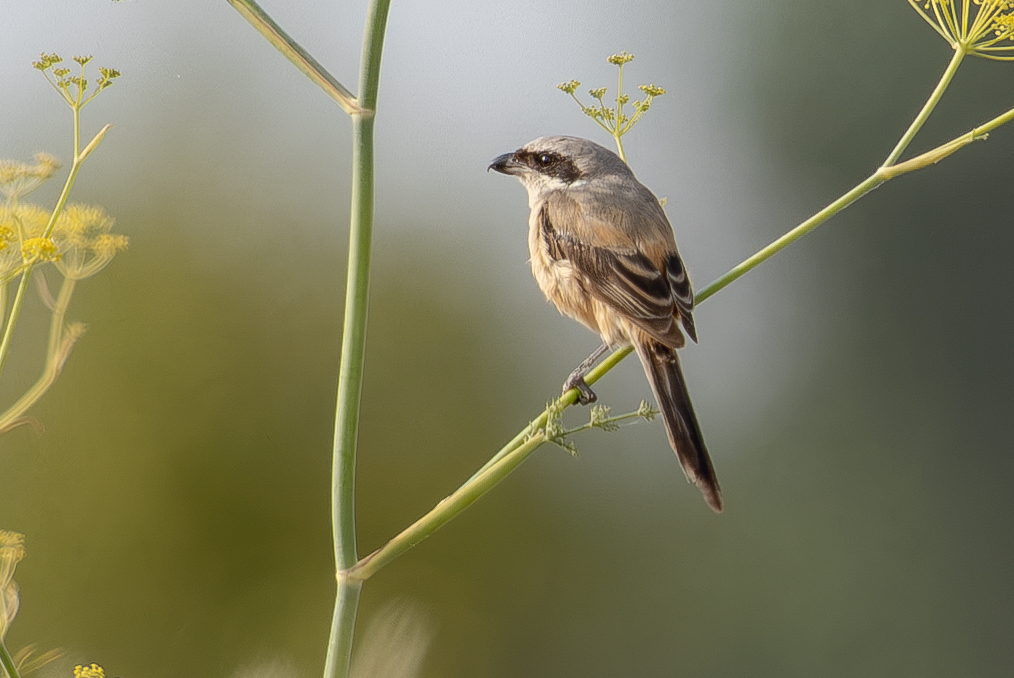
We suggested that the recent Long-tailed Shrike in Fife was a strong and perhaps unassailable candidate for bird of the year – a mythical rarity and the chance for those prepared to head north to Scotland to unblock the pain of Britain’s first, all too inaccessible, bird of decades ago.
But we were wrong. Because something better was in the post for summer 2026. And what’s better than Britain’s second Long-tailed Shrike? Clearly the answer to that is Britain’s third Long-tailed Shrike when it’s found in southern England in summer, and appears well settled into the area, allowing a well-organised twitch to unfold around it.
News first broke publicly of this bird early in the week as having been present near Eastleach Turville (Gloucestershire) on 8th-16th July. This, in itself, was remarkable enough, for its stay overlapped that of the Fife bird, confirming beyond doubt there were two birds present in Britain at once. Further belated news suggested the bird had been seen at Eastleach Downs on 17th.
Step forward Mike King, with a truly marvellous example of birding grit and determination on 19th…
Against my better judgement & knowing it was a lost cause I wandered Cotswold lanes searching for the Long-tailed Shrike, I felt I had to try. After 4 hrs as I was leaving it flew past my right shoulder about 2ft from my ear. I said "Goodness me, that's a shrike"????#GlosBirds pic.twitter.com/z9hGp8ZhIJ
— Mike King???? (@GlosterBirder) July 19, 2026
Gloucestershire’s first Long-tailed Shrike - indeed, the first for England as a whole – was still present well inland in the county. With arrangements made for parking, and the bird remaining present and showing well until 21st, it was game on.
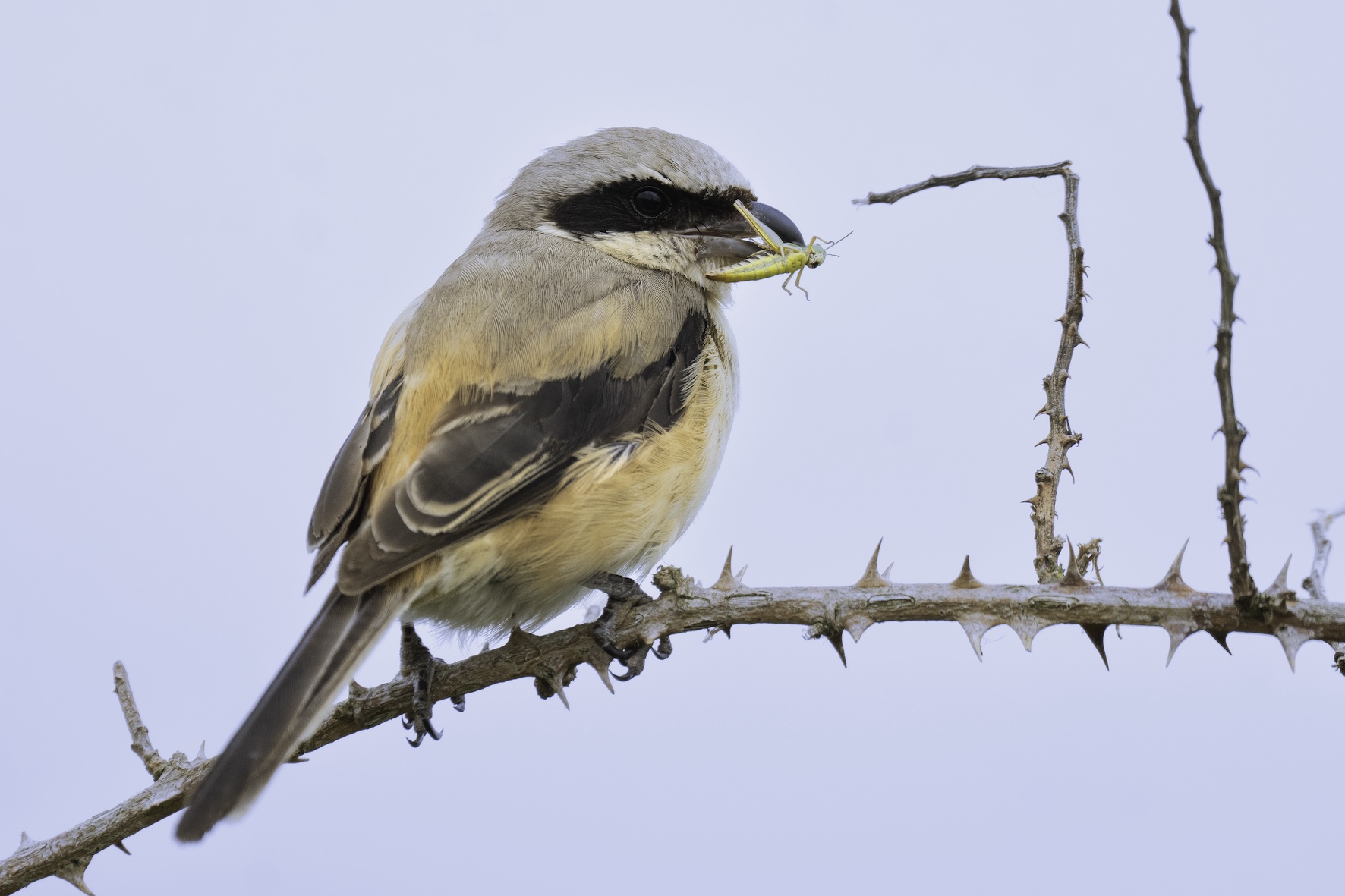
A bird of this heft and calibre, in such an accessible southern English location, inevitably exerts a gravitational pull during a week. Granted, bird news goes quiet at this time of year anyway, but the almost total absence of reports of other scarce species at times suggested that the Gloucestershire Long-tailed Shrike was attracting a lot of attention…
Reasonable tallies of Wilson’s Petrel were made this past week offshore, with 12 birds seen six miles off Croaghnakeela Island (Co.Galway) on 17th, and 12 birds also noted from the Scilly pelagic of 20th. Two more were seen west of Blasket Island (Co.Kerry) on 19th, and five from the Scilly pelagic of 22nd.
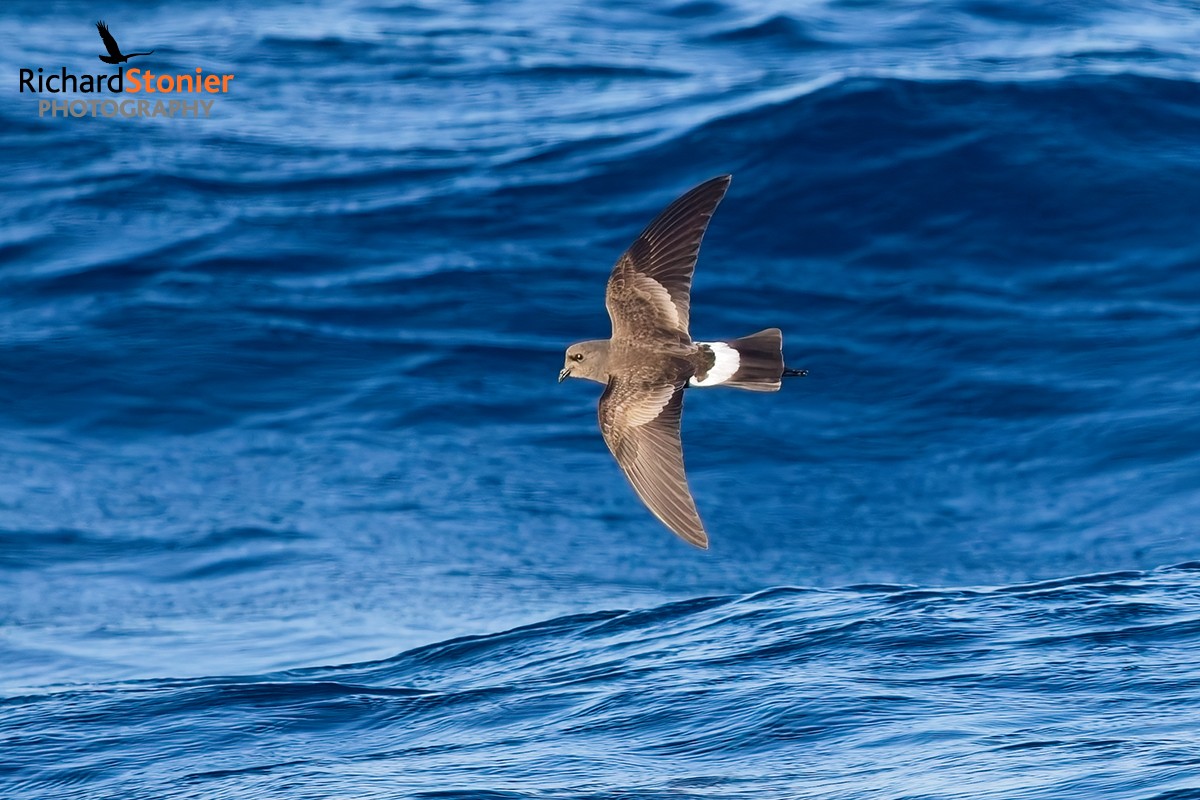
A Leach’s Petrel was trapped and ringed overnight on 22nd/23rd on Fair Isle (Shetland).
Precious few large shearwaters, however, were to be seen for now. A Great Shearwater was seen from the Scilly pelagic of 20th; while Cory’s Shearwater were seen from Flamborough (East Yorkshire) on 17th, Low Newton-by-the-Sea (Northumberland) on 19th, St Govan’s Head (Pembrokeshire) on 20th, and Sheep’s Head (Co.Cork) on 21st.
Numbers of Balearic Shearwater were also rather dismal. Portland (Dorset) gave us a peak count of four offshore on 17th; while singletons were noted from Northumberland on 17th at Cullercoats and Church Point, and at sea off Plymouth (Devon) on 19th. Devon did its best to make things right, with 18 birds noted on 22nd.
The Long-tailed Skua remained on Foula (Shetland) on 17th-18th; further examples were logged at Oare Marshes KWT (Kent) on 18th, and on 21st at Whitburn CP (Co.Durham) and Huttoft Bank (Lincolnshire).
Finally, the White-billed Diver remained off Houton (Orkney) on 17th-23rd.
Long-legged beasty news calmed down somewhat this past week, with just some regular fare to report upon, and no extreme African vagrants – though, as a marker for the coming week, a possible dark morph Western Reef Heron was reported in the evening of 23rd at Waungron (Glamorgan).
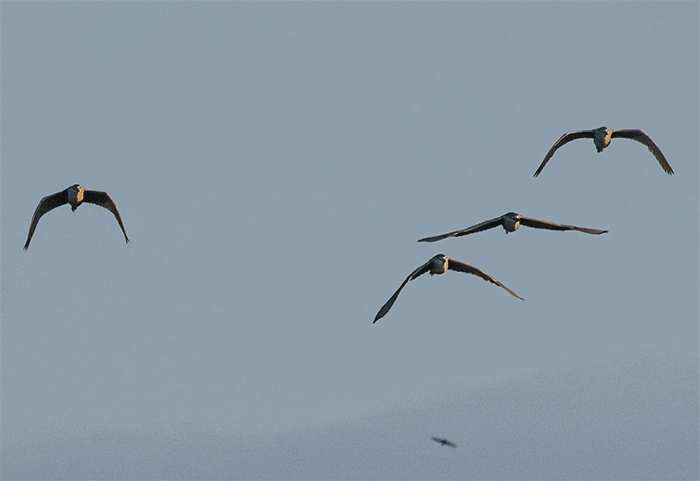
We did well once more for Night Heron, with four birds seen at Bolton-on-Swale Lake YWT (North Yorkshire) on 20th-22nd particularly notable, with three still present on 23rd; while single birds were seen at Miller’s Pond (Hampshire) still on 17th, at Middleton Lakes RSPB (Staffordshire / Warwickshire) on 20th-21st, and on 22nd again at North Cave Wetlands YWT (East Yorkshire).
A possible Purple Heron was reported from Ham Wall RSPB (Somerset) on 19th, followed by a confirmed bird seen on St Mary’s (Scilly) on 22nd, and another in Devon at Black Hole Marsh on 23rd.
Purple Heron on patch this morning at Black Hole marsh, Seaton Wetlands, Devon. Cheers Clive for getting the news out quickly. pic.twitter.com/KpkSBv7ej2
— Tim Clark (@TimNobby) July 23, 2026
The rarity duckpond this week began to stagnate somewhat, with comparatively little of interest bobbing around out there, as we might expect at this juncture in the year.
Starting in Scotland, off Musselburgh (Lothian) three White-winged Scoter drakes were logged on 22nd, while numbers of Surf Scoter varied, with three drakes still present on 17th and 22nd, but fewer noted there in between.
In Shetland the female King Eider remained in Lerwick on 20th.
Lesser Scaup logged this week were one still in Fife on Loch Gelly on 20th, and further south at Startop’s End Reservoir (Hertfordshire / Buckinghamshire) on 18th, and Blithfield Reservoir (Staffordshire) on 19th.
Three Ring-necked Duck were also recorded – on Abberton Reservoir (Essex) still on 19th-23rd; on Loch of Clickimin (Shetland) still on 17th-19th; and on Netherfield Lagoons (Nottinghamshire) still on 17th-23rd.
A Ferruginous Duck was present at Stanford Reservoir (Northamptonshire / Leicestershire) on 18th.
Foremost among the weekly waders was, of course, the settled adult Hudsonian Godwit, still delighting all comers to Cattawade (Suffolk) on 17th-23rd.
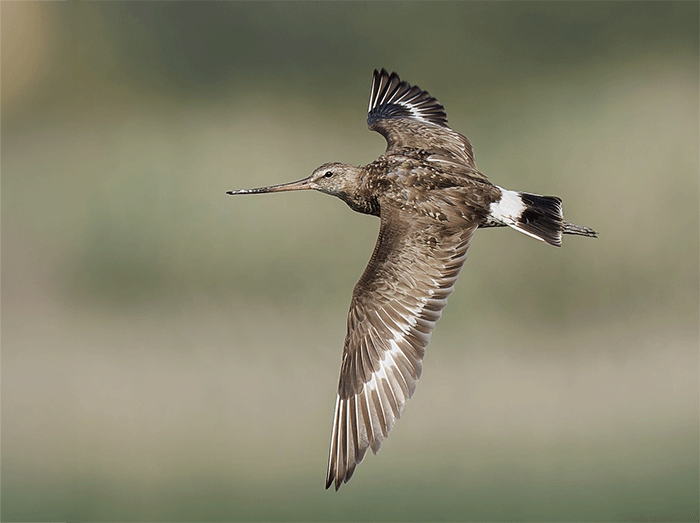
Also in Suffolk, a Lesser Yellowlegs was seen at Benacre Broad on 18th.
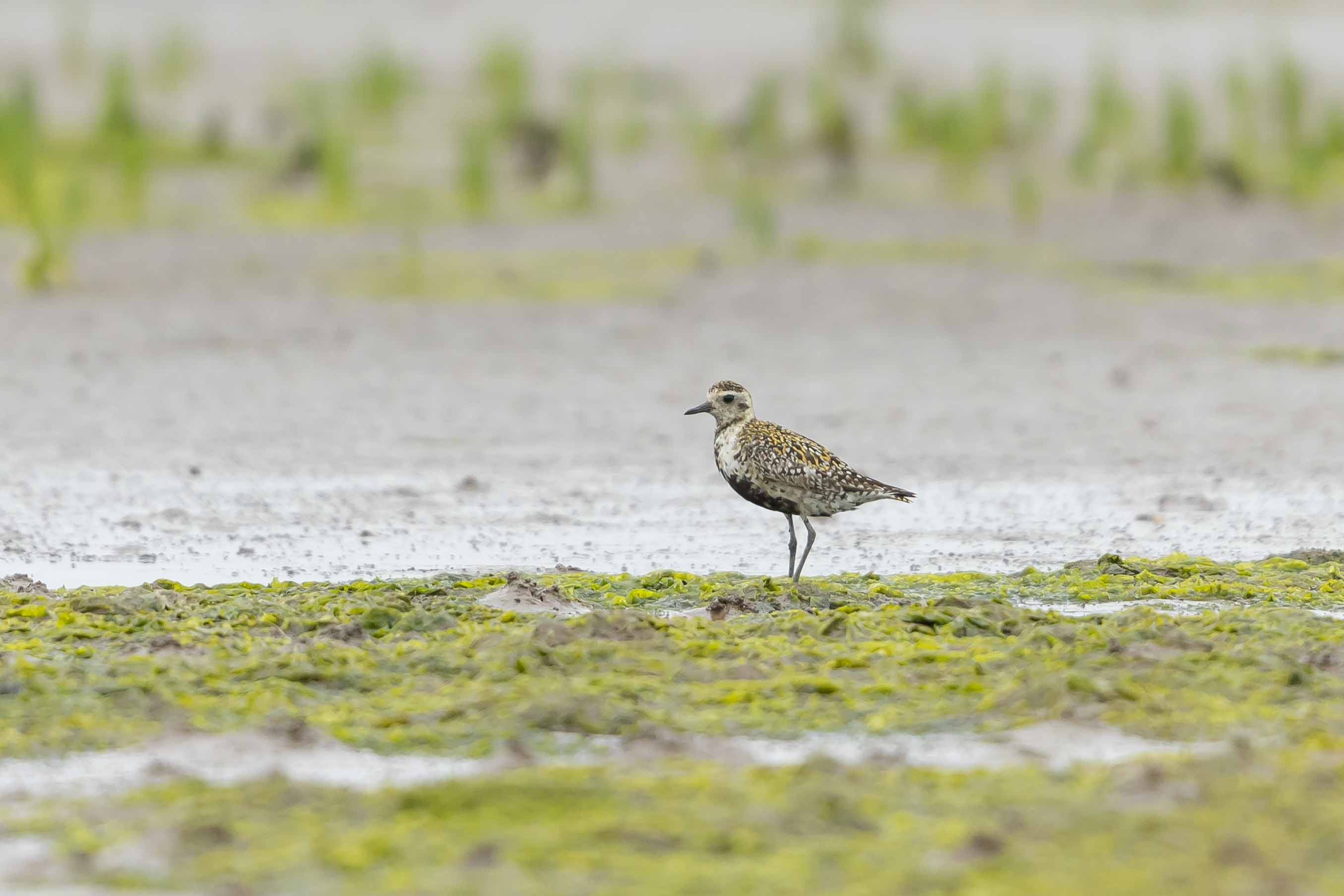
A Pacific Golden Plover was seen at Spurn (East Yorkshire) on 18th, and a bird in Lincolnshire at Donna Nook on 22nd-23rd; while an American Golden Plover was seen on Westray (Orkney) on 20th, and a further bird reported from Mousa (Shetland) on 23rd.
Orkney’s North Ronaldsay also held onto its lingering Semipalmated Sandpiper on 18th-23rd still.
A White-rumped Sandpiper dropped into East Yorkshire this week, seen at Beacon Ponds NR on 17th, and Kilnsea Wetlands NR on 18th-23rd.
The White-rumped Sandpiper present at Beacon Ponds showed pretty well just now ?? #spurnbirds pic.twitter.com/kMRl1mLm23
— Jack Pettit (@rossa599) July 18, 2026
The week proved another good one for Pectoral Sandpiper - duos were recorded at Old Hall Marshes RSPB (Essex) still on 17th-18th, and at Freiston Shore RSPB (Lincolnshire) on 17th and 21st; and singletons at Cairnbulg (Aberdeenshire) on 20th-23rd, Sandwich Bay (Kent) on 20th-22nd, Druridge Pools NR (Northumberland) on 17th-21st, Keyhaven Marshes (Hampshire) on 17th-23rd, Pannel Valley NR (East Sussex) on 23rd; and reported at Caerlaverock WWT (Dumfries & Galloway) on 18th.
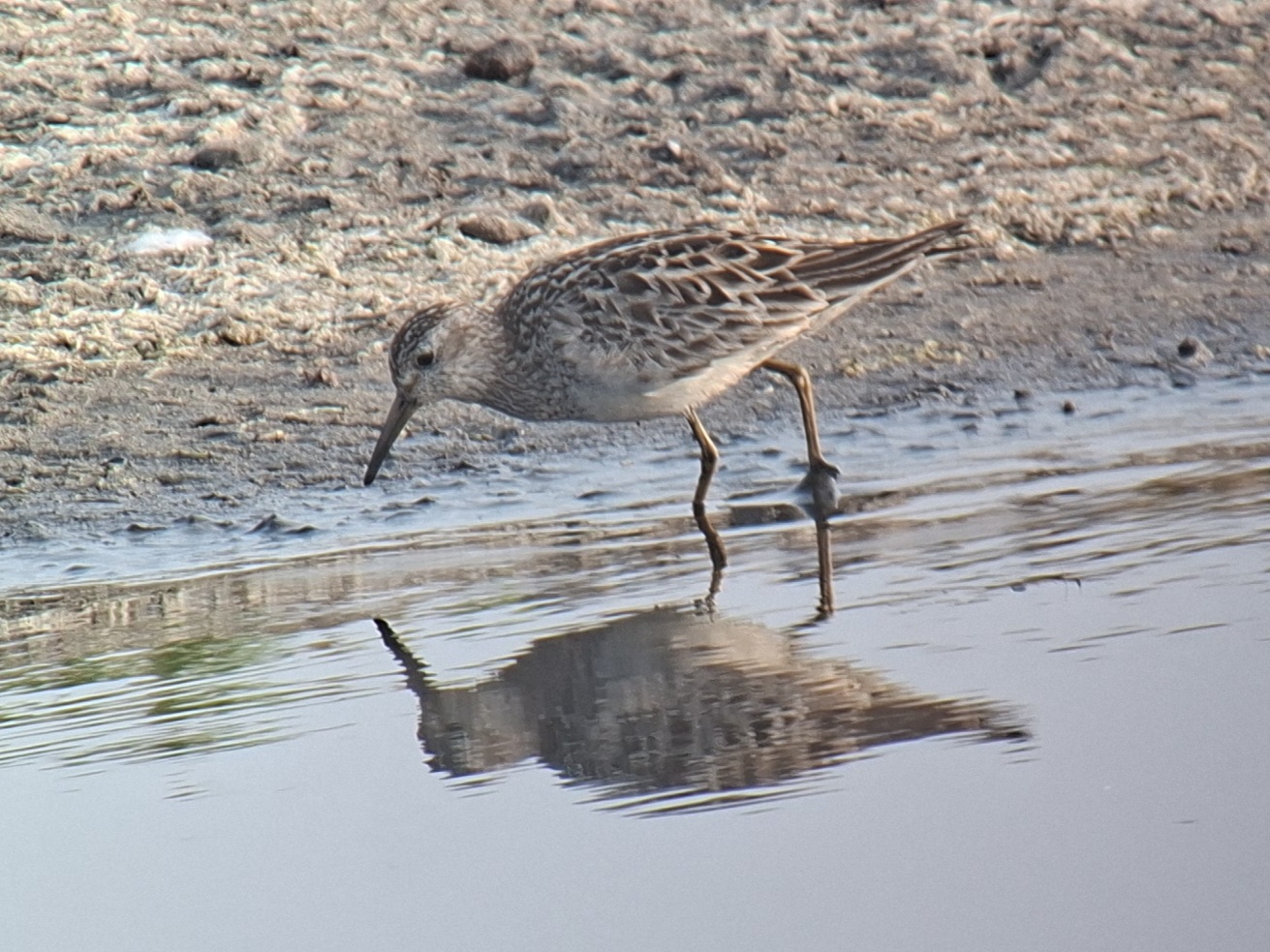
Also in Dumfries & Galloway, a Temminck’s Stint was seen at Crook of Baldoon RSPB on 18th-19th.
Two Black-winged Stilt remained at Frampton Marsh RSPB (Lincolnshire) until 22nd.
On Orkney the Red-necked Phalarope remained on Sanday on 17th.
Finally, back where we began in Suffolk, a pratincole sp was seen over Dunwich Heath on 20th.
In Kent the regular adult Bonaparte’s Gull remained at Oare Marshes KWT on 17th-23rd.
An adult Glaucous Gull was seen in Lincolnshire at Gibraltar Point NNR on 18th; on Orkney, the recent bird remained on Westray on 23rd, with another sighting that day on Mainland at Birsay Moors RSPB.
The recent Caspian Tern remained at Nosterfield Quarry (North Yorkshire) on 17th-18th.
A Gull-billed Tern made a brief appearance in Kent at Dungeness RSPB on 17th.
The Least Tern was again seen at Baltray (Co.Louth) on 18th.
In Northumberland the female surinamensis American Black Tern headed to Coquet Island on 17th, and a probable sighting came off Seahouses on 22nd.
The adult White-winged Black Tern was still present at Lady’s Island Lake (Co.Wexford) on 18th-19th, and Tacumshin on 19th-23rd.
Just about the only thing capable of eclipsing a Long-tailed Shrike for British twitchers’ affections this week might have been a twitchable Eastern Long-legged Buzzard - the fact there isn’t one in the headlines tells you all you need to know, but nonetheless one such possible bird was present for five minutes at Worth Marshes RSPB (Kent) in the early evening of 19th.
A female Red-footed Falcon was reported from a field near Orsett (Essex) on 22nd; a confirmed female was seen on 23rd at Winestead (East Yorkshire).
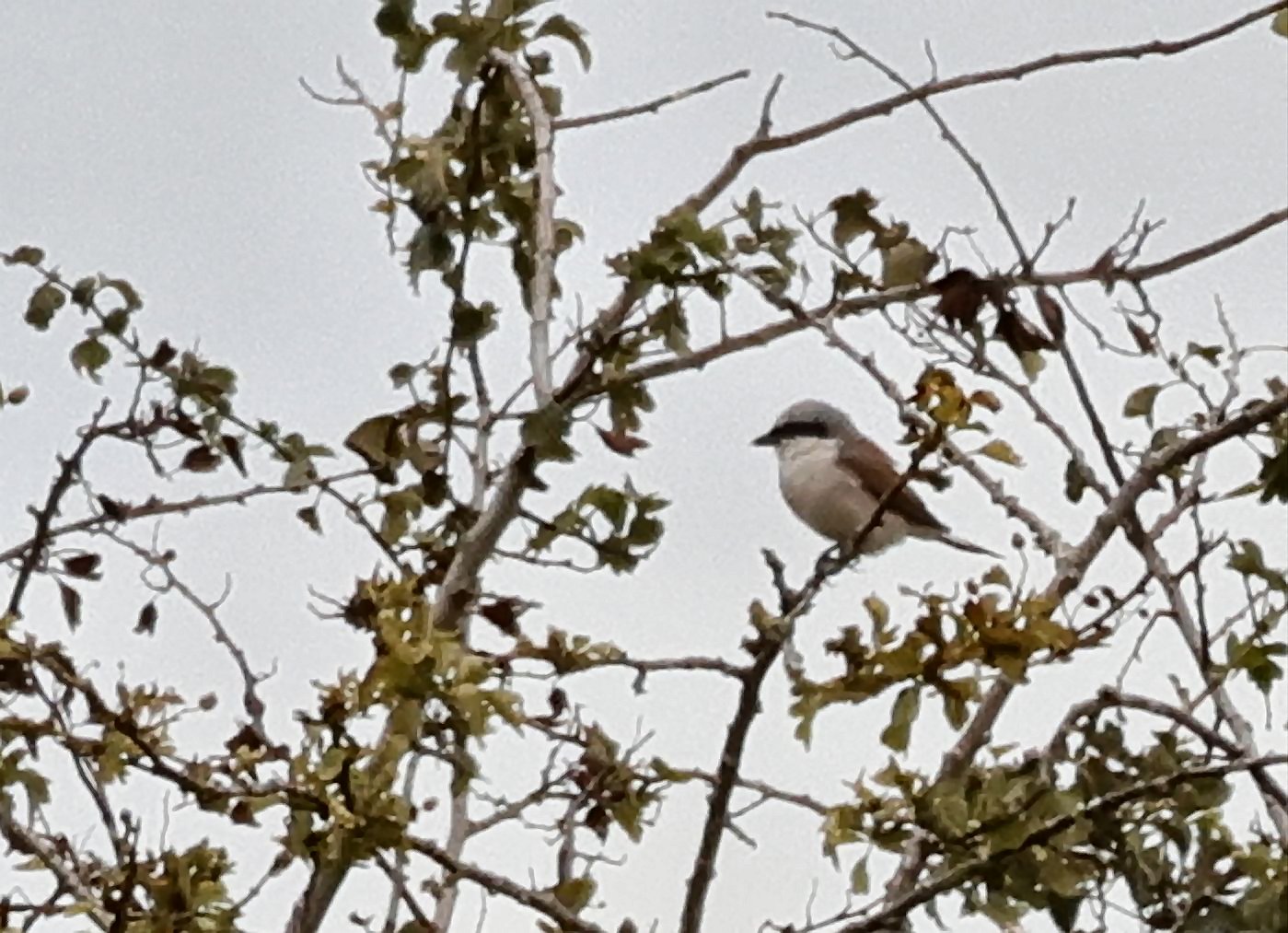
Away from Gloucestershire there weren’t a great deal of notable passerines hitting the dailies this week. We start with another shrike, a male Red-backed Shrike, present in Norfolk at Hickling Broad NWT on 20th-23rd; while another was seen on private land in Cornwall at St Buryan on 23rd.
The singing male Iberian Chiffchaff remained, albeit elusive, at Hardwick Hall CP (Co.Durham) on 22nd.
On Orkney the recent Rosy Starling remained on Mainland at Harray on 17th-22nd.
Orkney also boasted a Common Rosefinch on Papa Westray on 19th. A singing male was present in Northumberland on 22nd at Druridge Pools NR.
Lastly, a Serin was seen at West Wittering (West Sussex) on 19th.
The overseas news commences once more in Iceland, where the American Tree Sparrow remained at Kjos on 17th-22nd.
A Rock Thrush was seen in Sweden at Hoburgen on 17th.
In the Netherlands a White-tailed Lapwing was seen at Westplaat Buitengronden on 17th-19th.
Spain held onto its recent Western Reef Heron still present on Mallorca on 20th, while the White-backed Vulture was again seen on 20th at Campo do Oso, and the Elegant Tern again on 20th at Salinas de Pinet.
We move into the final week of July, the year having passed us by with alacrity, a seeming haste no doubt helped by the unremitting stream of weekly rarities we’ve enjoyed to date.
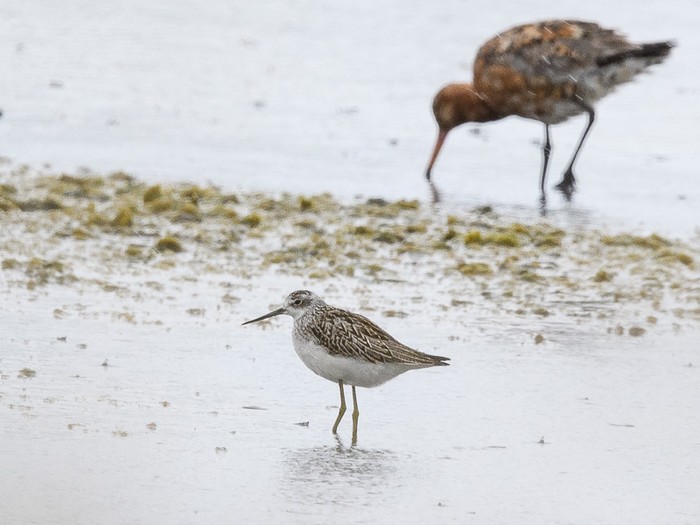
Surely, at some point, we’re going to have a week where there isn’t a startling mega to light up the headlines? The coming week, if we err on the cautious side, continues to be prime wader territory, still fine time to find a Pacific Golden Plover, and moving ever further into Peak White-rumped Sandpiper. However, with 16 accepted records to date, the last week of July has strong form for Marsh Sandpiper too, and this most elegant of waders may be a decent bet in coming days.
Jon Dunn
24 July 2026
Many thanks to all this week's contributors for your photos and videos and to everyone who contributed throughout the year.
Get Breaking Birdnews First
Get all the latest breaking bird news as it happens, download BirdAlertPRO for a 30-day free trial. No payment details required, and get exclusive first-time subscriber offers.
Share this round-up