Weekly birding round-up: 22 - 28 May
At this time of year the odd wayward Nearctic passerine may, with a fair following wind, be found in Britain, and just that happened this last week, albeit not the usual sparrow or junco fare. Meanwhile, with the mercury soaring to mark record temperatures for May, an influx of Bee-eater felt Mediterranean-appropriate. But they belong in the main body of the rarity round up – we’ve a red-hot vagrant to deal with first…
By any standards one cares to apply, Northern Parula can justly be considered to be a rarity of some heft in Britain, let alone Europe as a whole. We’ve a mere 16 accepted British records to date and, since the turn of the current century, just three birds on the books in the past 25 years, the most recent of which was that which spent four days on St Martin’s (Scilly) on 23rd-26th September 2023.
That was a classic record in several ways – between them, Scilly and Cornwall account for fully 11 of all British records of this most attractive of warblers, and all past British records have fallen during the autumn period. Their heyday was back in the 1980s, a time when a record approached an annual formality – 1985 boasted three birds in the English southwest.
But a spring bird? Nope, spring Nearctic vagrant passerines were almost wholly the preserve of the sparrows and juncos. Warblers were precious few and far between, and certainly haven’t included a Northern Parula. Until this week, that is.
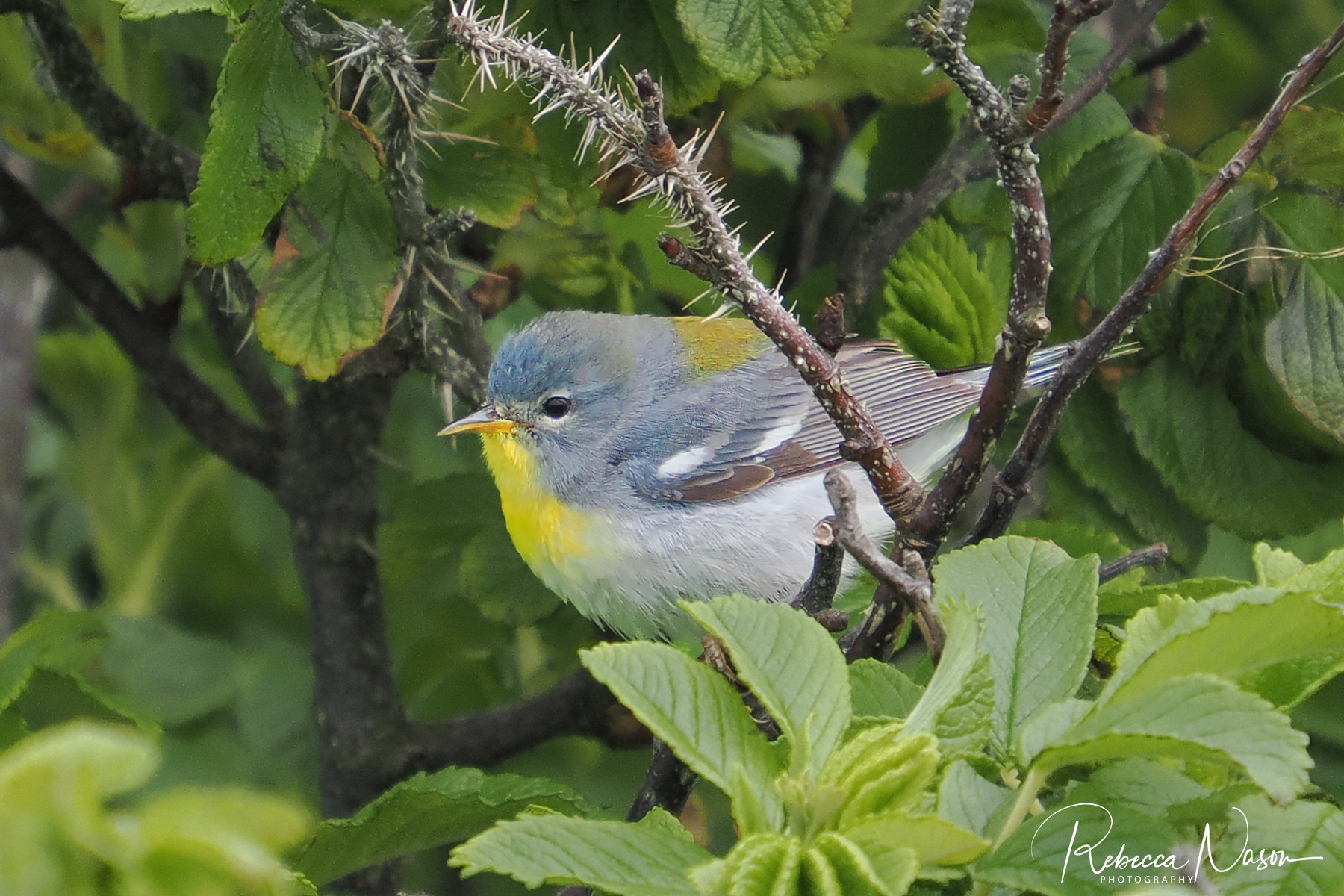
Shetland enjoyed something of a double whammy with the discovery of a first-summer bird on Fair Isle on 23rd. Britain’s first spring record of Northern Parula, yes, but also the first county record of the species as a whole. Which is, when one considers that Shetland’s enjoyed five of the statistically rarer Tennessee Warbler to date, quite something. The Shetland list continues to inexorably grow ever larger…
And for several of the archipelago’s keenest, this was a welcome opportunity to catch up with the species, for the bird stuck around on Fair Isle until 26th.
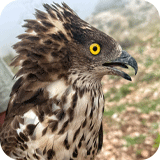
Having been a briefest, albeit most joyfully received, fly-by when it was last seen in Cornwall at Porthgwarra on 27th April, what was presumably one and the same dark morph Booted Eagle was seen again in the county this week on two occasions – on 24th east of Redruth at Bissoe, and then again on 26th drifting north over Land’s End. That’s a fair chunk of Cornwall it’s covered, unseen, in the meantime.
That said, given the corrugated topography of Cornwall, it’s perhaps no surprise whatsoever that the bird is able to lose itself for days or weeks at a time in the county. As we’ve seen, a Booted Eagle has plenty of pulling power for birders from further afield so, should it be pinned down anywhere anytime soon, we might expect some folk from up country to make the effort.
Speaking of rare raptors with enduring star quality, the Black-winged Kite remained this past week in the Hempstead Marshes area of Norfolk on 22nd-27th. Getting dug in for the summer? It’s starting to look very much that way.
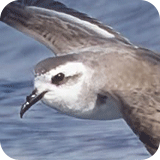
With a bird having been seen the previous week in Co.Cork, it wasn’t wholly surprising that a Scilly pelagic on 25th should score a couple of Wilson’s Petrel. A Leach’s Petrel was recorded from Rousay (Orkney) on 28th.
Considerably more notable in a local context was the adult Pacific Diver found off Unst (Shetland) on 26th-28th. The wintering adult remained present off Achill Island (Co.Mayo) on 25th.
Highland & Caithness continued to act like a lodestone for White-billed Diver this week, with sightings coming from Fort Augustus on 24th-25th, and John O’Groats on 26th-28th. Further Scottish sightings came from Orkney at Houton on 22nd, and passing Lewis (Western Isles) on 26th.

Passage skuas faded into the background, with barely any of either of the scarcer species seen. Pomarine Skua were noted from Evie (Orkney) on 24th, where three birds were seen; also on 24th off North Uist (Western Isles); one was reported from East Chevington NWT (Northumberland) on 25th; and another seen on 26th at Dunnet Head (Highland & Caithness). Just 11 Long-tailed Skua were seen during the week, all but one of which were noted from North Uist (Western Isles) during 24th-26th; the exception was a bird seen from the Scillonian on 23rd.
A Balearic Shearwater was again seen from Portland (Dorset) on 22nd and 27th, with two off there on 28th following one earlier seen from Wyke Regis; and another probable was seen at sea off Colonsay (Argyll & Bute) on 26th.
Finally, way out at sea some 200 miles off Co.Kerry on 28th, 70 Cory’s Shearwater were noted in the morning at Porcupine Seabight.
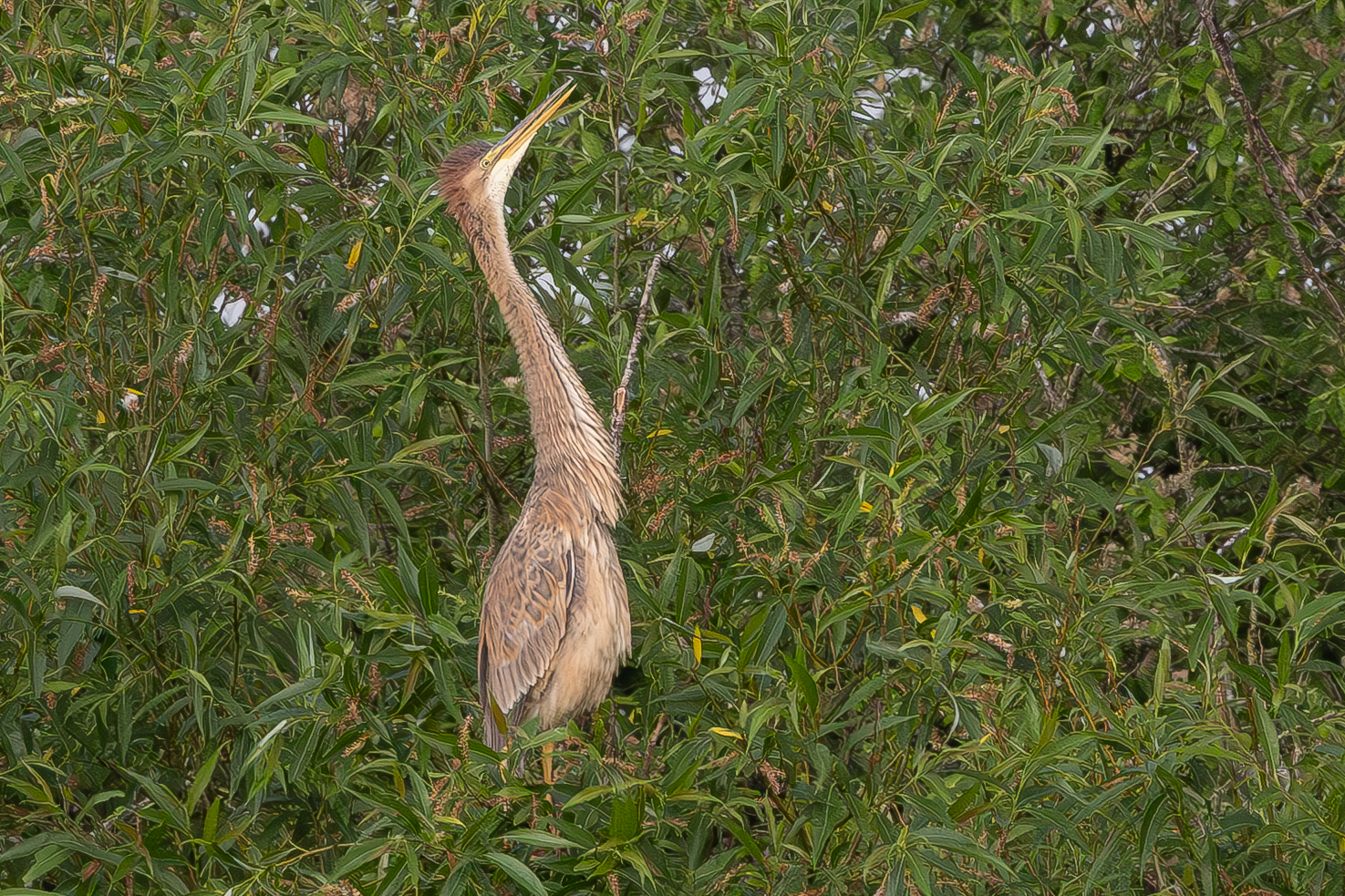
Purple Heron continued to keep the long-legged beasties interesting this past week, with a fair scatter of birds logged. On 22nd one was again seen at Etton-Maxey Pits (Cambridgeshire); on 23rd birds were seen at Stodmarsh NNR (Kent) again, at Ham Wall RSPB (Somerset) again, and at Hornsea Mere (East Yorkshire); Cambridgeshire came to the fore again on 24th, with a bird noted at Paxton Pits NR; one settled in to Holme Pierrepont (Nottinghamshire) on 25th-27th; and another was seen on 26th at Lakenheath Fen RSPB (Suffolk).
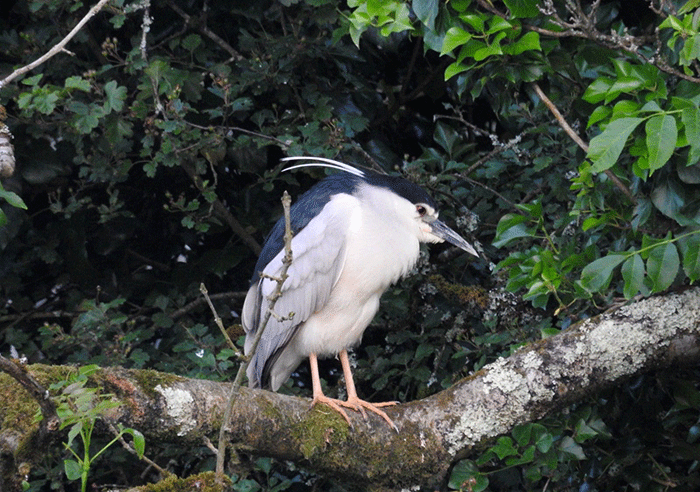
Cornwall landed a Night Heron at Padstow on 28th.
A male Little Bittern was seen on St Mary’s (Scilly) on 28th.
Rasping Corncrake were reported on 25th from Middleton-on-the-Wolds (East Yorkshire), and Gringley on the Hill (Nottinghamshire), the latter reported again there on 26th.
The weekly honkers and quackers, such as they currently are, begin with The Goose Formerly Known As Canada, and a Richardson’s Cackling Goose seen on Oronsay (Argyll & Bute) on 24th.
A Blue-winged Teal was reported from Ham Wall RSPB (Somerset) on 25th, seen there briefly in flight.
An American Wigeon was present on Helston Loe Pool (Cornwall) on 22nd; another on St John’s Loch (Highland & Caithness) on 23rd-24th; and a final bird on 27th at Musselburgh (Lothian).
Our sole Lesser Scaup remained the drake still present on College Lake NR (Buckinghamshire) on 22nd-24th.
A mere handful ofRing-necked Duck were seen this week, with the Scottish islands doing the heavy lifting. In Shetland a drake was seen on Loch of Asta on 22nd-26th, and Loch of Tingwall on 23rd again; the Orkney bird remained on Loch of Bosquoy on 24th-27th still; in Highland & Caithness one was still present at Loch Laide on 22nd-26th; and one remained in the Western Isles near Tarbert on 26th-28th.
Scotland also account for our notable seaduck during the week, starting with King Eider still in Highland & Caithness on Loch Fleet on 22nd-28th, and in Lerwick (Shetland) again on 22nd, the latter later relocating a little way down the coast to Gulberwick on 27th.
Two drake White-winged Scoter were present at Kirkcaldy (Fife) on 22nd, with one still present off there on 23rd-28th; while the drake Black Scoter was also present there on 22nd-26th.

Finally for the quackers, a probable Surf Scoter was seen from the ferry between Oban and Colonsay (Argyll & Bute) on 25th.
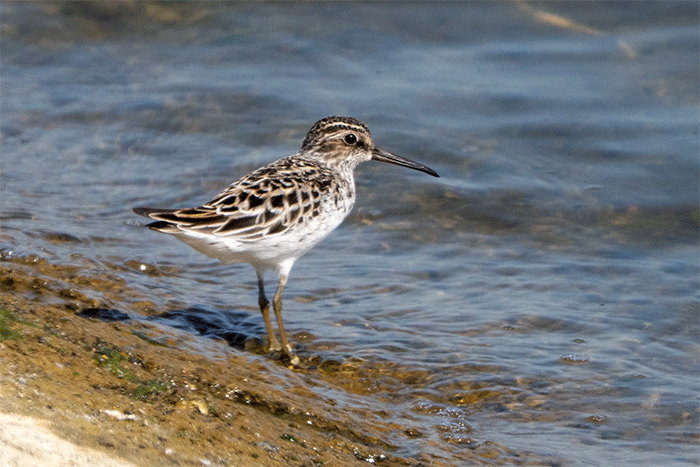
We’ve reached the point in the late spring where the calibre of rare waders may start to ramp up somewhat – last week it was a Great Snipe in Shetland, and this week a Broad-billed Sandpiper in Surrey briefly on 25th at Queen Elizabeth II reservoir. Hopefully we’re building towards something really good in the weeks to come.
Pectoral Sandpiper numbers were certainly building this past week, with several sites enjoying multiple birds – in Northumberland, two were seen at Budle Bay and Druridge Pools on 25th; while two at Loch of Strathbeg RSPB (Aberdeenshire) on 22nd rose to three present by 26th. Elsewhere, single birds were seen in Shetland at Leebitton still on 22nd-26th, and across the water on Mousa on 27th; on Orkney on Westray on 22nd-27th, and North Ronaldsay on 23rd; and at Alkborough Flats (Lincolnshire) on 24th.
The Spotted Sandpiper remained in Warwickshire at Earlswood Lakes on 22nd-23rd.
Spotted sandpiper at Earlswood Lakes Warwickshire a really nice looking bird getting flushed regularly but keeps returning back to the same areas pic.twitter.com/TxnouwjyHN
— Mike Scott (@MikeSco96453022) May 23, 2026
Temminck’s Stint continued to feature in recent days, with some 25 birds logged over the course of the week; our peak count this week was four birds at Goswick (Northumberland) on 23rd.
As the week unfolded Black-winged Stilt came back to the fore, with singletons noted at a variety of locations. In Lincolnshire, birds were seen at Frampton Marsh RSPB again on 23rd and 25th-26th (upgrading to two there on 27th-28th) and Bourne North Fen on 25th; a bird was seen in Cambridgeshire at Ouse Fen RSPB on 25th; Norfolk scored a bird at Welney WWT on 24th; one was seen in Warwickshire on 23rd at Brandon Marsh NR; and one in Staffordshire at Belvide reservoir on 23rd-24th.
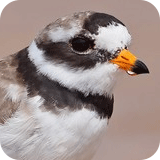
The male Kentish Plover remained at Egleton NR (Leicestershire) on 22nd-24th.
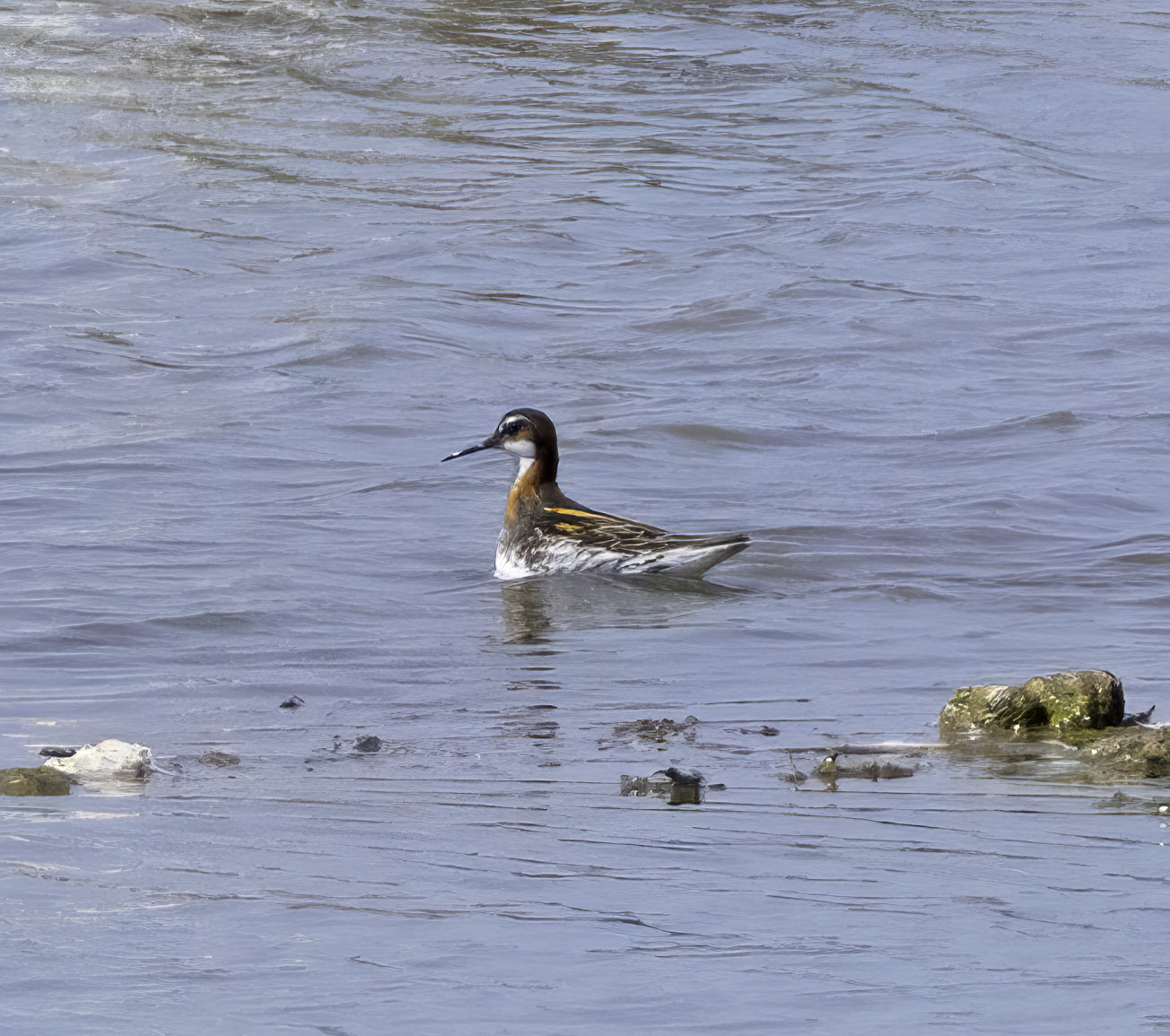
Finally, a female Red-necked Phalarope was seen at North Cave Wetlands YWT (East Yorkshire) on 25th.
After weeks of prominence in the news, just one Bonaparte’s Gull was seen this past week – a first-summer individual at Tongue End (Lincolnshire) on 26th.
A first-summer Ring-billed Gull was found on North Uist (Western Isles) on 26th; while in Shetland the recent bird was once more seen off Noss on 27th; and a second-summer was present at Doorly Park (Co.Sligo) on 28th.
White-wingers began to fade to almost nothing - Glaucous Gull were noted on Westray (Orkney) on 22nd-28th still; on South Uist (Western Isles) on 23rd-28th; on North Uist (Western Isles) on 27th-28th; on Tory Island (Co.Donegal) on 27th; and one was reported at Kenidjack (Cornwall) on 24th. Iceland Gull were seen solely in the Western Isles, on South Uist on 23rd, North Uist on 26th-27th, and St Kilda still on 28th.
In Northumberland the female surinamensis American Black Tern remained a fixture at Long Nanny on 22nd-28th.
The UK’s strangest avian couple at the Long Nanny, Northumberland this morning - the female American Black Tern with the same male Arctic Tern she bred (unsuccessfully) with in 2024. A small nest scrape but no eggs as yet. #NEbirding #rarebirdsUK
— Mark Eaton (@markaeaton.bsky.social) 28 May 2026 at 14:28
[image or embed]
White-winged Black Tern were seen in Devon at Exminster Marshes RSPB on 22nd; in Hampshire on 23rd at Hill Head and Titchfield Haven NNR; at Sands of Forvie NNR (Aberdeenshire) on 27th; on 28th at Misson (Nottinghamshire) and nearby Finningley GPs; and at Lady’s Island Lake (Co.Wexford) on 25th-26th.
Yesterday, I woke to a message from @MarkFra64259515 who had found this cracking adult White-winged Black Tern off Hill Head. It frequented the offshore feeding frenzy with a Black Tern for most of the morning at least.@HOSbirding pic.twitter.com/IrsTGuM3S4
— Ashley Howe (@Ashley_Howe1990) May 24, 2026
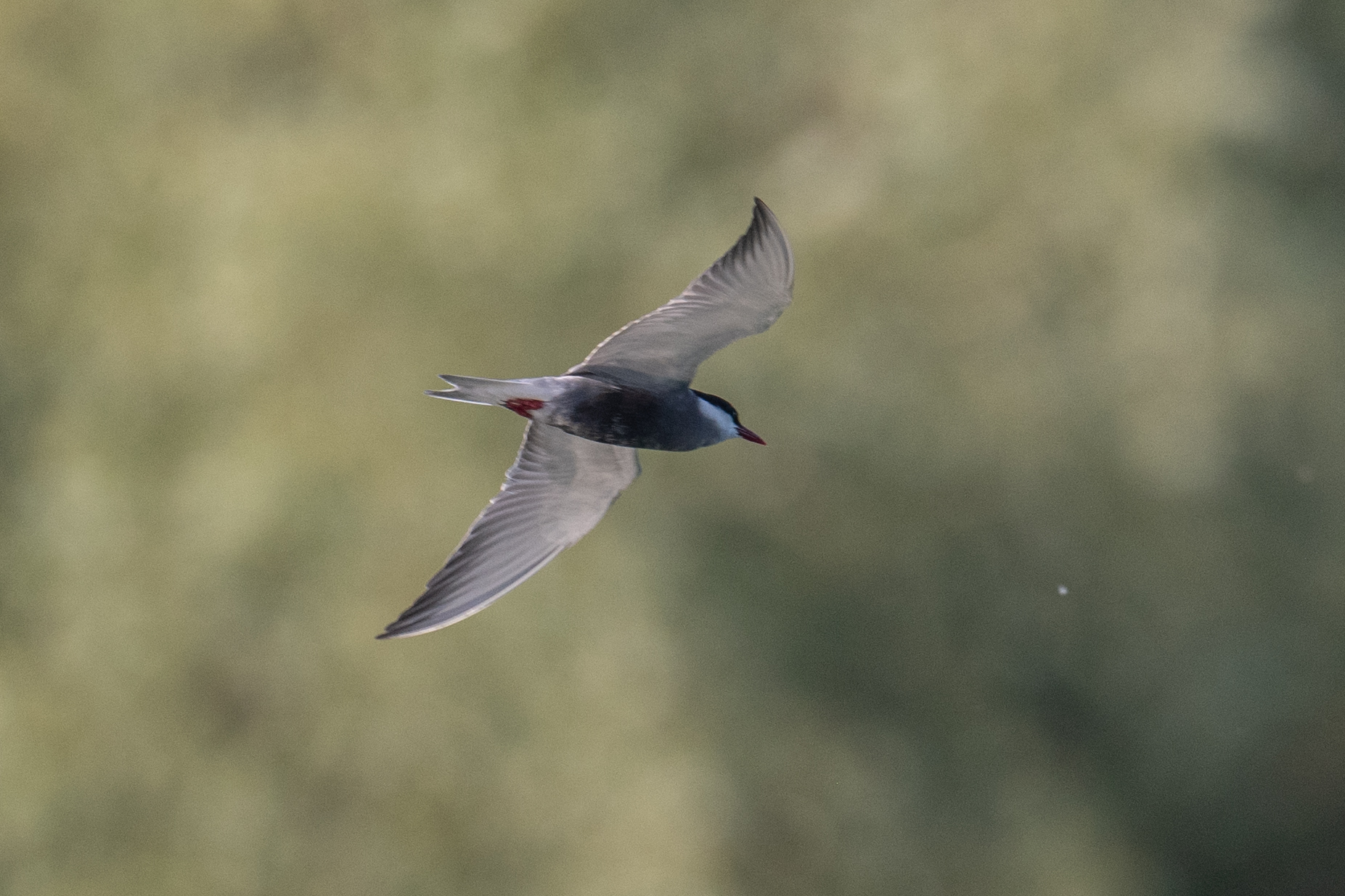
Finally, a Whiskered Tern put in an appearance at Woolhampton GPs (Berkshire) on 22nd.
Absent from the news for a while, a female Pallid Harrier was seen in Norfolk this week on 24th at Docking; while a probable was seen that day also at Freswick (Highland & Caithness).
Another scatter of transitory Montagu’s Harrier were noted in recent days – passing through Axe Edge (Derbyshire) on 23rd, Pendeen (Cornwall) on 24th, Blean Woods RSPB (Kent) on 25th, and Dungeness (Kent) on 27th.
In Dorset the recent Red-footed Falcon remained at Holt Heath on 22nd-24th. The week also delivered sightings elsewhere at The Naze (Essex) on 22nd, at Lakenheath Fen RSPB (Suffolk) on 23rd, near Kuggar (Cornwall) on 24th-25th, on 25th in Cornwall on The Lizard at Windmill Farm NR, on 26th also in Cornwall at Ladock Wood, on 26th back in Dorset at Stanpit Marsh, on 27th at North Foreland (Kent), and on 28th in the Thorpe Marshes area of Norfolk. An Irish bird was found on 28th near Dundalk (Co.Louth).
Black Kite began to feature anew once more, with birds logged lately at Amberley (West Sussex) on 25th, and at Leek (Staffordshire) on 25th; near Coverack (Cornwall) on 27th; one was also reported from West Sussex at Woods Mill SWT on 23rd; and another possible at Seaton Marshes (Devon) on 25th.
Once again we kick off the passerines with the eye-candy – Hoopoe were seen this week on 22nd at Ansley (Warwickshire) and Huggate (East Yorkshire); on 25th on Lundy (Devon); and on 26th at Tenterden (Kent).
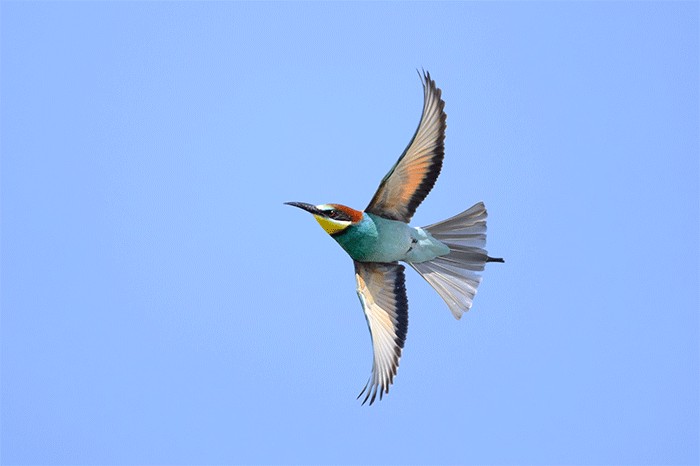
But never mind them. The real running was being made by Bee-eater, with an influx of some impetus under way – in the region of 95 birds were reported across the week, reaching at far north as Orkney where a single bird dropped in to Papa Westray on 23rd-24th. Many of the week’s records involved parties of birds, some breaching double figures – at least 20 were seen at Easington (East Yorkshire) on 24th; 10 birds at Longfleet (Dorset) on 25th; and on 26th 18 birds in Dorset at Lytchett Fields RSPB, and 12 at St Mary’s Bay (Kent).
A Roller was seen in Hampshire at Ipley Inclosure on 28th, but wasn’t seen again subsequently.
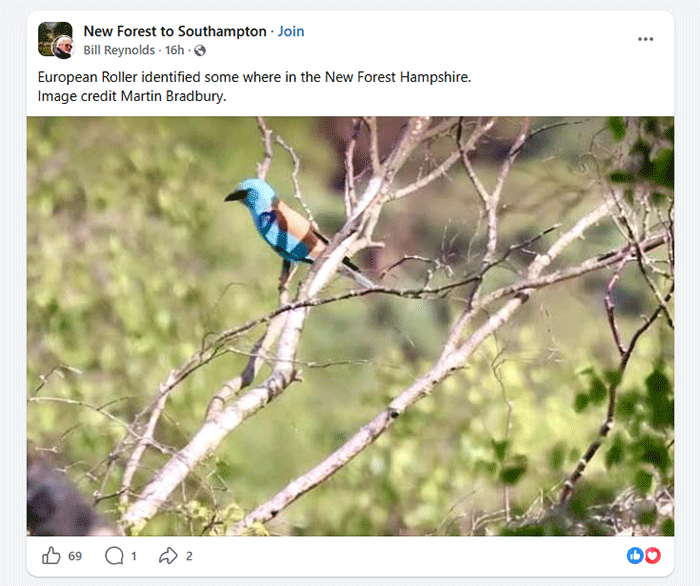
An Alpine Swift made it as far north as Foula (Shetland) on 25th.
Wryneck were seen on 22nd at Land’s End (Cornwall) and Labrador Bay (Devon).
The recent Woodchat Shrike remained on Skokholm (Pembrokeshire) 22nd-23rd, with a further sighting on Skomer on 25th; one was also seen at Flamborough (East Yorkshire) on 23rd; and a final bird on 28th at South Stack RSPB (Anglesey).

A possible Isabelline Shrike sp was seen briefly on St Mary’s (Scilly) on 25th.
Red-backed Shrike meanwhile continued to be found across Britain and Ireland. On 23rd one was present on Dursey Island (Co.Cork); on 24th birds were seen in Shetland on Mainland at Burastow, and in East Sussex at Beachy Head; on 25th, single birds were found on North Ronaldsay (Orkney) and at Zennor (Cornwall), while two were present at Kynance Cove (Cornwall); another was present in Cornwall at Polgigga on 25th-26th; one in Norfolk at Felbrigg Hall NT on 26th; another Cornish bird on 27th at Walmsley Sanctuary CBWPS; and one present at Cley NWT (Norfolk) on 28th.
Numbers of Golden Oriole picked up, with some 25 birds noted during the week. A couple of sites enjoyed multiple birds – three were seen at Gibraltar Point NNR (Lincolnshire) on 25th; and two on Lundy (Devon) on 22nd-23rd and on 26th.
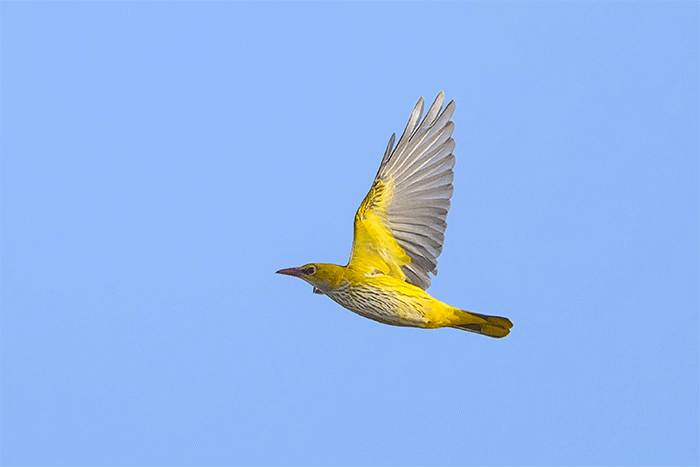
A handful of Red-rumped Swallow were found – at Langdon Cliffs (Kent) on 25th; on Bardsey (Gwynedd) on 25th-26th; on Barra (Western Isles) on 26th; and one on 28th on St Mary’s (Scilly).
A Short-toed Lark was on St Mary’s (Scilly) on 27th.
Warblers continued to provide much colour and variety this week. Starting once more with Iberian Chiffchaff, one remained at Hardwick Hall CP (Co.Durham) on 22nd-27th; another was in song in Suffolk at Assington on 26th; and a further bird near Broxa (North Yorkshire) on 26th-28th.
A singing Greenish Warbler was found at Dungeness (Kent) on 24th; and another on 28th at Spurn (East Yorkshire).
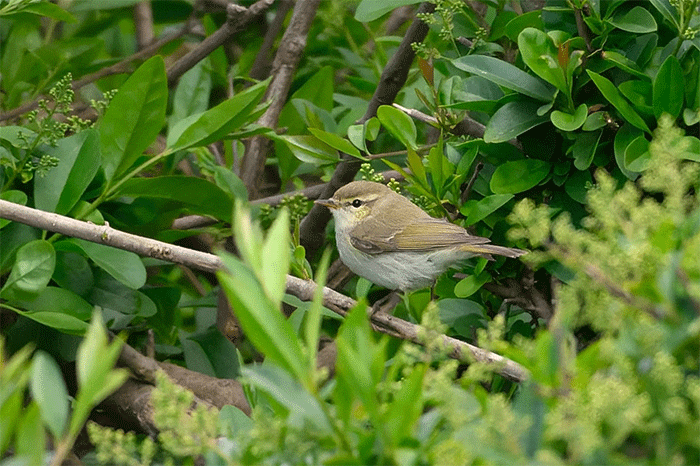
A Savi’s Warbler was singing at Storton’s GPs (Northamptonshire) on 26th-27th.
A Blyth’s Reed Warbler was trapped and ringed at Spurn (East Yorkshire) on 25th.
In Shetland Marsh Warbler were noted on 25th, 27th and 28th on Fair Isle, trapped and ringed on the latter date. Another was present on St Kilda (Western Isles) on 28th.
Somerset scored a singing Great Reed Warbler at Shapwick Heath NNR on 23rd-28th; another was reported at Catcott Lows NR on 25th; and away from Somerset, one was reported from Dunwich Heath (Suffolk) on 26th.
A male Western Subalpine Warbler was seen briefly in Suffolk at Landguard NR on 22nd, and one trapped and ringed on Isle of May (Fife) on 28th; and a Subalpine Warbler sp was seen on Skokholm (Pembrokeshire) on 26th.
A Melodious Warbler was trapped and ringed on Fair Isle (Shetland) on 25th, while a possible was in song in Dorset at Ferndown Common on 27th. Shetland, meanwhile, was enjoying still more Icterine Warbler - on Fair Isle on 22nd and 28th; on Mainland at Swinister Burn on 22nd, and in Lerwick on 24th; on Unst on 22nd, and on 24th when two were present; and on Bressay on 25th-26th. Away from there, one was seen at Easington (East Yorkshire) on 26th.
A handful of Bluethroat brightened the week – two present on Out Skerries (Shetland) on 22nd, with one across the water on near neighbour Whalsay on 22nd also; one on Foula (Shetland) on 24th; and one also on 22nd reported from Seaton Cliffs NR (Angus).
A Red-breasted Flycatcher was in song at Dungeness (Kent) on 28th.
A Tawny Pipit was seen on 23rd at Kelling Heath (Norfolk).
The week was notable for a small arrival of Common Rosefinch - birds being seen on 23rd at Martin Down NNR (Hampshire); on 24th at Cot Valley (Cornwall); on 26th on St Agnes (Scilly), at Easington (East Yorkshire), on Calf of Man (Isle of Man), and on St Kilda (Western Isles); on 27th-28th at Easington still and Kilnsea; and at Denver Sluice (Norfolk) and on Fetlar (Shetland) on 28th.
I made it to Martin Down with seconds to spare yesterday afternoon, allowing just about enough time for this Common Rosefinch to rise to the top of the bush, sing and then fly across the Down and disappear. It is the first gettable one in Hampshire and would have proved popular. pic.twitter.com/z4iJXIgZN6
— Ashley Howe (@Ashley_Howe1990) May 24, 2026
The recent Serin remained at North Foreland (Kent) on 23rd; further birds were found at Felpham (West Sussex) on 23rd, and on 24th at Seaton (Devon).
A male Black-headed Bunting was found as the week drew to a close on Orkney at Deerness on 28th.
Finally, in Lancashire & North Merseyside the male Great-tailed Grackle remained at Speke Hall on 24th.
Not a lot of news made it to our newsfeeds from overseas this week. Indeed, for a while it was almost wholly limited to a Pygmy Cormorant in the Netherlands at Beuven on 26th-28th, and a Bearded Vulture on 26th-27th at Ypenhof and on 28th over Texel.
However, Scandinavia came through too, with the Wilson’s Snipe in Sweden still displaying at Storsjo on 25th; Solitary Sandpiper on Faroe at Hoyvik on 27th; and, most curiously given the recent birds in Britain, a Great-tailed Grackle in Denmark at Blavands Huk on 28th.
It was all about the terns in France this past week, with Elegant Tern on 26th still at Polder de Sebastopol, and Bridled Tern still on 27th on Ile aux Moutons.
We seem set for fairly settled weather as May hands over to flaming June this coming week. The sort of weather that may either be a Sargasso Sea of calm and little of note, or the window of opportunity for something mega to pop out of the woodwork.
Picking a bird of a middling rarity calibre, neither mega nor merely scarce, the coming week has traditionally been a strong one for River Warbler. It’s that unusual rarity, the sort that can just as easily turn up at this time of year in a landlocked English reedbed as on a remote Scottish island. One for the blessed local patch-worker, this.
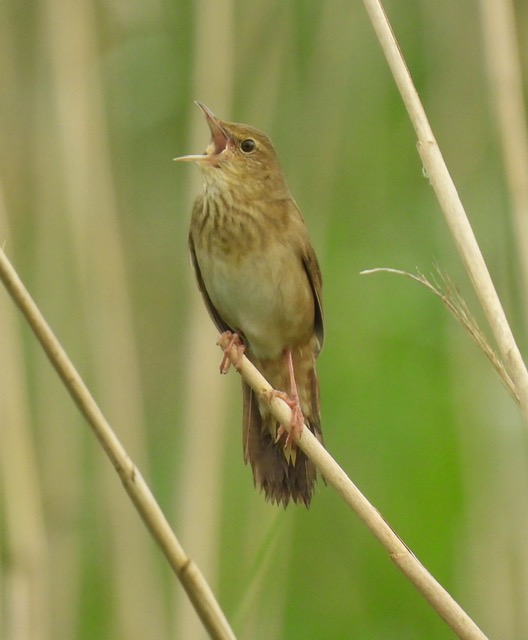
Jon Dunn
29 May 2026
Many thanks to all this week's contributors for your photos and videos and to everyone who contributed throughout the year.
Get Breaking Birdnews First
Get all the latest breaking bird news as it happens, download BirdAlertPRO for a 30-day free trial. No payment details required, and get exclusive first-time subscriber offers.
Share