


Dark Bordered Beauty rediscovered in Northumberland after 70 years
A population of one of England's rarest moths has been found at the National Trust's Wallington estate, where the species had not been recorded since 1952.
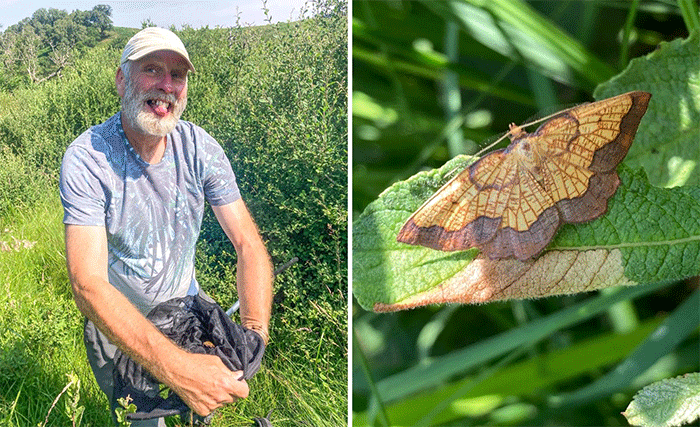
Butterfly Conservation has announced the rediscovery of a population of Dark Bordered Beauty at the National Trust's Wallington estate in Northumberland, more than 70 years after the rare moth was last recorded there.
The species was previously known from Wallington but had not been seen on the estate since 1952. For decades, Strensall Common in Yorkshire was the only known site for Dark Bordered Beauty in England.
Dr Dave Wainwright, Head of Conservation in England at Butterfly Conservation, found the first moth within minutes of arriving at Wallington on 16 July with project officer Charlotte Rankin and National Trust rangers.
We rocked up on site and within a few minutes we found one - it was one of the highlights of my career. Overwhelmingly it was just a feeling of relief that we weren't just fighting the fight at one site anymore.
Dr Dave Wainwright, Butterfly ConservationDark Bordered Beauty is a day-flying moth with lemon-yellow wings and a deep chestnut border. It was once more widespread across northern England and Scotland but has undergone a serious decline as suitable habitat has been lost.
Before the Wallington discovery, the species was known in Britain from two small areas on Deeside and Speyside in Scotland and from Strensall Common in Yorkshire. Its caterpillars depend on two food plants, Aspen and Creeping Willow.
Butterfly Conservation says hundreds of Dark Bordered Beauties were recorded at Strensall Common around 20 years ago, but the population has since fallen sharply. Last year numbers barely reached double figures, while a wildfire in May 2026 burned through a large part of the nature reserve.
Dr Wainwright has been searching for additional English populations since joining Butterfly Conservation in 2004. He visited Wallington that year but found no Dark Bordered Beauties and recalled that the site was then heavily grazed and did not appear suitable for the species.
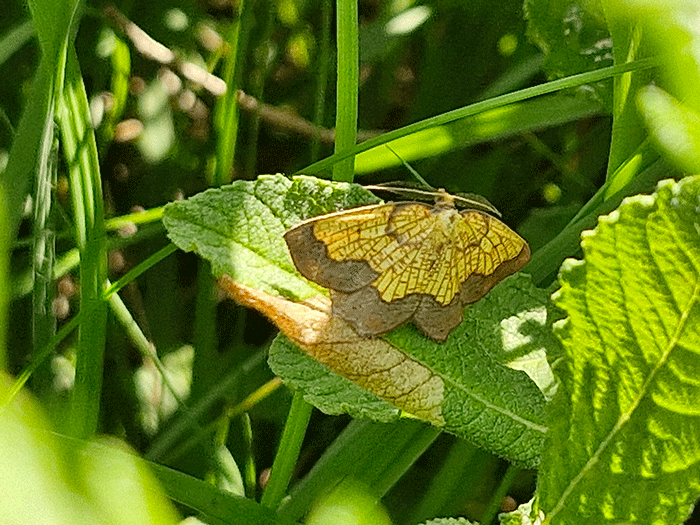
When he returned this summer, conditions had changed considerably, with lush vegetation and abundant wildflowers. The first moth was found within about 10 minutes and further individuals were then recorded regularly by the survey team.
For several years, the National Trust has worked with tenant farmer Fiona Goodfellow to improve habitat on the estate through nature-friendly farming. Measures have included reducing livestock grazing in key areas and restoring peatland, allowing the moth's food plants to thrive.
The work forms part of the wider Wilder Wallington project across the 20-square-mile estate, which aims to work with agricultural tenants to create woodland and hedgerows, restore wetlands and support nature-friendly farming.
Emily Johnson, Ranger at Wallington, said the estate had already recorded 130 moth species this year. The discovery follows the recent return of the endangered Large Heath butterfly to an area of bog on the same farm.
We couldn't be more excited to find that Wallington is a stronghold for such a rare species. We have been working hard to manage the land better for nature, and it seems to be paying off.
Emily Johnson, National Trust Ranger at WallingtonThe next phase of Wilder Wallington will improve habitats along the Fallowlees Burn, funded by the Garfield Weston Foundation and Northumbrian Water and carried out in partnership with Forestry England. Following the discovery, the team hopes to expand the amount of potential habitat for Dark Bordered Beauty with guidance from Butterfly Conservation.
Butterfly Conservation is also working with Yorkshire Wildlife Trust on habitat management at Strensall Common and is planning to trial a captive-breeding programme for the species.
The Wallington find has also shown that the moth can persist in habitat that differs from the conditions conservationists have become used to seeing at Strensall. Dr Wainwright said this could help identify other sites in northern England where undiscovered populations may remain.
This opens up a new front in our knowledge of the species in England: we have very fixed ideas of what good habitat looks like based on Strensall, but actually the habitat at this new site is different.
Dr Dave Wainwright, Butterfly ConservationHe added that the discovery had strengthened his belief that other colonies could still be found around the Northumberland and Cumbria border.
13 Aug 2026
Get Breaking Birdnews First
Get all the latest breaking bird news as it happens,
download BirdAlertPRO
for a 30-day free trial. No payment details required and get exclusive first-time subscriber offers.
Share this story




