Weekly birding round-up: 27 Mar - 2 Apr
Spring threw out a few more green shoots this past week, with a couple of pioneering scarcer warblers found in song in southern England. The headline birds, however, were all in Ireland. Any day now the dam will break and migration will start shifting through the gears, and we’ll start seeing some new stand-out birds coming our way.
Ireland’s first Oriental Turtle Dove made it into another week, remaining in the Harmony Hill area of Lisburn (Co.Antrim) on 27th.
Just over an hr. after I arrived into Dublin last Wednesday from Socotra,I was on the road to Lisburn, & amazingly struck lucky with the Oriental Turtle Dove with only 1.5hrs. of waiting needed. News of the bird had broken late on the evening b4 I departed for the Socotra trip. pic.twitter.com/XjqnaqIzxg
— Aidan G. Kelly (@agk10k) March 30, 2026
Seen back and forth throughout the week, the American Bittern remained in Co.Cork at Cuskinny NR until 2nd.
The very rare, very secretive and well camouflaged American Bittern at Cuskinny Marsh Nature Reserve, Cobh, at first light this morning. #Birds #Rare #IrishBirding #BirdsSeenIn2026 #phonescoped @BirdwatchCork pic.twitter.com/cKgjvJysoa
— Gemma (@BC_Gemma) April 2, 2026
Finally for the headline birds, still present at Lady’s Island Lake (Co.Wexford) throughout the week until 2nd, the American Coot continued to show well.
Over in Ireland this week, kicked things off with the American Coot at Lady's Island, Wexford this afternoon.
— Toby Carter (@_TCartz) March 31, 2026
Took some finding but glad to finally see it, also female Ring-necked Duck & 2 Glossy Ibis present. pic.twitter.com/8kuWUNJAiC
Starting the weekly seabirds in Ireland, the Pacific Diver remained off Coolsiva Quay (Co.Clare) on 28th.
The ongoing White-billed Diver show calmed down significantly, with just two birds still to be seen off Inverkeithing (Fife) on 28th-2nd, and one Loch Venachar (Forth) still on 28th-31st also. Additional sightings on 2nd came from Roseisle (Moray) and Portsoy (Aberdeenshire).
A Little Auk was seen from Dunure (Ayrshire) on 28th, and another passing Saltcoats (Ayrshire) on 1st.
A very wayward Leach’s Petrel made a pitstop inland at Misson (Nottinghamshire) on 29th.

Still present for another week, the Double-crested Cormorant was again seen at Lough Gill (Co.Sligo) on 27th.
A couple of Night Heron enlivened the long-legged beasties this week, albeit one was to meet a sorry end – a bird seen on the River Avon in Bath (Somerset) on 28th-29th was found dead on 30th. Another bird was seen at an undisclosed site in Devon on 31st.


Kicking off the honkers and quackers with The Goose Formerly Known As Canada, two interior Todd’s Canada Goose remained at Ballygilgan NR (Co.Sligo) on 28th, and one still on Tiree (Argyll & Bute) on 30th; while hutchinsii Richardson’s Cackling Goose were seen at Cross Lough (Co.Mayo) on 27th still, Ballygilgan NR (Co.Sligo) on 28th, and two at Dunfanaghy New Lake (Co.Donegal) on 31st-2nd again.
In Lancashire & North Merseyside a Snow Goose was once more to be seen at Marshside RSPB on 27th and 1st, and Southport Marine Lake again on 31st; another was seen on The Mullet (Co.Mayo) on 27th; and one in Dumfries & Galloway at Glenlochar on 1st.
The Ross’s Goose remained in Cumbria near Lessonhall on 27th-29th.
Two Black Brant were again seen in East Yorkshire at Kilnsea on 27th, with one still present there the following day; another was seen in Norfolk at Snettisham on 27th; and one was again seen at Webb’s Field (Co.Wicklow) on 31st.
The Red-breasted Goose remained on Islay (Argyll & Bute) on 30th.
Just two American Wigeon were logged during the week. One remained on Shetland at Loch of Spiggie on 28th; and another was lingering at Newshot Island (Clyde) on 28th-31st. Numbers of Green-winged Teal held up rather better, with 14 birds recorded in recent days across Britain and Ireland.

The Ferruginous Duck was still present at Ryton Pools CP (Warwickshire) on 29th.
Five sites boasted duos of Lesser Scaup this past week – at Abberton Reservoir (Essex) on 27th still; on Clifton Pits (Worcestershire) still on 27th-2nd; at Tacumshin (Co.Wexford) on 27th still; on Chew Valley Lake (Somerset) on 27th-30th still; and at Shelley (Suffolk) on 2nd. Further singletons were seen at Cheddar Reservoir (Somerset) on 1st-2nd, Marshside RSPB (Lancashire & North Merseyside) on 1st, and College Lake NR (Buckinghamshire) on 2nd.

A shade under 40 Ring-necked Duck in Britain and Ireland this week represented a reduction on recent weeks, with six present at Upper Lough Erne (Co.Fermanagh) on 2nd the best single site tally.

In Co.Donegal the first-winter drake Harlequin Duck remained off Curransport on 28th-2nd.
The first-winter drake King Eider remained at Loch Fleet (Highland & Caithness) on 27th-30th.
The second-winter drake White-winged Scoter was still present at Port Seton (Lothian) on 27th-28th, with a drake seen at Methil (Fife) on 27th and 31st. on 21st-22nd. The second-winter Stejneger’s Scoter was still present in Fife at East Wemyss on 27th-2nd.
Surf Scoter this week were seen again at Vatersay (Western Isles) on 27th-1st, and at Owenahincha (Co.Cork) on 30th.
Ever slimmer pickings for the weekly waders now…
Last week’s American Golden Plover remained at Tacumshin (Co.Wexford) on 27th, while a first-winter dropped into Hook-with-Warsash LNR (Hampshire) on 30th-2nd.
And all three wintering Lesser Yellowlegs remained anchored in place, one apiece in Cornwall at Truro on 28th-30th, in Denbighshire at Rhyl on 27th-2nd, and on Rathlin Island (Co.Antrim) still on 28th-31st.
Onto the gulls’n’terns , and Bonaparte’s Gull remained a strong fixture. In Shetland, the Unst bird was once more seen there on 31st, while another was present in Lerwick on 30th-1st. Cornwall gave us sightings once more at Hayle on 28th, where three birds were present during the day, two first-winters and an adult; and at Marazion again on 30th. One was again to be seen in Devon at Blaxton Meadow on the Plym Estuary on 30th, while another was found on 1st in Lancashire & North Merseyside at Myerscough Quarry. Finally, Co.Derry again mustered a bird at Lough Beg on 31st.
Hayle (Cornwall) once again enjoyed an adult Ring-billed Gull on 29th-30th; the remainder of the week’s birds were in Ireland, at Enniskillen (Co.Fermanagh) still on 28th-30th, at Tralee Bay Wetlands (Co.Kerry) still on 27th-28th, at Cork Lough (Co.Cork) still on 28th-29th, at Barnaderg Bay (Co.Galway) again on 31st, 23rd, and at Cross Lough (Co.Mayo) again on 27th.
An adult Kumlien’s Gull was seen in Cornwall near Sancreed Beacon on 29th; one was again seen in Shetland on Unst on 29th; and another in Northumberland on 1st at Shotton Pools. A probable Thayer’s Gull was seen on Unst on 1st. Numbers of further white-wingers were fairly subdued, with a dozen Glaucous Gull recorded, including two at Fraserburgh (Aberdeenshire) on 27th; and 10 Iceland Gull that included two on the Lossie Estuary (Moray) on 27th.
Finally, the adult Forster’s Tern was again seen at Holes Bay (Dorset) on 30th.
The juvenile Northern Harrier was once more seen at Cahore Marsh (Co.Wexford) on 27th and 30th.
In Wales, the second-winter female Pallid Harrier was again seen at National Wetlands Centre WWT (Carmarthenshire) on 31st; while a possible flew high north over Dungeness (Kent) on 27th.
Nothing says the advent of spring quite like a singing scarce or rare warbler or two, and this week brought a little flurry, if two birds can be described as such…
Erstwhile mega Iberian Chiffchaff was represented by a singing male at Nanquidno (Cornwall) on 28th, with a further probable reported in song that day at Minsmere RSPB (Suffolk) too.
Wiltshire meanwhile enjoyed a singing male Western Bonelli’s Warbler at Cotswold Water Park on 28th.
The Hume’s Warbler remained in Warwickshire near Lea Marston on 28th-1st.
In Cornwall the Dusky Warbler remained present at Boscathnoe Reservoir on 28th-2nd.
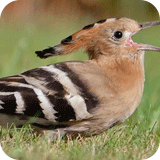
After a veritable feast of their kind during the preceeding week, a Hoopoe famine in recent days – one reported on St Mary’s (Scilly) on 29th, and another seen at Carnsore Point (Co.Wexford) on 31st.
Into the headlines like a shot had it only been confirmed, a possible Blue-cheeked Bee-eater was reported over Durlston CP (Dorset) on 31st.
Two Waxwing remained in East Yorkshire at Goole on 27th; the flock of 10 in (Durham) Co.Durham was again seen there on 29th, with a dozen present on 30th; two were seen at South Gyle (Lothian) on 1st; and singletons were seen at Wakefield (West Yorkshire) on 27th, and St Andrews (Fife) on 28th.
A Woodchat Shrike was present at a private site in Essex on 29th.
In Hampshire, Great Grey Shrike sightings came from Yew Tree Heath on 28th, and Stoney Cross Plain on 30th; the bird remained in Lincolnshire near Ingham on 27th-2nd; one was present at Old Hunstanton (Norfolk) on 2nd; and another was reported from Llanrug (Gwynedd) on 28th.
A Serin was found at Trevose Head (Cornwall) on 30th, and another on Portland (Dorset) briefly on 31st.
Finally, in Hampshire the Great-tailed Grackle was still in Holbury off and on until 2nd; and the probable remained in Lancashire & North Merseyside at Speke Hall on 27th-31st.
Quiet times for overseas news this past week. In the Netherlands the Black-faced Bunting remained on Texel on 27th-2nd still, while the drake Falcated Duck remained at Het Scheur on 2nd.
In Belgium, a Bonelli’s Eagle was logged at Burdinne on 28th.
Spain meanwhile enjoyed a Sociable Lapwing at Laguna de El Oso on 2nd.
Hello April, upon us all shiny and newly minted. What have you got in store for us this coming week?
Given half a chance, birds are on the move around about now. The coming week boasts a mouth-watering array of southern rarities to tempt us… Wallcreeper, Blue Rock Thrush, and two apiece of Crested Lark and Alpine Accentor. Any of them would be warmly received, none more so than Wallcreeper, but would we settle for another Crested Lark? Yes, I think we would…

Jon Dunn
3 Apr 2026
Many thanks to all this week's contributors for your photos and videos and to everyone who contributed throughout the year.
Get Breaking Birdnews First
Get all the latest breaking bird news as it happens, download BirdAlertPRO for a 30-day free trial. No payment details required, and get exclusive first-time subscriber offers.
Share