RBA Round-up: 9 - 15 Oct
Westerlies dominated the week just gone, with predictable consequences for the rarities that were found – there was a decidedly western flavour to the week’s main birds, with a little salty seabird action by way of seasoning.
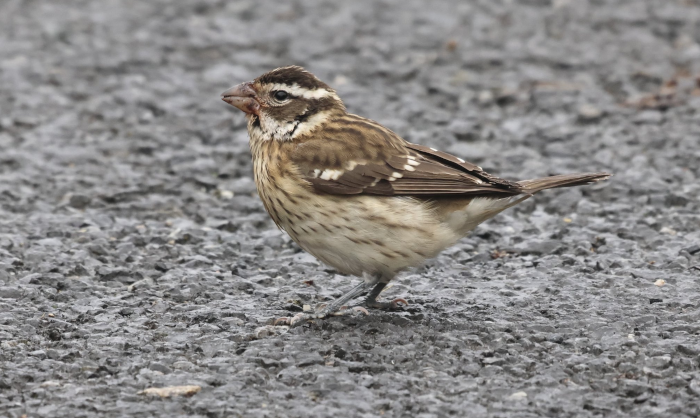
The week looked set fair for at least a decent chance of a half-mega Nearctic passerine somewhere in Britain or Ireland and so it shouldn’t come as too much of a surprise that something was found on the westerly seaboard of the latter this week – Inishbofin (Co.Galway) adding to its already burnished reputation this autumn with a first-winter female Rose-breasted Grosbeak on the isle on 10th-13th.
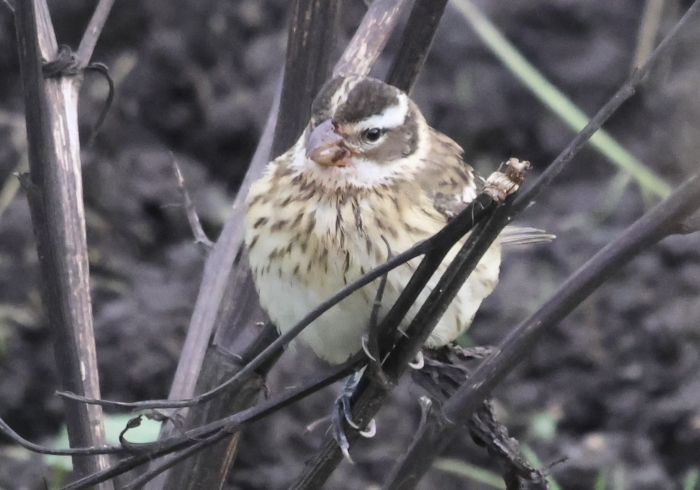
What was perhaps a surprise was that this was a first for Co.Galway. Now into double figures of past records of Rose-breasted Grosbeak Ireland’s no stranger to them as a whole, albeit Co.Cork strongly skews the record with – nine of Ireland’s eleven birds to date have been found there. Dry stats aside, this week’s bird was an absolute cracker, and a brilliant find.
Rose-breasted Grosbeak on Inishbofin, Co Galway this afternoon. Excellent find by Rachel Cronin ???? https://t.co/Vd4t6bae76
— Tom Shevlin (@tertials) October 10, 2026
Resident in Ireland and seen off and on for so long, the long-staying Double-crested Cormorant that’s been hanging around Doon Lough (Co.Leitrim) and Lough Gill (Co.Sligo) since 2022 has been in Ireland long enough to breed a little complacency – reports of it were initially regular features in these parts before, as time elapsed, becoming more sporadic.
None of which is to undermine the rarity of Double-crested Cormorant this side of the Atlantic – they remain decidedly rare beasts. All that said, when one is found, they do tend to stick around – as Co.Galway’s first record of the species did way back when the classic autumn for Nearctic vagrants of 1995 gave way to a new year, and a bird was found at Nimmo’s Pier on 18th November, and stuck around there until 6th January 1996.
However, since then, not a sniff of a Double-crested Cormorant has there been for this west-facing Irish county. It was surely just a matter of when rather than if another would be found in due course, and this past week duly delivered with a bird found on Omey Island’s Fahy Lough on 13th. The bird was seen again there on 15th before flying off west.
A good Atlantic blow this past week ushered a just rewards to the seawatching stalwart on the Cornish coast, with a South Polar Skua found off St Ives in the afternoon of 9th. Improvements in optics but, most crucially of all, the immense leaps and bounds of the abilities and general ubiquity of digital photography have transformed the landscape – or should that be seascape – of seawatching and, in particular, the recording of transitory rarities that are there and gone past a vantage point in a matter of minutes.
Where once a claim of a ‘Little Shearwater’ or a South Polar Skua might once have raised eyebrows, nowadays there’s a good chance images or footage will be recorded, and a record of the latter in particular now stands a fighting chance of not being dismissed as just ‘a funny bonxie’. Birds can at last stand on their own merits – which opens a whole other can of worms where the future lies in terms of appraisal for the official record of non-photographed birds, and we’re not just talking seabirds there…
But back to the here and now, and stepping away from potentially the not too distant future. Cornwall’s first accepted South Polar Skua was a bird seen (and photographed) from St Ives as recently as 13th October 2023. Was that really the very first of its kind in Cornish inshore waters? Surely not, but certainly the first to make the grade, and as subsequent events are proving, far from the last.
Events in Co.Galway and Cornwall notwithstanding, this was generally a typically quiet week at this juncture of the year seabird news. There was definitely a later autumn feel in the air, typified by the sighting of a few Little Auk on the move – around a dozen were seen during the week, mostly down the western side of Scotland and Ireland, the exception being a couple of Norfolk sightings on 10th at Bacton, and reported on 11th off Burnham Overy Dunes. A couple of sites enjoyed multiple birds – two were seen from Frenchman’s Rocks (Argyll & Bute) on 10th, and three the same day from Bloody Foreland (Co.Donegal); and three on 13th at Bridges of Ross (Co.Clare).
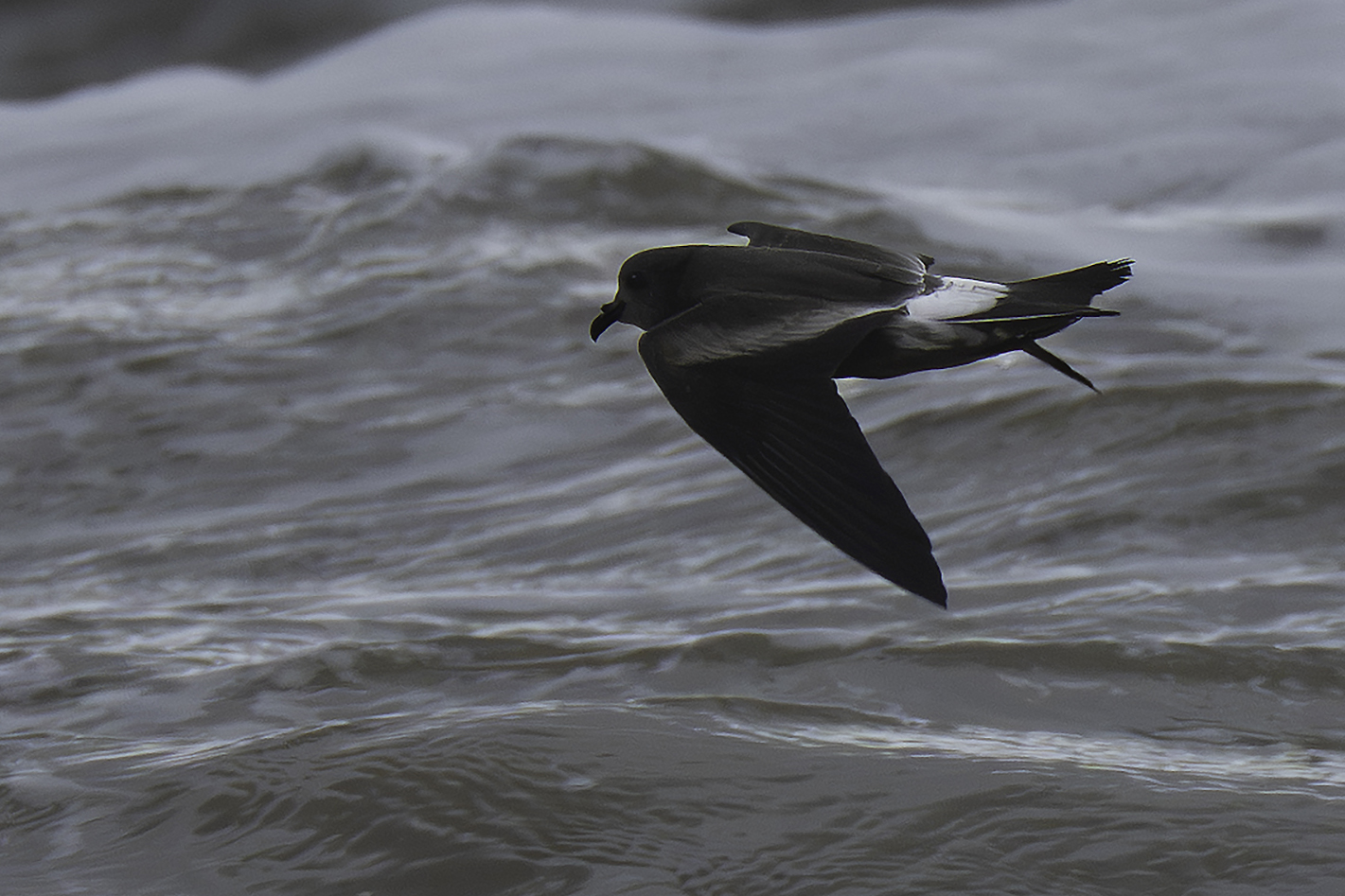
Around 180 Leach’s Petrel were logged nationwide during the week, with a peak count count of 60 seen from Bridges of Ross (Co.Clare) on 9th.
A mere dozen or so Cory’s Shearwater were seen in recent days, peak counts being trios seen from Porthgwarra (Cornwall) on 9th and Bridges of Ross (Co.Clare) on 13th. Great Shearwater did a little better, with around 120 birds logged across the course of the week, and a peak count of 86 birds on 13th from Brandon Point (Co.Kerry).
Numbers of Balearic Shearwater recorded stayed much the same as in the preceding week, with around two dozen birds noted, all of them ones or twos and failing to be seen in any volume anywhere.
A White-billed Diver paused in Bressay Sound (Shetland) between Lerwick and Bressay on 13th, seen off the Bressay ferry terminal for a while that afternoon.
And finally onto skuas, where both Pomarine Skua and Long-tailed Skua continued to be represented by fair numbers of their kind still on the move – respectively, around 65 individuals of each species being recorded in Britain and Ireland as a whole during the week.
There was a little variety on events of late in the long-legged beastie stakes, with a Night Heron seen in Monmouth at Monnow Bridge (Gwent) on 11th, and a Purple Heron reported flying over Heigham Holmes (Norfolk) on 12th.
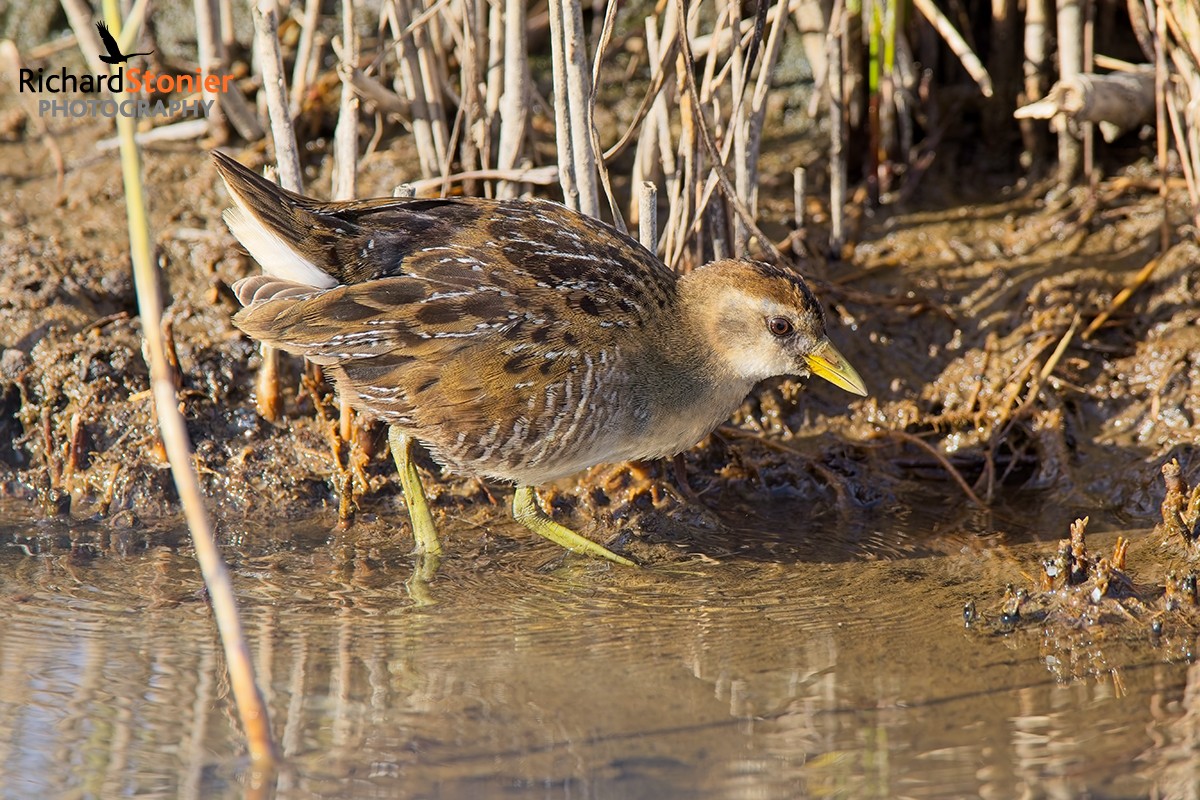
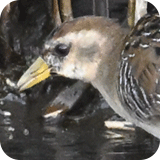
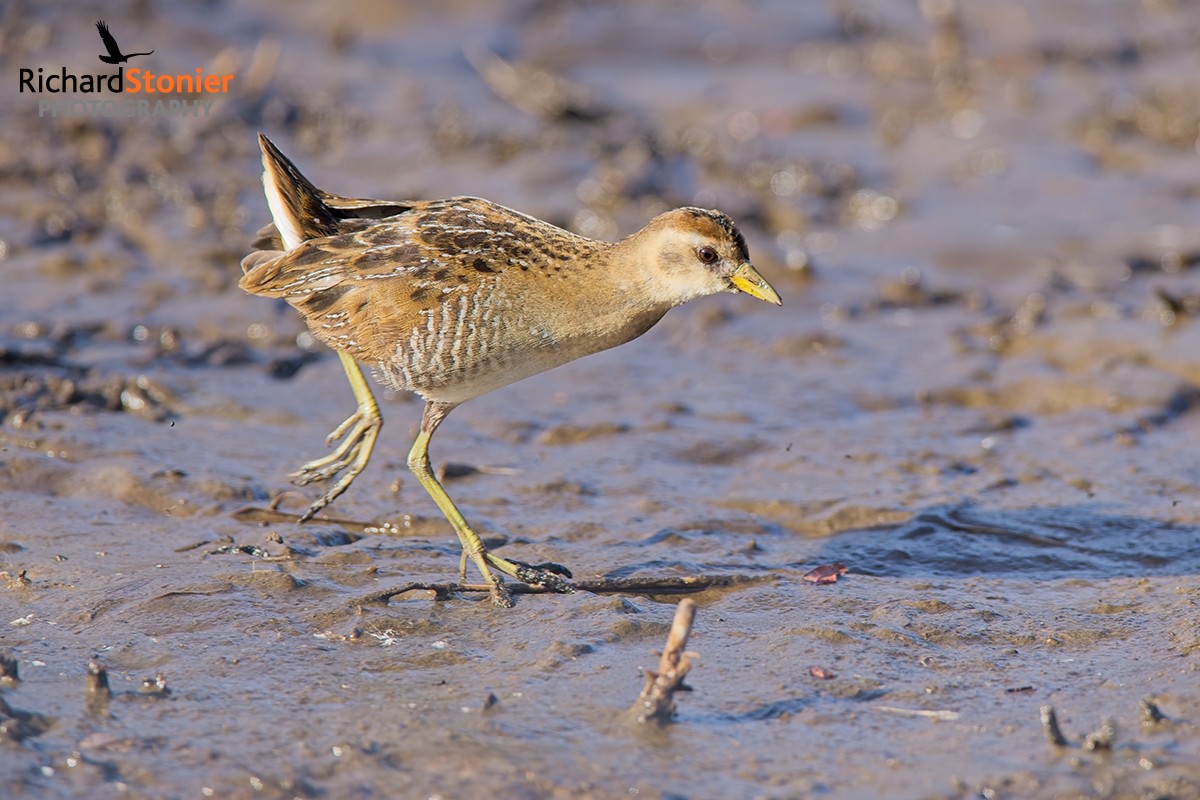
Down on Scilly, the juvenile Sora continued to prove steadfast to St Mary’s on 9th-15th, a deservedly very popular bird indeed, and sharing the site with a Spotted Crake on 10th.
A Corncrake was seen in Shetland at Levenwick on 9th.
The green shoots, if such a metaphor is right for the time of year, of coming winter wildfowl wonders were there to be seen this week, with a small but noticeable uptick in notable honkers and quackers alike.
Starting, as is our wont, with The Goose Formerly Known As Canada Northumberland’s Budle Bay was proving busy, with a probable interior Todd’s Canada Goose still present there on 9th-10th, and a hutchinsii Richardson’s Cackling Goose reported from there too on 9th; a probable interior bird was seen at Ross Back Sands on 11th. Elsewhere, interior birds were noted at Martin Mere WWT (Lancashire & North Merseyside) on 11th, and at Udale Bay (Highland & Caithness) on 12th.
Also present at Udale Bay, the recent Ross’s Goose remained to be seen there on 9th-12th. On 15th presumably the same bird was present in Dingwall Bay (Highland & Caithness). A Snow Goose was present on Barra (Western Isles) on 15th.
A Black Brant was seen in Kent at South Swale NR on 13th.
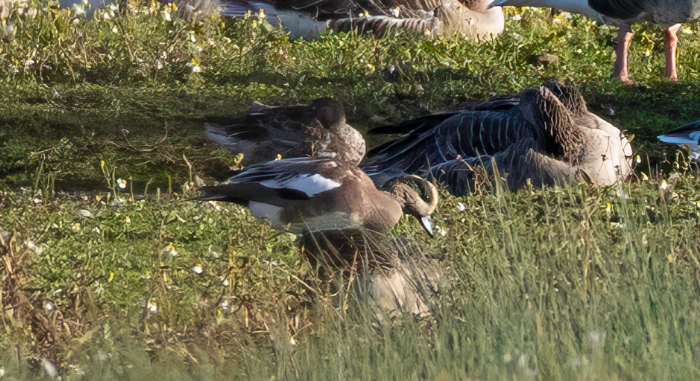
The week proved a busy one for American Wigeon, their cumulative numbers nudging double figures. In Scotland birds were present at Loch of Spiggie (Shetland) on 9th-15th; on Loch of Ayre (Orkney) on 9th-15th; at Loch Eye (Highland & Caithness) on 13th; and on South Uist (Western Isles) on 13th-14th still. English birds were seen at Old Moor RSPB (South Yorkshire) still on 9th-15th; East Chevington NWT (Northumberland) still on 9th-10th; at Staveley YWT (North Yorkshire) on 13th-15th; at Port Carlisle (Cumbria) on 11th; at Pitsford Reservoir (Northamptonshire) on 13th; and on 14th at Fenham-le-Moor (Northumberland).
A Green-winged Teal was found on 14th at Goldcliff Pools NR (Gwent).
Two Ferruginous Duck were seen again on regular Norfolk site Filby Broad on 9th.
Two English sites held two Ring-necked Duck apiece this week – two birds seen at East Chevington NWT (Northumberland) on 9th-10th, and two in Cornwall at Boscathnoe Reservoir on 11th-15th. Five birds coalesced at Cadover Bridge (Devon) on Big Pond on 14th. Single birds were seen in recent days at Martin Mere WWT (Lancashire & North Merseyside) still on 9th-15th; at Titchmarsh LNR (Northamptonshire) on 12th; on Tiree (Argyll & Bute) still on 13th-15th; and on Lough Natawny (Co.Galway) on 10th.
A drake White-winged Scoter remained in Lunan Bay (Angus) on 9th-12th.
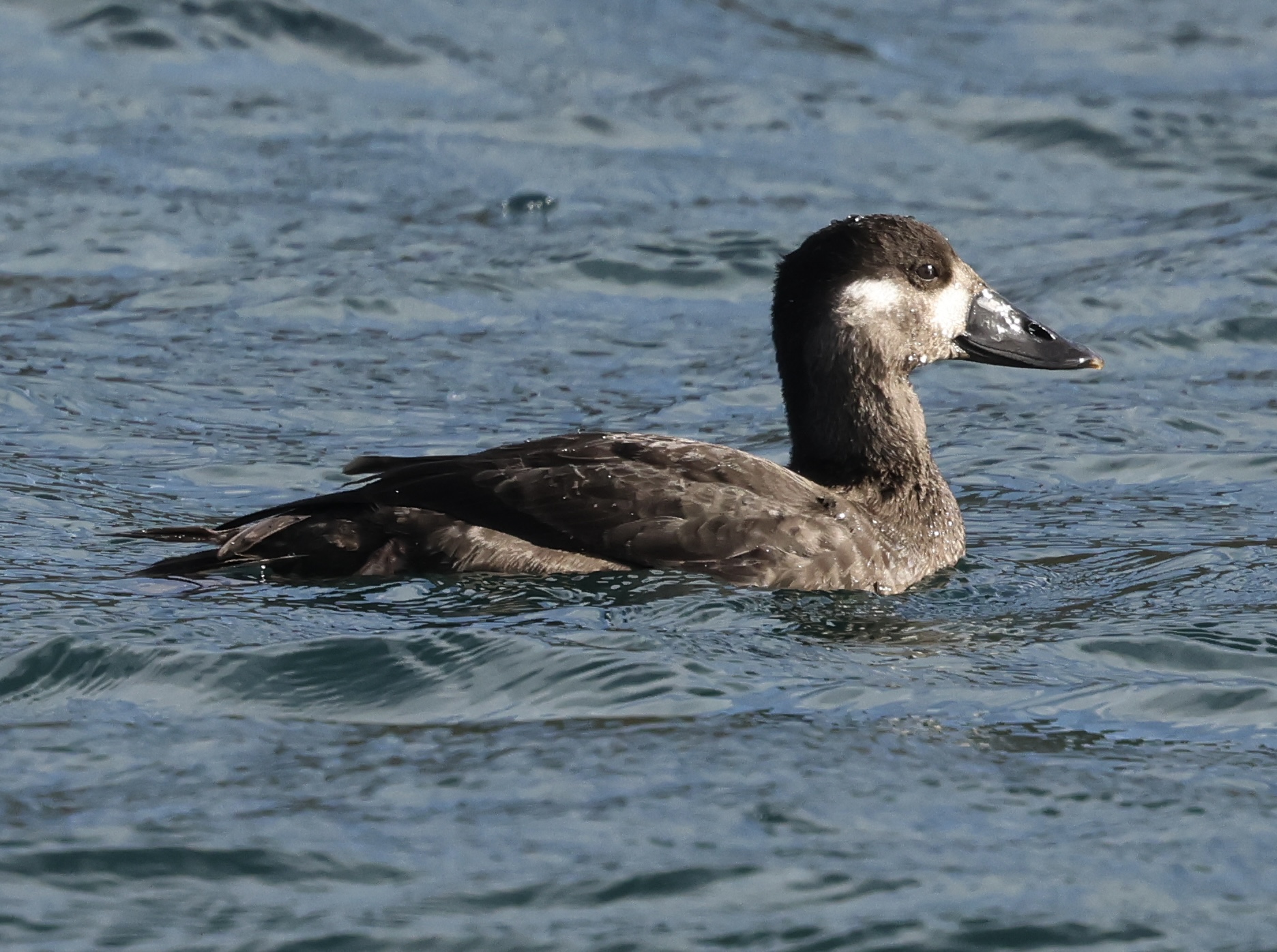
Surf Scoter were on the move this week, with new birds popping up here and there – one seen heading south past Gibraltar Point NNR (Lincolnshire) on 9th; one found in the Tresco channel between Bryher and Tresco on 13th-15th; now two drakes off Ballinesker (Co.Wexford) on 13th-15th; and further lingering birds still off Inishbofin (Co.Galway) on 9th-10th, and Old Colwyn (Conwy) on 11th-14th.
We wrap up again in Shetland where the lingering female King Eider remained present off Lerwick on 10th-15th.
Our weekly waders start again with Wilson’s Snipe, the recent individual on St Mary’s proving more or less reliable throughout the week on 9th-15th, with a second individual on there by week’s end. Another probable Great Snipe was reported this week, this time on Shetland at Quendale on 13th.
After such a flurry of records in the preceding week, sightings of Lesser Yellowlegs dried up somewhat in the week just gone. Lingering birds remained at Beacon Ponds NR (East Yorkshire) on 9th-14th; on the Eden Estuary (Fife) on 9th-14th; and at Inch Island Lake (Co.Donegal) on 9th-10th and again on 15th. Co.Cork gave us one more bird, seen at Kilbrittain Creek on 9th. On 15th a bird was found in Lincolnshire at Woodhall Spa Airfield LWT.
In Cornwall the juvenile Spotted Sandpiper remained at Drift Reservoir on 9th.
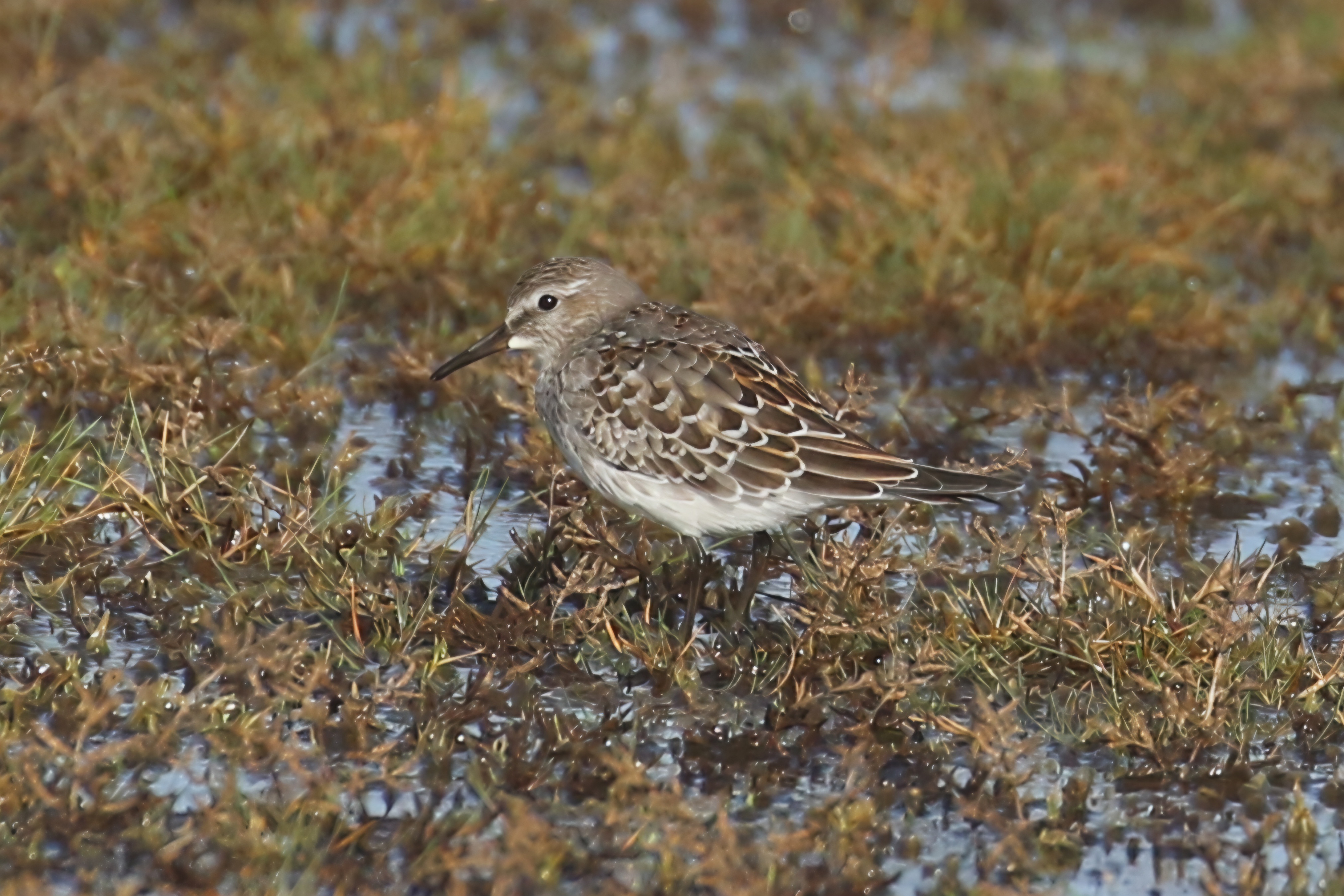
Numbers of White-rumped Sandpiper climbed, with 15 birds in total recorded over the course of the week. In Ireland, birds were seen at The Gearagh (Co.Cork) on 9th-15th; on 10th at Rough Point (Co.Kerry), Myroe Levels (Co.Derry), and Lough Beg (Co.Derry) where two birds were seen; on 11th at Kilkee (Co.Clare); on 12th at Tacumshin (Co.Wexford, followed by two present there on 15th; on 14th-15th at Seafield (Co.Clare); on 14th at Lissagriffin (Co.Cork); and on 15th at Ring Strand (Co.Cork). British birds meanwhile were to be seen on 9th in Scotland on the Ythan Estuary (Aberdeenshire) and South Uist (Western Isles); on 10th on North Uist (Western Isles); and on 14th on Scilly on Bryher and St Mary’s.
A handful of Baird’s Sandpiper were seen during the week, with one at Rainham Marshes RSPB on 11th and reported there again on 13th an exceptional London record – one needs to go back almost half a century to the 1970s for the last London bird, seen at Rainham on 3rd September 1977. Additional birds this week were seen elsewhere at Toft Newton Reservoir (Lincolnshire) on 9th, Drift Reservoir (Cornwall) on 10th-14th, and at Rough Point (Co.Kerry) on 10th.
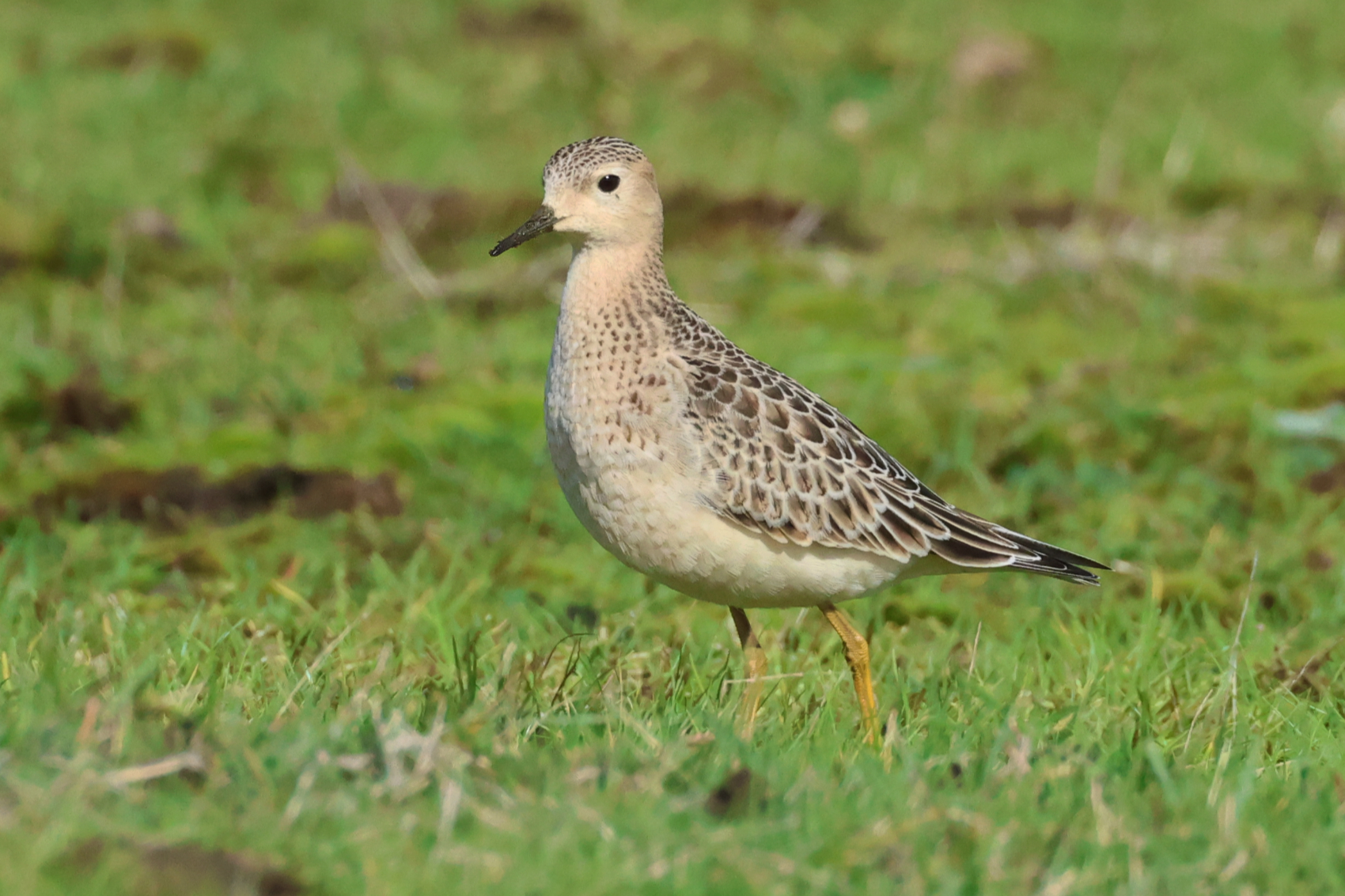
Numbers of Buff-breasted Sandpiper seen in Britain and Ireland collapsed this week, with just five confirmed birds and another possible, the latter on St Mary’s (Scilly) on 9th. Just one remained in Cornwall at Davidstow Airfield on 9th-10th; one was seen at Myroe Levels (Co.Derry) on 10th and 15th; a bird on 11th near Kearney (Co.Down); one settled in Northumberland at Longhoughton Steel on 11th-15th; and a final bird was found on 15th on Dursey Island (Co.Cork).
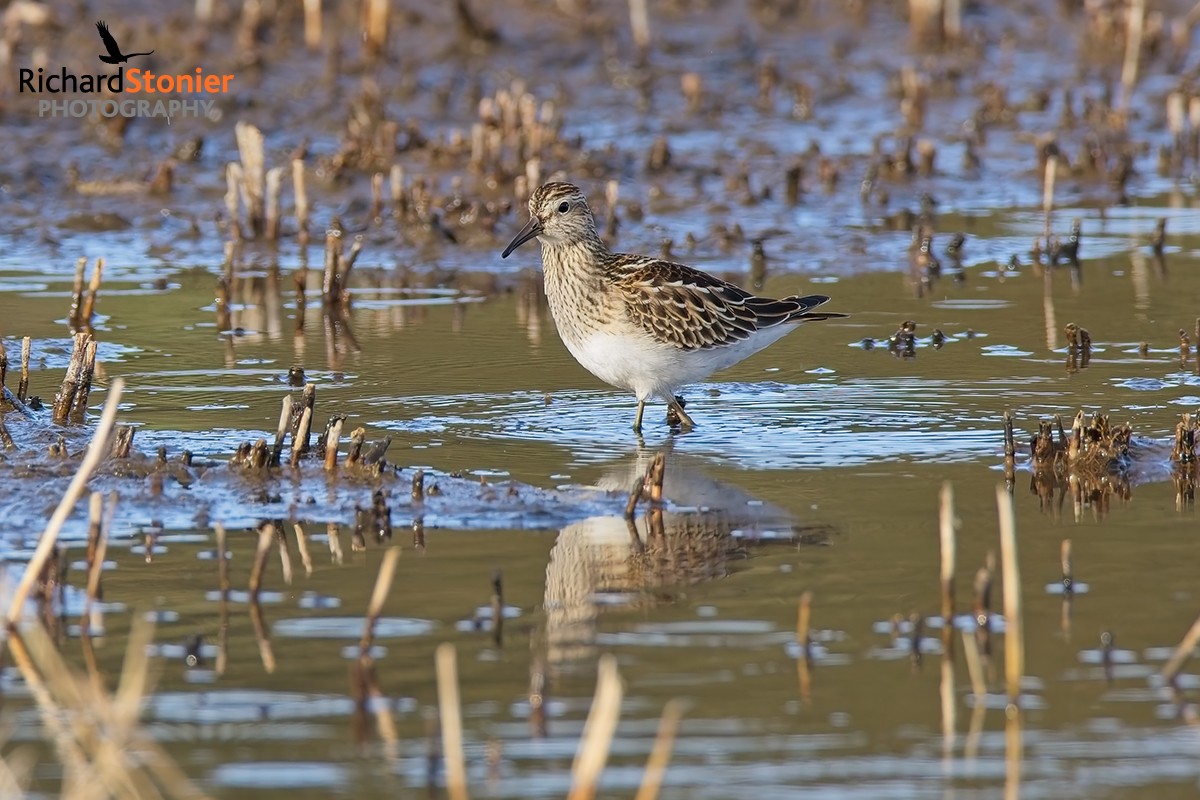
Pectoral Sandpiper were also a shadow of their former selves, not least the bird on St Mary’s (Scilly) on 9th-10th that transformed into a literal shade courtesy of a Sparrowhawk on the latter date. Birds that remained extant were seen on 9th-10th still at Rutland Water (Leicestershire); on 9th-15th at North Cave Wetlands YWT (East Yorkshire); on South Uist (Western Isles) on 9th-12th; at Tacumshin (Co.Wexford) on 10th; on Holy Island (Northumberland) on 12th; and at Rainham Marshes RSPB (London) on 12th-15th.
A probable adult Semipalmated Sandpiper was seen in Co.Wexford at Bannow Bay on 12th.
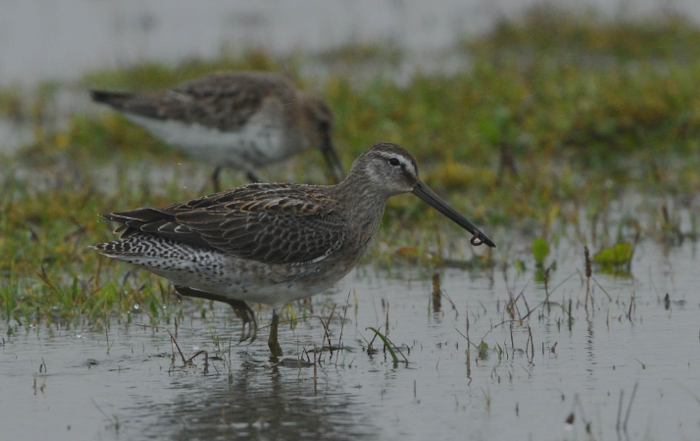
On Orkney the Long-billed Dowitcher remained on North Ronaldsay on 9th-11th, while the recent bird was also still settled on South Uist (Western Isles) on 9th-15th.
While numbers were down, there were still American Golden Plover out there to be found this past week – on Shetland at Fleck on 9th; on Tiree (Argyll & Bute) still on 9th and 13th; over St Mary’s (Scilly) on 9th; on South Uist (Western Isles) still on 10th; also still on 10th at Jury’s Gap (East Sussex); at Bloodt Foreland (Co.Donegal) on 10th; on 13th-15th at Cemlyn Bay NWWT (Anglesey); and on 15th over Hayle Estuary (Cornwall), and in Co.Cork at Clonakilty and Ring Strand.
More surprising was the adult Pacific Golden Plover present on Western Yar Estuary (Isle of Wight) on 13th-15th – a county first.
A possible Semipalmated Plover was noted briefly in flight at Cemlyn Bay NWWT (Anglesey) on 14th.
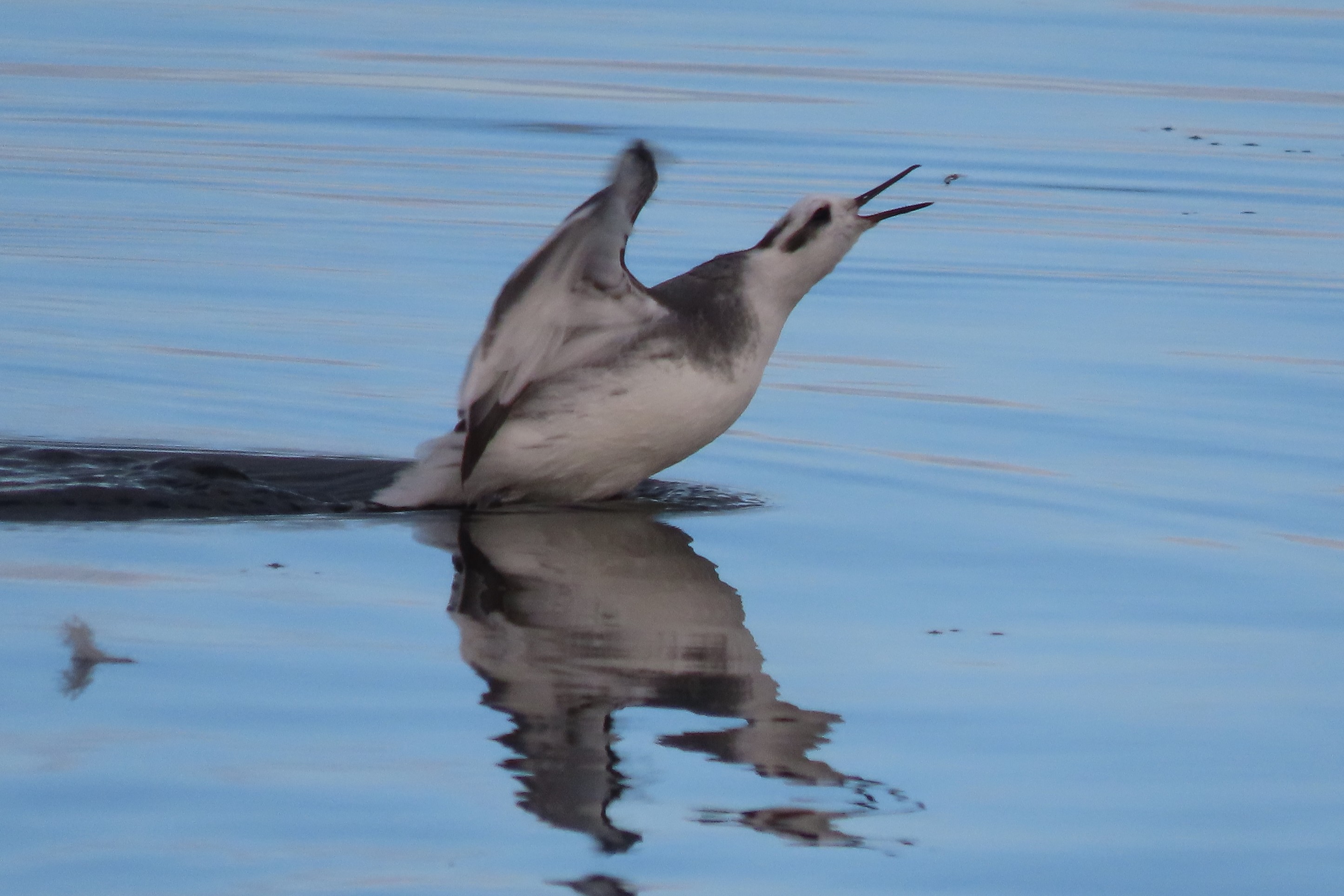
Last but far from least, courtesy of some chunky numbers in Ireland, some 950 Grey Phalarope were seen over the course of the week. A count of 165 off Bridges of Ross (Co.Clare) on 9th seemed impressive… right up until 415 were logged off Brandon Point (Co.Kerry) on 13th.
A handful of Bonaparte’s Gull were about the best of the weekly gulls in the absence of anything rarer. One remained at Ballyconneely (Co.Galway) on 11th, while another was seen in Co.Down at Groomsport on 13th-14th; and British sightings came from Mull (Argyll & Bute) on 11th, Hayle Estuary (Cornwall) on 11th also, on 14th at Stag Rocks (Northumberland) and Fishguard (Pembrokeshire), and on 15th at Goodwick in Pembrokeshire.
Ireland gave us a trio of Ring-billed Gull in recent days – the Doorly Park (Co.Sligo) bird still present there on 9th; one again in Co.Galway at Barnaderg Bay on 10th; and one again at Blackrock (Co.Louth) on 10th also.
In Orkney the regular Glaucous Gull was still to be seen on Mainland at Stenness on 9th and 15th. Cornwall again proved to be busy for Iceland Gull, with the second-winter still at Drift Reservoir on 9th-10th, an adult at Cape Cornwall on 10th, a bird seen at Marazion Marsh RSPB on 13th, and a probable at Portmellon on 11th. Scotland meanwhile gave us birds on Fair Isle (Shetland) on 11th-12th, and at Scrabster (Highland & Caithness) on 12th still. The immature Kumlien’s Gull was again seen at Drift Reservoir on 10th.
The week proved solid for Sabine’s Gull with around 60 birds in all logged around Britain and Ireland as a whole.
(Juv) SABINE'S GULL this morning at Wall Common, Stuart, Somerset. ?? photo by Andy Stockhausen. https://t.co/S5Jg4WtPEs
— MarcM381 (@aquilabirding) October 15, 2026
Finally, in Co.Dublin the adult White-winged Black Tern was again seen on 12th-15th at Dun Laoghaire, joined there on 14th-15th by a juvenile surinamensis American Black Tern.
With Pallid Harrier having more or less melted away as suddenly as they came – the exception being the juvenile male again on 14th in Greater Manchester / Lancashire & North Merseyside over Horwich Moors – the week’s principal raptor news was once again the enduring Black-winged Kite still to be seen in the Sea Palling area of Norfolk on 9th-14th.
On Orkney, the Scops Owl remained on Mainland as the week began, seen at Deerness on 9th-10th.
Given how well Scilly was doing for Nearctic arrivals in the form of a succession of waders and not one but two Sora lately, giving off some strong 1991 vibes overall, a Catharus thrush and, specifically, a Grey-cheeked Thrush felt very much on the cards.
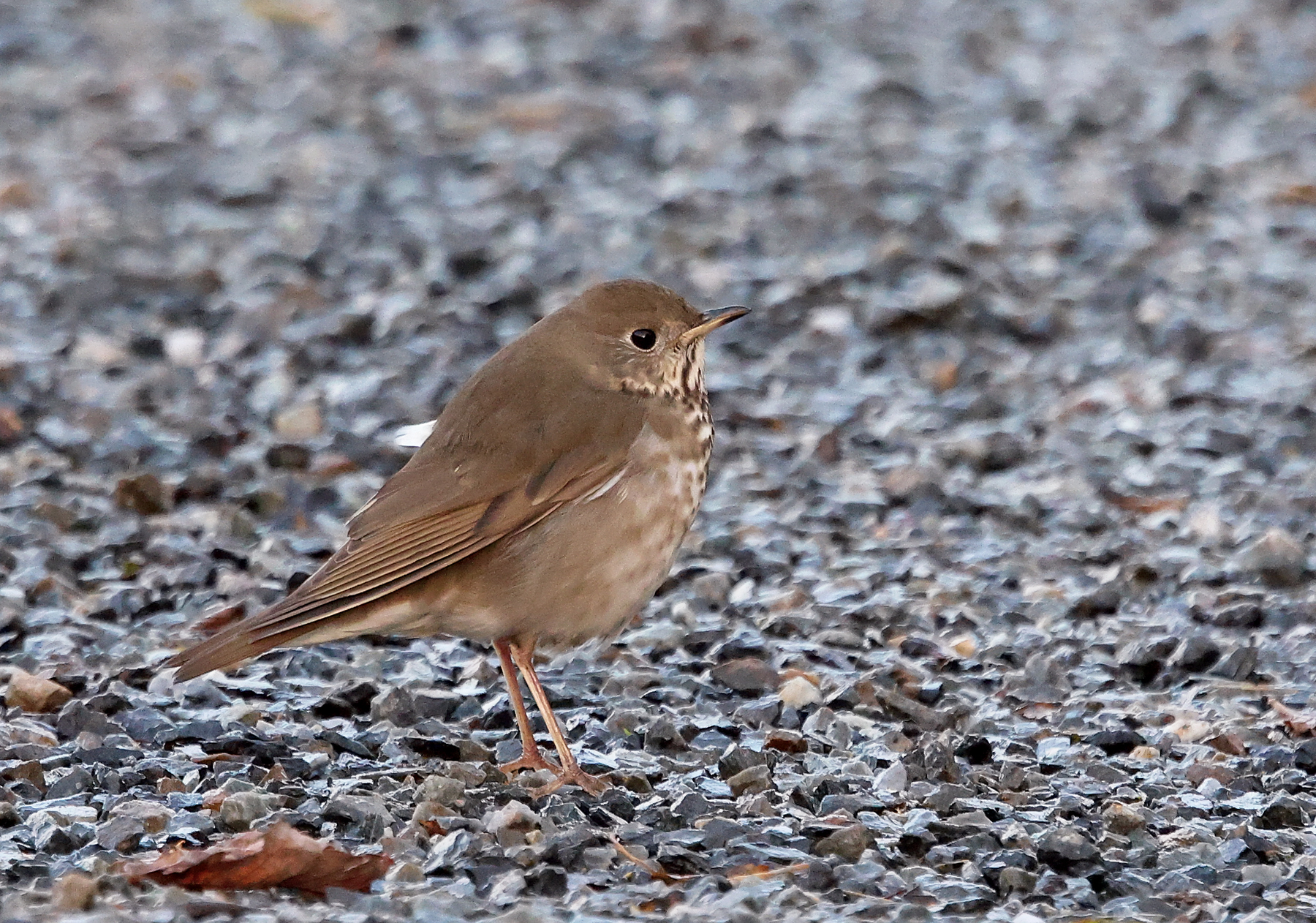
Sure enough, we got one this past week, but not on Scilly – those frisky westerlies delivered up at the opposite end of the country, with Shetland Mainland landing the prize at Easter Quarff on 10th-14th. Shetland’s far from a stranger to the species – it’s enjoyed 11 past records of this delicately smudged thrush and, for a time after the turn of the century, it felt like it was becoming an autumn staple, with eight birds seen up to and including 2015. But since then… nothing. For a new generation of Shetland visiting or resident birders, this week’s bird was a welcome one indeed.
A Black-throated Thrush was a more fleeting bird on Shetland at Sumburgh on 9th.
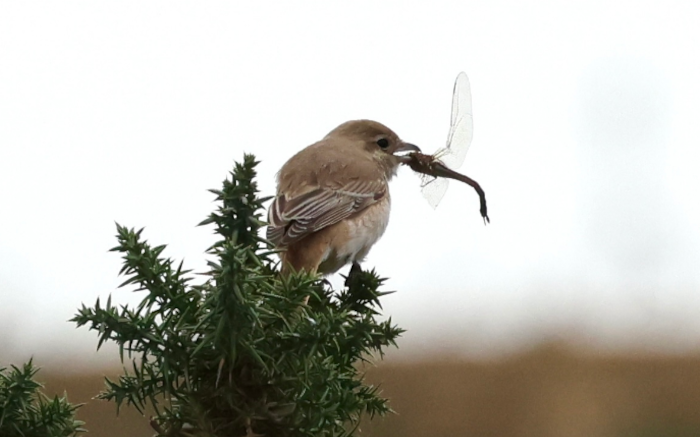
None of which is to say Scilly was without its passerine attractions this week. Sure, no Catharus, but a cracking Isabelline Shrike sp found on St Mary’s on 14th was ample compensation, and also evoked the spirit of 1991, for one was seen on the island that autumn too. This week’s bird remained present on 15th, by which time opinion was swinging towards probable Daurian Shrike.
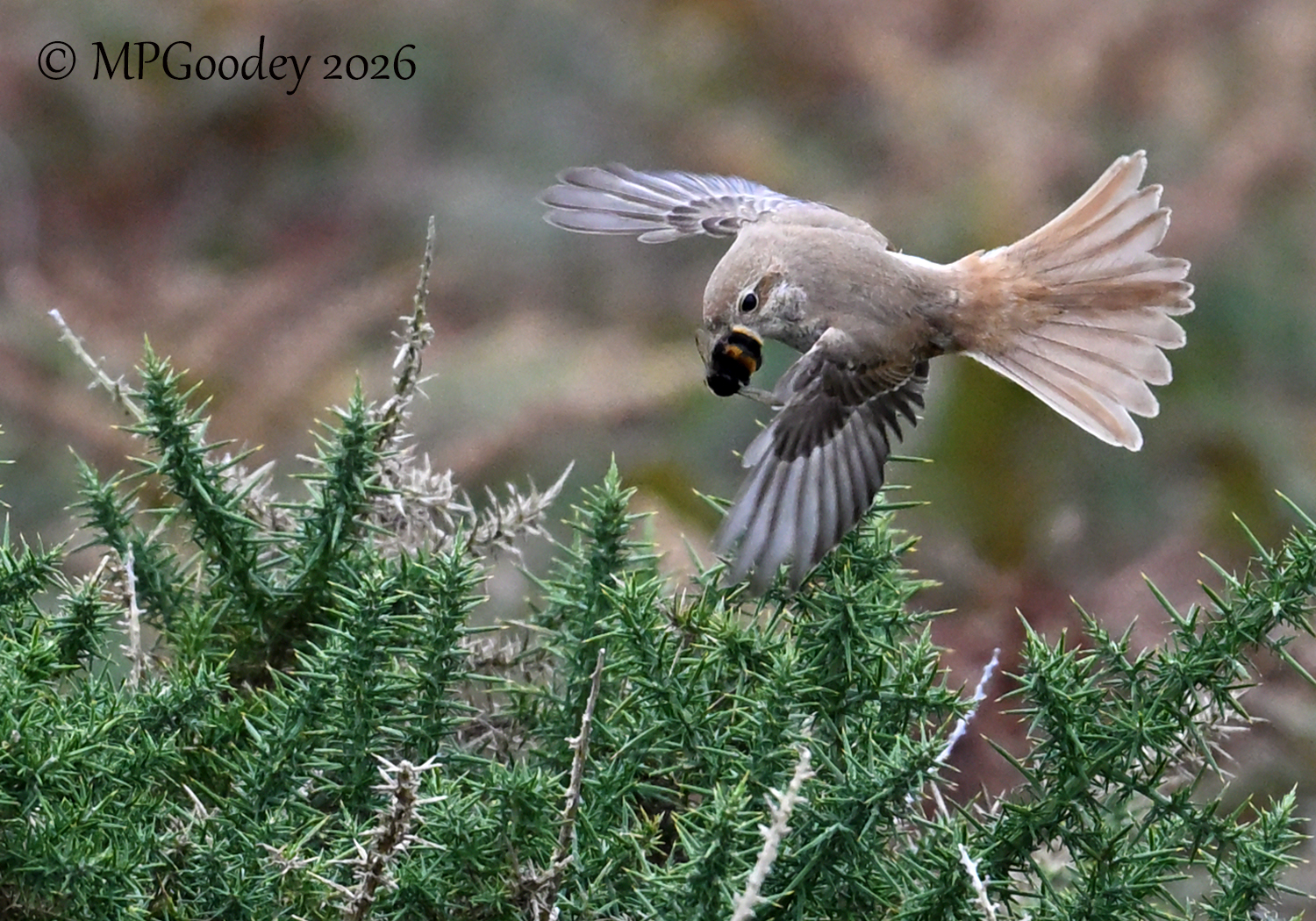
Scilly also boasted Red-backed Shrike this week on St Agnes still on 9th-10th, and on St Mary’s on 12th-13th. One remained on Portland (Dorset) on 9th-15th; while in Shetland a bird was lingering at Scousburgh on 9th-13th also.
Shetland landed a Great Grey Shrike just down the road in South Mainland at Quendale on 12th-13th; another was present up on Unst on 11th; while an elusive bird was in the classic wintering surrounds of Pig Bush (Hampshire) on 10th-11th; and another southern English bird was found on 15th in West Sussex at Arundel WWT.
Onto the warblers and, also on Unst (Shetland) still as the week began, the recent Pallas’s Grasshopper Warbler extended its stay on 9th-10th.
Shetland also scored a couple of Western Bonelli’s Warbler, on Mainland at Skelberry still on 9th-13th, and Frakkafield on 11th-15th. A Bonelli’s Warbler sp was also present at Flamborough (East Yorkshire) on 11th.
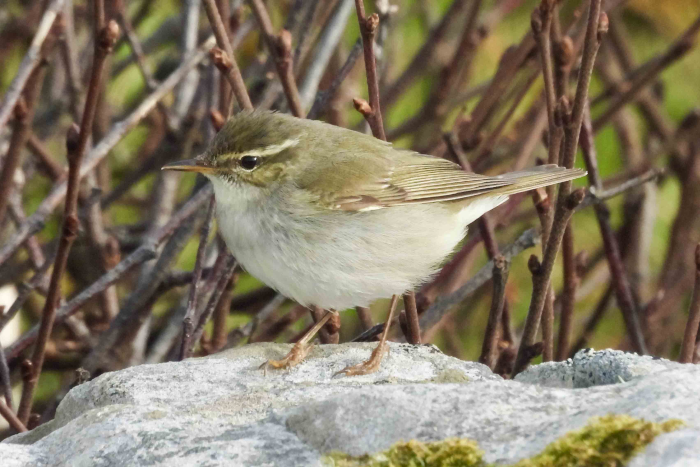
Shetland Arctic Warbler remained at Fladdabister on Mainland on 9th-10th, and on Fair Isle on 9th. A probable Greenish Warbler was on Bryher (Scilly) on 9th.
Back on Shetland the recent Radde’s Warbler remained at Tangwick in North Mainland on 9th. Another was trapped and ringed in Dorset at Lytchett Bay on 10th; and a bird was found at Spurn (East Yorkshire) on 12th.
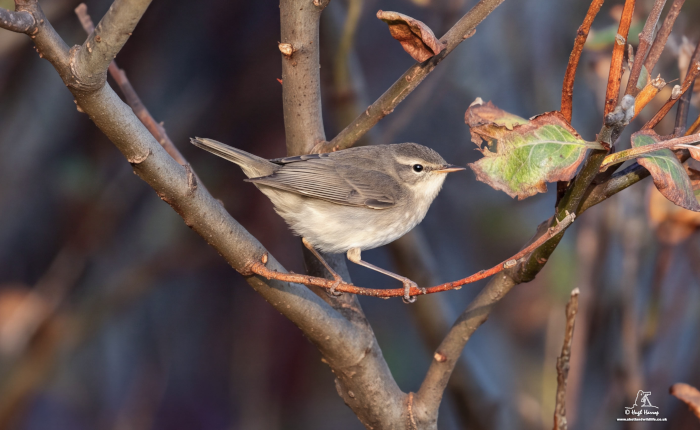
A Dusky Warbler was trapped and ringed on Fair Isle (Shetland) on 11th, with further Shetland birds that day found on Mainland at Pool of Virkie, and up on Unst.
Numbers of Yellow-browed Warbler faded a little, with a little over 200 reported across the span of the week. That may change substantially in the coming week once we get some easterlies…
Much the same might be said for Barred Warbler - 14 were noted this past week, but more may be waiting in the wings for coming days.
Putative Marsh Warbler were seen on Sanday (Orkney) on 10th and 15th.
In Suffolk a Zitting Cisticola was seen on 11th at Trimley Marshes SWT.
A handful of Wryneck were seen this week, with Scilly doing best for them – one was present on St Mary’s on 10th-13th; another on St Agnes on 12th; and one on Bryher on 13th. Away from there, a bird was seen in Suffolk at Boyton Marshes RSPB on 11th, another in Devon on 14th at Pig’s Nose Valley, and one on 15th at Land’s End (Cornwall).
A Hoopoe was seen in an Oxford (Oxfordshire) garden on 11th-12th.
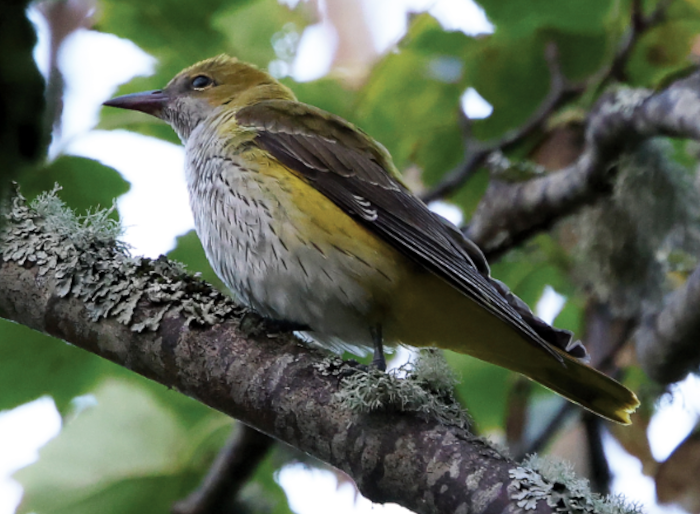
A Golden Oriole dropped in to Tresta on Shetland Mainland on 13th-15th.
Norfolk enjoyed a one-day Short-toed Lark at Warham Greens on 9th.
The recent juvenile Rose-coloured Starling remained on St Mary’s (Scilly) on 9th-10th; another was photographed in Dorset near Bloxworth on 14th.
A Bluethroat remained at Boddam (Shetland) on 9th-10th, with a second bird present there on the latter date.
Up on Unst (Shetland) a Red-flanked Bluetail arrived at the northern end of the island on 12th-13th.
Unst’s best bird of the week, however, was the Isabelline Wheatear found on the island on 13th-14th. There have been half a dozen records in the archipelago including the first, found at another Skaw on Whalsay on 20th September 1994, so the species isn’t entirely unanticipated in the autumn, but still a quality find and, in this particular bird, a first for Unst. Another bird this week was belatedly reported from Angus as present at Carnoustie on 11th, and that if accepted will be a county first.
Also in Shetland the recent Siberian Stonechat remained at Levenwick on 9th-10th.
Precious few Red-breasted Flycatcher were logged during the week, most of them on Shetland – at Dalsetter and Voe on 10th, and still at Exnaboe on 9th-10th; one on Orkney on North Ronaldsay on 12th-14t; and one on Cape Clear (Co.Cork) on 15th.
Helpful westerlies delivered some more American Pipit our way this week, with birds found on Rathlin Island (Co.Antrim) on 12th-15th, and Dursey Island (Co.Cork) on 13th; while the recent bird remained on St Agnes (Scilly) on 9th.
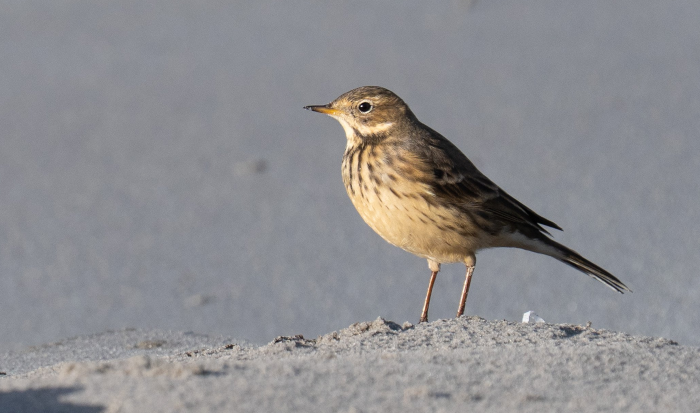
Seven Olive-backed Pipit were under the circumstances a pretty good show of their kind. Shetland birds were present on Fair Isle still on 9th-11th; on Fetlar on 10th; trapped and ringed on Bressay on 9th-10th; at Loch of Clickimin on 10th; at Wester Quarff on 10th; and at Pool of Virkie on 11th. One settled on Coll (Argyll & Bute) on 9th-15th. On 15th a bird was found way to the south, on Hengistbury Head (Dorset).
A Red-throated Pipit was seen at Bempton Cliffs RSPB (East Yorkshire) on 12th, and another was seen on St Mary’s (Scilly) on 14th-15th.
Norfolk enjoyed fleeting Richard’s Pipit on 9th at Holme, and on 13th near Happisburgh; another this week was seen on 9th at Galley Head (Co.Cork; one was reported at Pendeen (Cornwall) on 13th; another seen on 14th on Tresco (Scilly); and final sightings in Cornwall on 15th at Land’s End and Crows-an-wra.
A Citrine Wagtail was found late in the week on 15th at Tacumshin (Co.Wexford).
A Serin was again reported on St Mary’s (Scilly) on 10th.
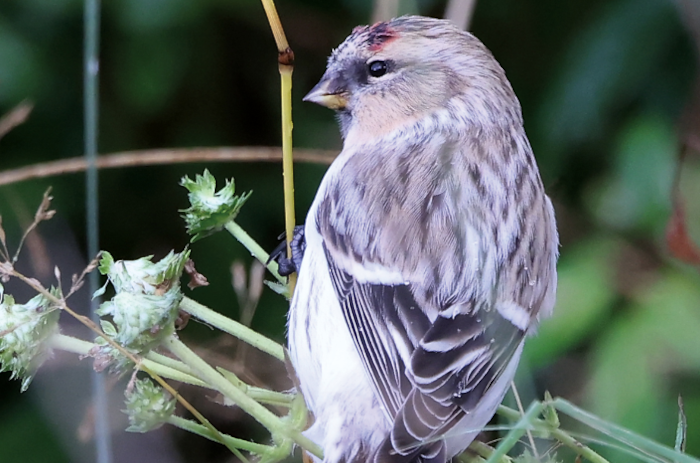
Shetland meanwhile sported a hornemanni redpoll on the outskirts of Lerwick on 10th-15th.
Numbers of Common Rosefinch were still underwhelming, with Shetland individuals seen at Scousburgh on 9th-10th and Fair Isle on 11th, and one on Scilly’s Bryher on 12th.
A mere handful of Little Bunting were logged – single birds at Sumburgh (Shetland) on 9th-10th, Mizen Head (Co.Cork) on 10th, on Westray (Orkney) on 11th, and a possible at Hunmanby Gap (North Yorkshire) on 13th.
A Rustic Bunting was seen on Shetland Mainland near Culswick on 10th.
Our penultimate bird of the week isn’t the stuff of headlines, but locally was an extremely welcome find – a Blackpoll Warbler on Barra (Western Isles) on 15th, almost a year to the day since the island’s first ever record of the species.
Blackpoll Warbler at Glen today, a good find by Calum Scott and only the second record for Barra, a day short of a year since the first record. #BirdingScotland #RareBirdsUK
— Bruce Taylor (@barrabirder.bsky.social) 15 October 2026 at 13:46
[image or embed]
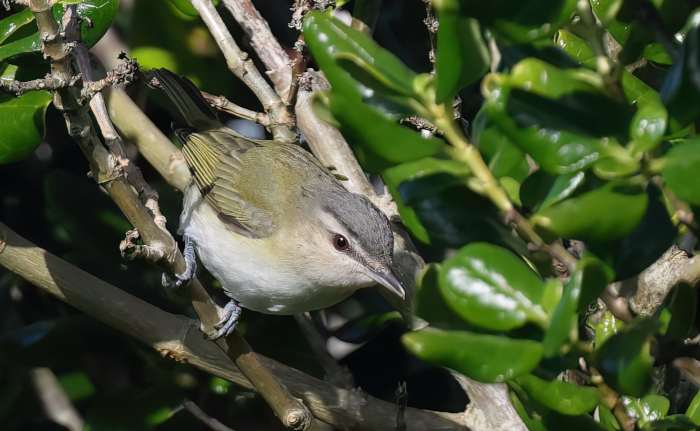
Once again, we draw a line under the week’s passerines with Red-eyed Vireo - one was trapped and ringed on Bressay (Shetland) on 10th, and another was found in the more classic quarters of Scilly on St Agnes on 13th-14th.
Nutcracker? Shall we talk about them? Still being seen, and seen well, daily in the Netherlands this past week. And elsewhere on the coasts of the North Sea. They’re so near and yet, for now, so far away…
Nutrackers building up in the low countries. Occurrences in pink, counts in blue for week 1-7 Oct www.eurobirdportal.org/ebp/en/#home...
— Dawn Balmer (@debalmer.bsky.social) 9 October 2026 at 21:37
[image or embed]
Not a million miles from us, on Ouessant (France) a Red-eyed Vireo was seen on 12th-14th.
Up on Iceland the White-winged Scoter remained off Reykjavik on 12th.
Two Ruppell’s Vulture were seen in Spain at Ocazalla on 12th.
Out in Israel a Pin-tailed Snipe was seen in Gazelle Valley, Jerusalem on 12th.
And finally, not wholly surprising anyone being as it’s the Azores, on Corvo on 12th there were single Indigo Bunting, Northern Waterthrush, Grey-cheeked Thrush, three Red-eyed Vireo, and a Semipalmated Plover. On 13th to this haul was added Dickcissel, Hooded Warbler, and Northern Parula. By 14th Corvo was up to two Northern Parula, while the Hooded Warbler and Northern Waterthrush remained present, along with two Red-eyed Vireo.
Finally! Look at those charts…
Surely the time is now. There will be some other birds coming our way from the east, and the coming week is traditionally a very strong one for some monster birds – half a dozen past Siberian Rubythroat, anyone? – but we’re going to nail our colours to the mast and call it. This coming week is the one for a Nutcracker.
The Netherlands continues to creak under their numbers, and there’ve been some mouth-watering images coming our way from our Dutch friends. They’ve got as far as the coast – one was seen flying over Groningen on 15th, while an obliging bird has been delighting birders almost in sight of the sea at Kerkwerve this past week. They can’t help themselves, the compulsion to push on west is irresistible…
https://www.omroepzeeland.nl/nieuws/18856705/deze-zeldzame-vogel-trekt-vogelliefhebbers-naar-kerkwerve-hij-heeft-een-hele-typische-roepLooking back to the glory days of the great influx of 1968, the coming week featured no fewer than 17 birds found, for the most part down the east coast, and with half a dozen in Suffolk and three in Norfolk. Dare we say our inbound bird this week will be in East Anglia? Go find a Hazel tree, and stake it out…
We are all still waiting and hoping that the current Nutcracker irruption continues, and one eventually crosses the English Channel. This is one of the Dutch birds #dutchbirding #birding
— Chris Galvin (@chrisgalvin.bsky.social) 13 October 2026 at 07:09
[image or embed]
Jon Dunn
16 Oct 2026
Many thanks to all this week's contributors for your photos and videos.
Get Breaking Birdnews First
Get all the latest breaking bird news as it happens, download BirdAlertPRO for a 30-day free trial. No payment details required, and get exclusive first-time subscriber offers.
Share this round-up