Jet lag shifts Manx Shearwaters off course
Twenty years of tracking show that rapid east-west flights can desynchronise the seabirds' body clocks and produce predictable sun-compass errors.

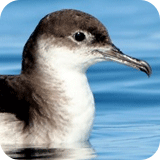
Manx Shearwaters flying rapidly across the Atlantic can experience a form of jet lag that makes them veer predictably off course when navigating by the sun, a 20-year tracking study has found.
The paper in Science, led by the University of Oxford, analysed GPS records from 1,045 breeding birds across 3,688 foraging trips. The shearwaters travelled from colonies off western Britain and Ireland to feeding grounds in the Irish Sea and North-east Atlantic, sometimes reaching waters about 1,000 km west of their nests.
A sun compass works only if an animal also has an accurate sense of time. The sun moves across the sky throughout the day, so a bird must interpret its position using an internal clock. That clock is normally reset by sunrise, but a fast eastward flight crosses into places where dawn occurred earlier, leaving the bird's body time behind local solar time.
Researchers calculated the direction of the error expected if each bird's clock remained set to the time at dawn. On homing flights beyond sight of land, the recorded headings closely matched those predictions: eastbound birds tended to turn clockwise from the most direct course, as a time-lagged sun compass would produce.
Lead researcher Dr Patrick Lewin said the underlying mismatch is comparable with human jet lag.
Our results show that animals experience the same internal clock mismatch as we do during jet lag.
Dr Patrick Lewin, University of Oxford
The pattern persisted near visible coastlines. When the predicted compass error pointed towards land, birds flew closer to shore; when it pointed offshore, they tended to remain farther out. That suggests the shearwaters continued using solar information even where landmarks might have offered another guide.
The deviations were modest, reaching about 15 degrees. Because experienced birds can repeatedly reassess their position and correct their route, the additional distance may be small. The team calculated that a bird returning from 1,000 km away with an average seven-degree error would travel only about five extra kilometres before reaching within five kilometres of its colony.
This does not mean the birds navigate by the sun alone. Animal navigation is often described as a map-and-compass process: an individual first determines its position relative to a goal, then uses one or more compass systems to select a direction. The tracking data reveal the signature of a time-compensated sun compass within that larger system.
The study is also observational. Its statistical models fitted the clock-shift prediction better than an alternative based on variation in the Earth's magnetic field, but researchers did not manipulate the birds' clocks in this analysis. Nor did they test whether disrupted timing affects feeding, sleep, survival or breeding success.
Those questions matter because Manx Shearwaters feed most actively around dawn and dusk, when prey can be nearer the surface. A mistimed activity cycle could have consequences beyond a small navigational detour. First-time migrants may also be less able than experienced breeders to correct accumulating compass errors, but that remains a hypothesis for future tracking and experimental work.
3 Nov 2026
Get Breaking Birdnews First
Get all the latest breaking bird news as it happens, download BirdAlertPRO for a 30-day free trial. No payment details required and get exclusive first-time subscriber offers.