Weekly birding round-up: 6 - 12 Feb 2026
Coming up to halfway through February, and it already feels like it’s been six weeks long. Spare a thought for Aberdeen, making the national news early in the week for having endured over a fortnight without so much as a glimpse of the sun overhead. Even for the most stoic of Aberdonians, it’s a bit much. Apparently they may be due a drop of sunshine this coming weekend but, for them and most of us alike this past week, it’s been another grey, cold, and wet one. And, whichever way we shape it, it’s not been characterised by much novel rarity action.
With the week’s other notable duck flirting with hybrid ambiguity, it falls to the female Redhead in Co.Kerry to carry the banner solo in the headlines this week. She remained settled on Lough Ygnanvan throughout the present week up to and including 11th. Familiarity shouldn’t breed contempt in these parts – there’ve been precious few of her kind in Britain or Ireland hitherto, and on that basis it could easily be a decade or two until the next.
At least one of the recent duo of Pacific Diver in Cornwall remained present there in recent days, with sightings off Mousehole still on 8th-11th and Penzance on 10th again. Ireland was in on the action too, with the juvenile still present in Broadhaven Bay (Co.Mayo) on 10th, and an adult off Curransport (Co.Donegal) on 8th-12th.
After an absence the preceding week, White-billed Diver came back with a vengeance lately, with several birds logged. Two were seen in the South Shields (Co.Durham) area on 7th, with one lingering in the harbour at Hartlepool (Cleveland) that morning too; while another was seen the same day from Lewis (Western Isles). On 8th one was reported from Loch Turret (Perth & Kinross); while on 9th two were in the Leven area of Fife, one remaining there on 10th; and a bird lingered off St Abb’s Head (Borders) on 9th-12th. 12th saw a further flurry of sightings in Scotland – off Inverkeithling (Fife), Port Laing (Fife), and Skateraw (Lothian).

Around 30 Little Auk were noted off our coast during the week, with a peak count of six seen from Bridges of Ross (Co.Clare) on 12th.
A Pomarine Skua was seen off Penzance (Cornwall) on 11th.
Glossy Ibis? Yes, still. Damp weather isn’t going to dampen their spirits any time soon.
Still plenty to report in recent days on the honkers and quackers front and we kick off once more with The Goose Formerly Known As Canada. An interior Todd’s Canada Goose was still present on Tiree (Argyll & Bute) on 8th, with two probables seen that day also at Lissadell (Co.Sligo); and a further bird remained at Sheigra (Highland & Caithness) on 9th still. The hutchinsii Richardson’s Cackling Goose was still present at Drimvore (Argyll & Bute) on 6th; one was seen in Co.Sligo at Ballintemple on 8th; one remained in Co.Mayo on 10th at Cross Lough; and a further probable was seen on 10th at High Hauxley (Northumberland).
The Ross’s Goose was seen again at Stormont Loch (Perth & Kinross) on 8th.
Three recent Snow Goose were seen again this week – at Insh Marshes RSPB (Highland & Caithness) on 7th-10th; in Lincolnshire around Baston Fen on 7th-12th; and in Lancashire & North Merseyside at Marshside RSPB on 6th-10th.
Black Brant this week were seen in Hampshire at Langstone on 6th; in East Yorkshire at Outstrays NR still on 7th-9th; in Essex still at Heybridge Basin on 7th; and in Co.Dublin on 11th at Broadmeadows Estuary. Possible Grey-bellied Brant were seen at Blennerville (Co.Kerry) on 6th, and Dublin (Co.Dublin) on 10th where three putative birds were noted.
Rounding off the geese for another week, a Red-breasted Goose was seen again on Islay (Argyll & Bute) on 6th.
Moving onto the ducks, the recent first-winter drake Baikal Teal was still present on the River Loughor around Waungron (Glamorgan / Carmarthenshire) on 6th-9th.
The Blue-winged Teal drake remained at Loch Loy (Moray) on 7th-12th.
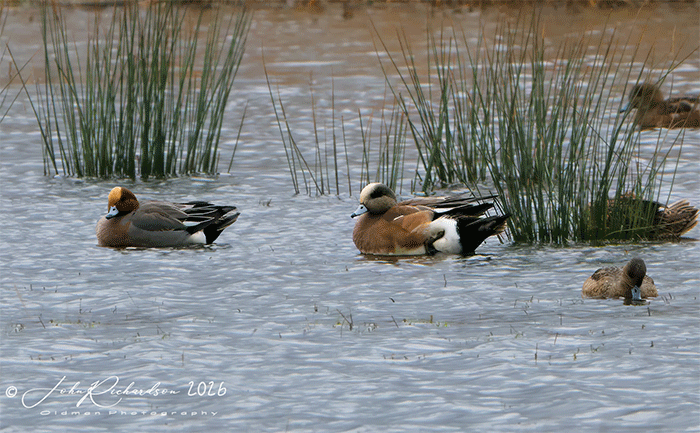
Numbers of American Wigeon dwindled this week, with six birds noted – at Carlton Marshes SWT (Suffolk) on 8th-12th; in Kent at Scotney GPs on 6th-8th and once more on 11th-12th, and Dungeness RSPB on 9th; still present at Newshot Island (Clyde) on 6th-12th; at Preston (Lancashire & North Merseyside) still on 10th-11th; at Shapwick Heath NNR (Somerset) on 11th still; and in Shetland once more in the Spiggie area on 12th.
Numbers of Green-winged Teal also dropped, with eight birds logged during the week – at Tain Links (Highland & Caithness) still on 6th-10th; on Barra (Western Isles) still on 6th; on Lossie Estuary (Moray) on 9th; on Tindale Tarn (Cumbria) on 7th; on Broom GPs (Bedfordshire) on 6th-8th and once more on 12th; at Shapwick Heath NNR (Somerset) still on 11th; at Newport (Pembrokeshire) still on 6th-11th; and at Llanfairfechan (Conwy) on 8th-12th still.
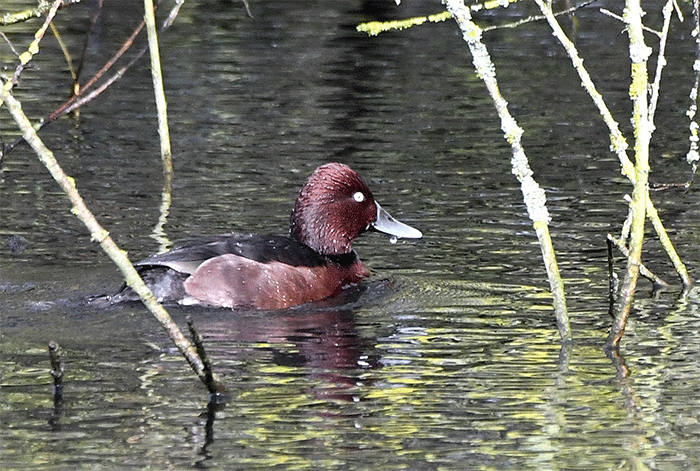
Three Ferruginous Duck were logged during the week – one in Cambridgeshire at Earith still on 7th-10th; one in Co.Tyrone at Ballysaggart Lough on 6th-9th still; and a drake in Hertfordhire at Maple Lodge NR on 6th-11th.
Lesser Scaup again threatened double figures. Four were noted in Ireland – a drake at Tacumshin (Co.Wexford) on 8th still, and a female at Lady’s Island Lake on 7th; the drake still at Lough Cullaunyheeda (Co.Clare) on 6th-9th; and a first-winter drake still present at Lough Yganavan (Co.Kerry) on 7th-11th. British birds remained in Leicestershire on Swithland Reservoir on 8th-10th; on Staines Reservoir (Surrey) on 6th-9th; and in Cornwall at Helston where two remained on 6th-12th.
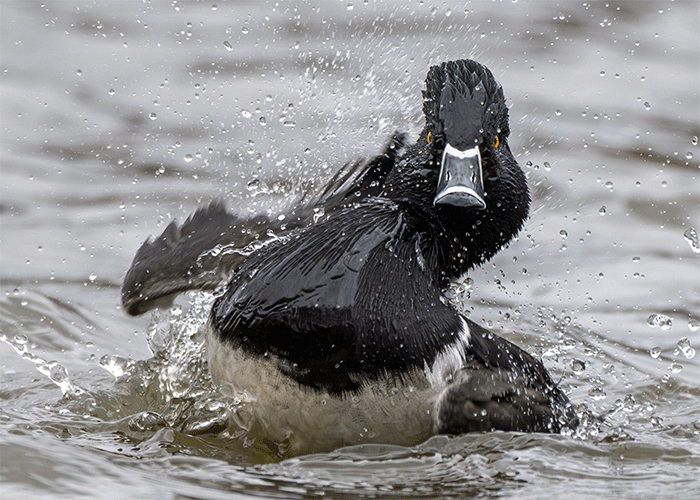
Just shy of 50 Ring-necked Duck were noted across Britain and Ireland, with the latter still enjoying the lion’s share of their number – nine birds still present on Lough Yganavan (Co.Kerry) on 11th being the peak count of the week.
Also in Ireland, the first-winter drake Harlequin Duck remained at Tra na gCloch (Co.Donegal) on 6th-12th.
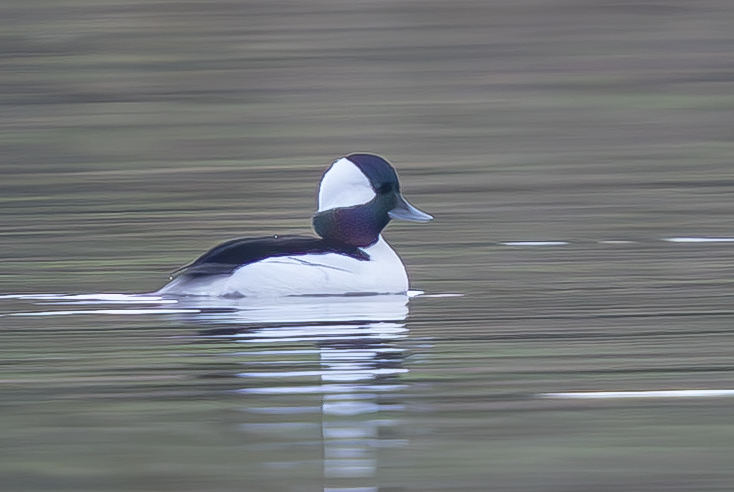
In Wales a drake Bufflehead appeared on Anglesey this week, present at Llyn Coron on 9th-12th.
Scotland held onto both recent King Eider - the first-winter female still in Quendale Bay (Shetland) on 6th-12th, and the first-winter drake at Dornoch (Highland & Caithness) on 6th still.
A short video of the female King Eider that has frequented Quendale Bay here in Shetland since finding it in early December. Also a very welcome addition to the house list...???@RareBirdAlertUK @ScottishBirding @BirdTrack @NLFerries @Britnatureguide @ShetlandWild pic.twitter.com/bSKzfBNbbG
— Hugh Harrop Wildlife (@HughHarrop) February 9, 2026
The drake Black Scoter remained at Dornoch (Highland & Caithness) on 9th-12th, while another was seen off Rossbeigh (Co.Kerry) on 8th.
Sightings of drake White-winged Scoter came from Fife at Leven on 7th, and Lower Largo on 9th-10th.
Lovely views of drake White-winged Scoter at Buckhaven carpark in choppy seas along with the cracking white headed Velvet. #RareBirdsUK Fife
— Adam Hutt (@sbomad.bsky.social) 8 February 2026 at 14:52
[image or embed]
Finally, a putative second-winter Stejneger’s Scoter was seen between Buckhaven and East Wemyss (Fife) on 8th and again on 10th – the possibility of there being some Velvet Scoter genes in the mix also being mooted, the suggestion rendered all the more intriguing with a letter in a recent British Birds issue hypothesising the latter species may have bred in the area in 2022.
The weekly waders continued to be rather slim pickings, but with some quality remaining in their midst. We start with the Kentish Plover still present in Somerset at Burnham-on-Sea on 7th-8th.
Out in Ireland, the Semipalmated Sandpiper was again seen at Seafield (Co.Clare) on 8th-11th, while the Spotted Sandpiper remained at Ballynagaul (Co.Waterford) on 10th-12th.
The Long-billed Dowitcher was once more seen at Montrose Basin (Angus) on 9th.
Finally, all three recent Lesser Yellowlegs remained present for another week – on Rathlin Island (Co.Antrim) on 7th still; in Cornwall at Truro on 6th-12th still; and in Denbighshire at Rhyl on 7th-11th still.
Arguably the most notable news story of the week came courtesy of a small arrival of Ring-billed Gull in recent days – first-winter birds were seen on 7th at Red Strand (Co.Cork), and Padstow (Cornwall); at Newquay (Cornwall) on 7th-8th; at Fishguard (Pembrokeshire) on 8th-12th; and at Blennerville (Co.Kerry) on 10th. Prior known birds were again seen at Blackrock (Co.Louth) on 7th; Tralee Bay Wetlands (Co.Kerry) on 6th-12th; at Doonbeg (Co.Clare) on 7th; and Hayle Estuary RSPB (Cornwall) on 6th-12th.
In Shetland the third-winter Kumlien’s / Thayer’s Gull remained on Unst at Uyeasound on 6th. An adult Kumlien’s Gull was seen at Blennerville (Co.Kerry) on 10th-12th; and another bird in Cornwall at Helston Loe Pool on 7th.

Some 15 Glaucous Gull and a dozen Iceland Gull were seen during the week, with three Iceland Gull at Killybegs (Co.Donegal) on 9th the only multiples.

Cornwall continued to boast a first-winter Bonaparte’s Gull around Newlyn on 7th-8th; while on 9th-12th the recent adult remained near Gairloch (Highland & Caithness) at Loch Kerry. A further first-winter was found on 11th at Belmullet (Co.Mayo), and an adult at Blennerville (Co.Kerry) on 12th.
Bonaparte's Gull yesterday at Tolcarne beach area of Newlyn, Cornwall. Seen with Karen @hobbylovinglife. @CBWPS1 pic.twitter.com/SnwfF59Yz3
— Dean Reeves (@worlebirder) February 8, 2026
Returning out of the woodwork this week, Northern Harrier were again seen at Tacumshin (Co.Wexford), where the male was once more noted on 7th; and at Cahore Marsh (Co.Wexford), where the juvenile female was again seen on 9th-12th.
In Wales, sightings of female Pallid Harrier ame this week from Wernffrwd (Glamorgan) on 6th; on 7th-8th and once more on 11th at Llanrhidian Marsh (Glamorgan); and on 8th at National Wetlands Centre WWT (Carmarthenshire).
Lastly, Orkney notched up an unseasonal adult Black Kite on Mainland at Loch of Boardhouse on 8th-11th.
The weekly passerines begin once more with Great Grey Shrike, with two individuals seen lately – one in Hampshire at Stoney Cross Plain still on 7th; and the other in Lincolnshire outside Ingham still on 6th-12th.
Waxwing continued to be a scarce commodity, with barely any to report once more – two at Ullapool (Highland & Caithness) on 6th; three in Cleveland at Stockton-on-Tees on 7th-8th, with one seen at Thornaby-on-Tees on 8th; one reported at Snod’s Edge (Northumberland) on 9th; and one in Shetland on Mainland outside Voe still on 11th.
The Hume’s Warbler remained showing well at times in Lowestoft (Suffolk) on 6th-12th.
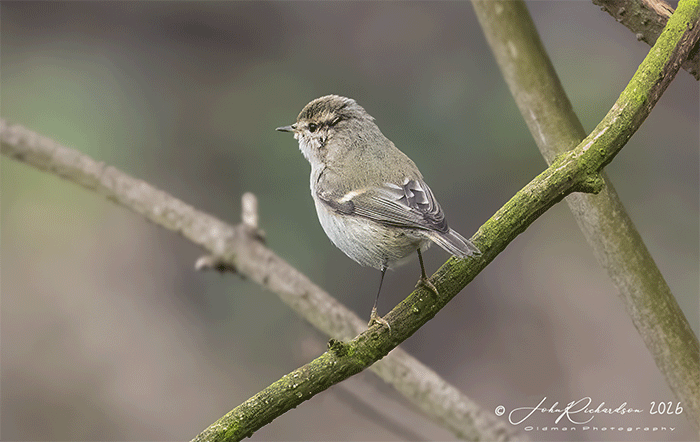
Yellow-browed Warbler dwindled to almost nothing, with prior birds seen again at Llanfairfechan (Conwy) on 7th-11th, in Torpoint (Cornwall) on 8th still, and at Efford Marsh NR (Devon) on 12th still.
In Kent the Pallas’s Warbler was again seen at Faversham Creek on 12th.
In Cornwall the Dusky Warbler remained present at Boscathnoe Reservoir on 7th-11th.
Kent held onto its wintering Red-flanked Bluetail at Crockham Hill Common on 7th-12th.
Norfolk’s first-winter male Eastern Black Redstart remained steadfast at Sheringham on 6th-12th.
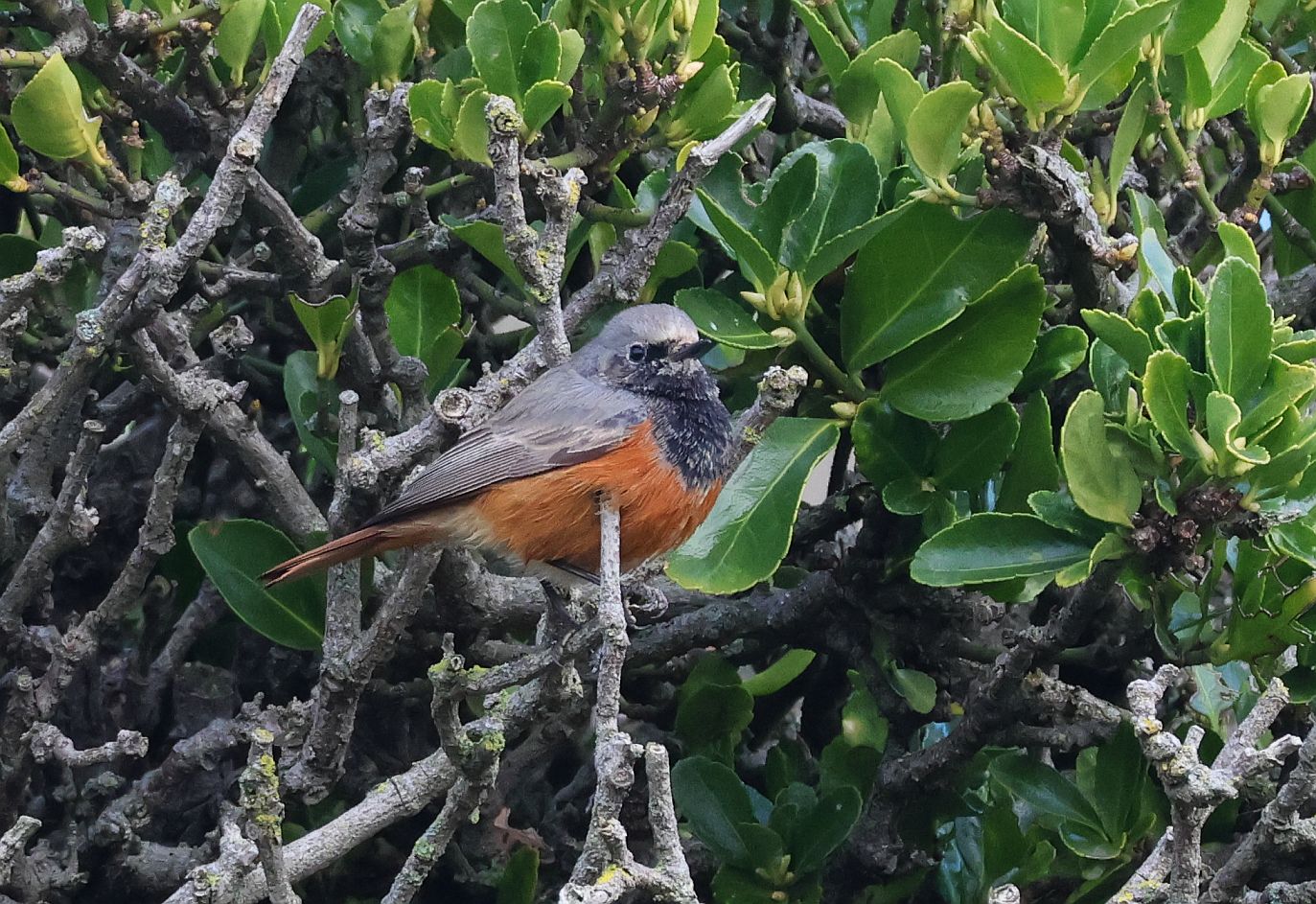
The Black-bellied Dipper was also still to be seen in Norfolk at Bintree on 6th-12th.
The Pied Crow remained in Co.Galway at Mervue on 6th and 12th, and Doughuiseon on 8th-11th.
Finally, the Great-tailed Grackle was still present in Holbury (Hampshire) on 7th-12th, and the probable remained in Lancashire & North Merseyside at Speke Hall on 6th-11th.
Our overseas news starts again in the Netherlands, where the Black-faced Bunting remained on Texel on 7th-12th; the Pygmy Cormorant was still to be seen at Natuurpark Lelystad on 8th; and the drake Falcated Duck was still at Benthuizerplas on 9th.
In France the Belted Kingfisher was still on the Canal de Nantes a Brest on 10th-12th; and the Northern Harrier at Marais de Peychaud on 7th.
Denmark’s Dusky Thrush remained at Refshaleoen on 8th.
On Iceland, the Baltimore Oriole remained in Reykjavik on 6th.
The Cape Gull remained in Spain at Laredo on 8th, while a Sociable Lapwing was at Deltebre on 9th-12th.
Finally, in Cape Verde, the Western Willet remained on Boa Vista on 6th-7th, and the recent Black-headed Heron was still to be seen on Sao Vicente on 12th.
Sometimes living in Britain and Ireland in winter feels like being in a washing machine drum, spinning around and generally a bit wet and turbulent. The last few weeks have been like that, and the coming week shows little sign of relenting. If anything, we’re entering into the spin cycle, with winds coming from pretty every point of the compass as the week progresses.
Which may, in and of itself, be no bad thing from the perspective of a potential mega pitching down in our midst. Almost anything (from, granted, rather a limited group of precedents) is possible.
Fully a third of Britain’s half dozen Rock Bunting records come from the coming week, the most recent of those two birds being at Spurn (East Yorkshire) on 19th February – 10th March 1965 – surely a contender for bird of the decade were one of those to fall again. From the south, three past records tell us it’s not too early for an overshooting Great Spotted Cuckoo; while from the north the coming week is a solid one for a Gyrfalcon; and odds remain short on another American Herring Gull in the coming week to represent the west.
Or, as the past week taught us, it might just be generally rather quiet. Let’s hope not…

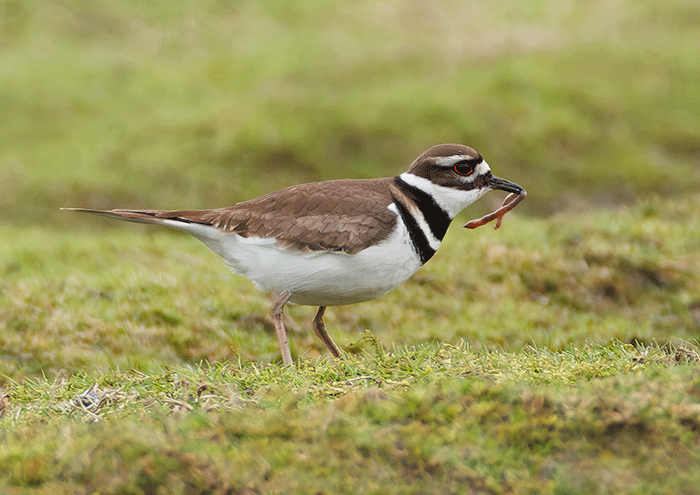
Finally, we are pleased to publish this photograph of the Hampshire Killdeer by Adrian Webb. A previous weekly roundup included a Killdeer image that was incorrectly credited and published without Adrian’s permission. Once the error was identified, the image was removed. We apologise to Adrian for that mistake and are grateful to him for providing this photograph and for allowing us to publish it here.
Rare Bird Alert
13 Feb 2026
Many thanks to all this week's contributors for your photos and videos and to everyone who contributed throughout the year.
Get Breaking Birdnews First
Get all the latest breaking bird news as it happens, download BirdAlertPRO for a 30-day free trial. No payment details required, and get exclusive first-time subscriber offers.
Share