


Young Jackdaws learn predator warnings before fledging
New research shows nestlings pick up warning signals from adult alarm calls and quickly learn which unfamiliar sounds signal danger
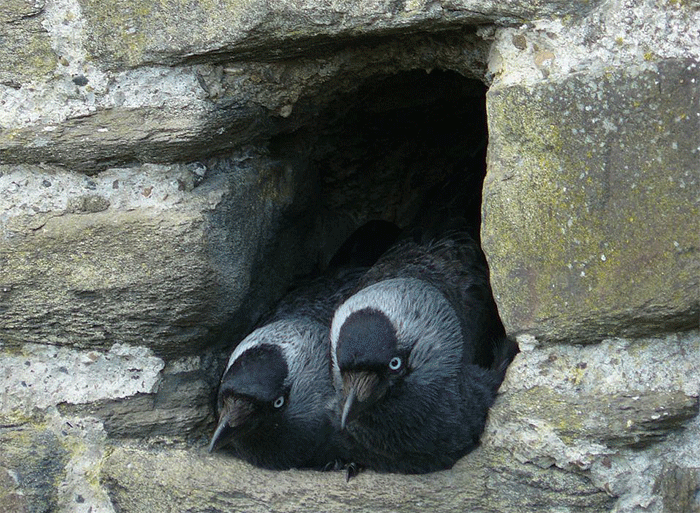
Learning about danger before leaving the nest
Young Jackdaws may begin learning about predators long before they ever encounter one. A new study of wild birds in Cornwall has shown that nestlings can learn to recognise threatening species by listening to the alarm calls of adults, allowing them to build vital survival skills while still inside the nest.
The research focused on how young birds interpret unfamiliar sounds. Recognising predators is essential for survival, but direct encounters can be risky - particularly for inexperienced birds. Learning indirectly from others may therefore provide a safer route to understanding danger.
Testing how nestlings respond to unfamiliar calls
Researchers carried out playback experiments at nestboxes in Cornwall, exposing Jackdaw chicks to calls from two unfamiliar species - the Eurasian Goshawk, a predator, and the American Golden Plover, which poses no threat. Both species were effectively unknown to the local birds.
At first, the nestlings heard the calls on their own. Later, the same calls were paired with either Jackdaw alarm calls, which signal danger, or normal contact calls, which are used for routine communication between birds.
The idea was simple: if young birds can learn from the reactions of adults, they should begin to treat a sound as threatening when it is consistently associated with alarm calls.
Alarm calls trigger rapid learning
The results showed a clear pattern. When the sound of a Goshawk was paired with Jackdaw alarm calls, the nestlings became significantly more vigilant when they heard the predator again later. They raised their heads more often and appeared more alert, suggesting they had learned to associate the call with danger.
In contrast, when the same predator call was paired with ordinary contact calls, the young birds showed little change in behaviour. Likewise, calls from the harmless Golden Plover did not trigger increased vigilance, even when paired with alarm calls.
This suggests that Jackdaw chicks are not simply learning to fear any sound linked to alarm calls. Instead, they appear to learn selectively about genuine threats.
A built-in bias towards real predators
The findings hint that young birds may be predisposed to learn about certain types of stimuli - particularly those linked to predators. Even though the Goshawk was unfamiliar to the birds in the study area, it has a long evolutionary history as a predator of corvids, which may make its calls easier for young Jackdaws to associate with danger.
This kind of selective learning could help avoid mistakes. If birds learned to fear every unfamiliar sound paired with an alarm call, they might waste time responding to harmless stimuli.
Why early learning matters
For nestlings, learning about predators early in life may offer a major advantage. Young Jackdaws are relatively safe inside nest cavities, but the risk of predation increases dramatically once they fledge.
By learning to recognise potential threats before leaving the nest, young birds may be better prepared to respond quickly in the outside world.
The research therefore provides rare evidence that complex social learning - learning from the behaviour and calls of others - can begin at a surprisingly early stage of life in wild birds. :contentReference[oaicite:0]{index=0}
Implications for changing ecosystems
Understanding how birds learn about predators may become increasingly important as ecosystems change. Climate change and wildlife reintroductions are altering predator communities across many regions.
If birds can adapt by learning quickly about unfamiliar predators through social cues, they may be better equipped to cope with these shifts. The study suggests that even very young birds may already possess the tools needed to learn about new dangers before they ever face them.
March 2026
Get Breaking Birdnews First
Get all the latest breaking bird news as it happens, download BirdAlertPRO for a 30-day free trial. No payment details required and get exclusive first-time subscriber offers.
Share this story





