



Weekly birding round-up: 24th Dec 2025 – 8th Jan 2026
Happy New Year to you all – and, judging by what’s happened even in the opening days of 2026, it’s set to be another fabulous year of rarities ahead. But before we can make a start on them, we need to tidy up the loose ends of 2025 which, true to the year’s form, finished with quite the flourish in Norfolk…
Doing the thoroughly decent thing in not being found until Christmas Day was over, a Black-winged Kite in Norfolk provided the perfect grand finale to 2025 – found near Ludham in the late afternoon of Boxing Day, and mercifully still there the following day for those quick out of the blocks.
Could this be one and the same individual last seen at Hickling Broad NWT earlier in the year on 11th September? It’s certainly possible that it’s managed to lose itself in the vastness of Norfolk in the meantime; but then again, it may have wandered further afield in the interim period or, conceivably, this could be a fresh individual newly in from the near Continent.
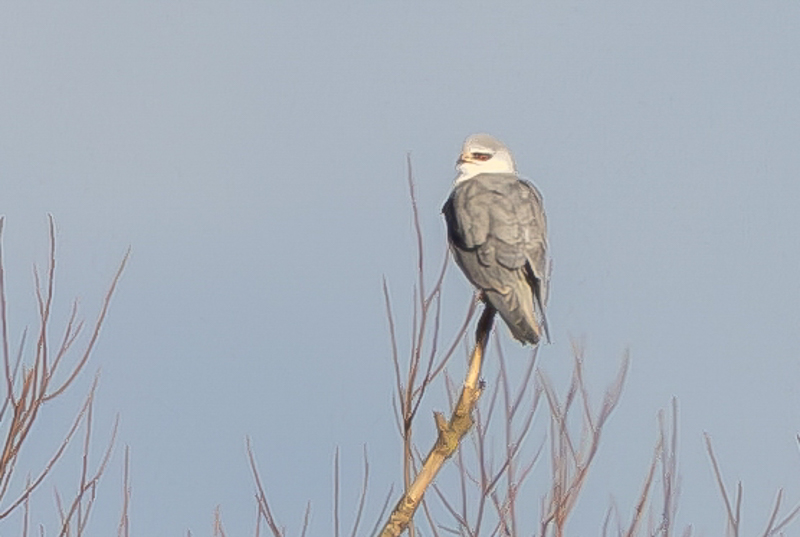
Either way, the main thing was the bird in question was no ephemeral here-today, gone-tomorrow individual – it stuck around the Ludham area until 4th and then, after an absence of a couple of days, was seen again on 7th near Horsey Mill, proving to be the very best way to wrap up the old year and to start the new.
All that said, birders in Kent were doing rather well for themselves, at least on paper. Neither of the birds that graced the county were in any way as amenable as Norfolk’s star raptor, but all the same… a county first and a county second are not birds to be sniffed at.
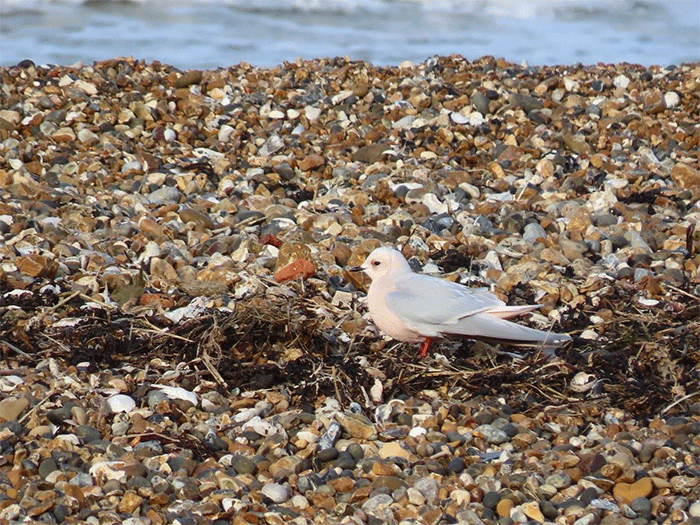
Treating them in chronological order, the New Year got off to a very solid start with the second ever Ross’s Gull for Kent seen briefly at Swalecliffe on 1st. An adult bird, it wasn’t hanging around – though, given the miles of gull-friendly habitat all along the north Kent coast, one wouldn’t bet against it being refound again at some point in the coming weeks.
That news had no sooner broken than, on 3rd, a county first was on the cards, and barely a couple of miles along the coast from Swalecliffe. Not only a Siberian Thrush at the RSPB reserve at Seasalter, but an adult male. That was the good news. The bad news was that it had been seen in a restricted area of the reserve in the early afternoon but no subsequently. And that was that.
(Apart from a report on 5th that, short of being ‘from a moving vehicle’, was couched with every qualifying caveat in the books – wholly unconfirmed, possible, in bushes, distant…)
Sadly there’s been no further sighting, confirmed or putative, since that. Were it to reappear, this would be the first really big twitch of the new year – sure, a fair few Shetland regulars and twitchers of a certain vintage have enjoyed a Siberian Thrush on Shetland or Scilly, but there are plenty of folk still out there who’d welcome a twitchable bird in the English southeast.
For all there’ve been a few recent records of Baikal Teal in Britain, there’s been a noticeable bias towards the southwest of England and Somerset and Dorset in particular of late.
They’re a different kettle of fish in Wales, with just the one bird to date – the drake that settled at Llangorse Lake (Powys) on 9th-18th January 2023. That this was recent, and a relatively long-staying bird, will presumably do much to assuage any Welsh angst at the brevity of the past week’s bird, a first-winter drake found on the River Loughor at Castell Ddu (Glamorgan / Carmarthenshire) in the morning of 4th.
After a spell on the river bank it drifted off downriver with Eurasian Wigeon in the mid-afternoon and that was that – no further sign.
Fortunately another duck in Wales was proving much more compliant lately. The drake Bufflehead, last seen in Gwynedd at Foryd Bay on 22nd, was back there again on New Year’s Eve and, better still, kicked off the new year in some style by showing well there once more on 3rd-7th.
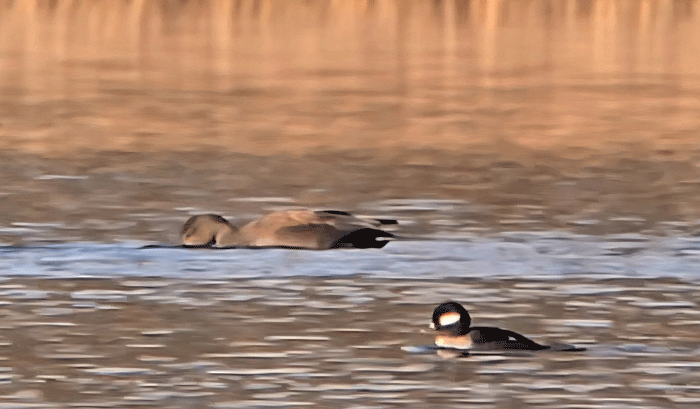
Nor was that bird alone in the newsfeeds of late. The Irish drake stuck around in Co.Kerry at Kilbrean Lake, sitting tight there from 25th-7th; and a female / juvenile drake was found in Co.Wexford at Wexford Wildfowl Reserve on 4th-5th. And Wales wasn’t done with us yet either, for a female / juvenile drake dropped in to Kenfig Pool NR (Glamorgan) on New Year’s Eve. Welsh birders wait a lifetime for their first Bufflehead and then, like buses, two come along at once.
We’ve been saying in these parts in only the past couple of weeks that a Pied-billed Grebe might be lurking out there for the finding and, pleasingly, that’s just what happened in Ireland over the festive period, with a bird picked up on the water at Tacumshin (Co.Wexford) on 3rd.
Not that this was to prove an easy bird – there was no further report of it there in the days that followed. Gone? Surely not or, if so, not far. Co.Wexford’s enjoyed three previous records of Pied-billed Grebe, but none for a good while – the last was seen at Tacumshin back in the last week of November 2003, so were this to be relocated, it might prove locally popular.
There was some consolation to be had – and reassurance that said grebe was being looked for – at Tacumshin (Co.Wexford) on 4th-7th, in the form of a fine American Coot. Sure, neither grebe nor coot will be winning many awards for their outstanding aesthetics, but both are properly rare beasts, and the latter was only the second record for the county – the first, a long-staying bird, was also seen at Tacumshin, on 13th-19th November 2021 and again on 26th December 2021 – 2nd April 2022.
Great to see this American Coot at Tacumshin, Wexford this afternoon. Always remember the first I saw at Ballycotton, Co. Cork 1981 found by the late Catherine O’Sullivan. pic.twitter.com/ezebpaG610
— Birds Ireland (@EricTheBirdman) January 5, 2026
The New Year kicked off in Ireland, with the resident Double-crested Cormorant still present on Doon Lough (Co.Leitrim) on 2nd and 8th.
Ireland also accounted for lingering Pacific Diver at Crookhaven (Co.Cork) again on 30th, and in Broadhaven Bay (Co.Mayo) still on 28th-1st. In Cornwall the adult remained off Mousehole on 24th-31st.
Two White-billed Diver were seen off Yell (Shetland) on Boxing Day.
A shade under 60 Little Auk were logged across the period, most of which were seen down the eastern side of Britain from Shetland to Kent. Northumberland gave us our peak count, nine birds seen from Howick on 3rd.
An unseasonal Balearic Shearwater was a surprise off St Mary’s (Scilly) on 4th; while a wayward Great Shearwater was tracked along the Norfolk coast on 27th, and another was seen on 8th from Bridges of Ross (Co.Clare).
Finally, Cornwall lent us a few sightings of Pomarine Skua - off Cape Cornwall on 1st and 2nd, and Porthleven on 4th; while another was seen from St Mary’s (Scilly) on 1st.
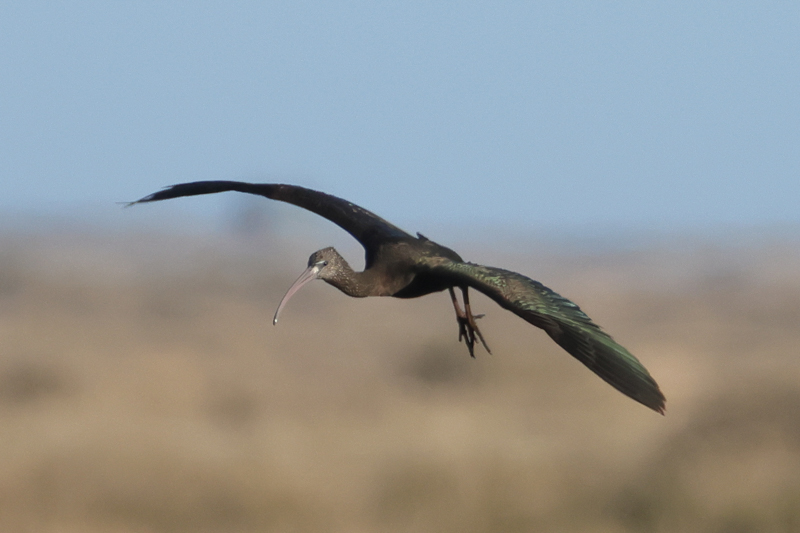
Unsurprisingly, based both on recent winter precedent and the late autumn influx, there were still plenty of Glossy Ibis being seen throughout the Christmas and New Year period. The cold snap will have come as a shock to them, but there are still birds lingering here, undaunted…
Quite what the Corncrake seen in the reeds at Amwell NR (Hertfordshire) on 5th thinks it’s playing at is anyone’s guess. An incredible January record.
The rarity duckpond was a busy place in the last fortnight, with plenty of honkers and quackers out there and, presumably, plenty of birders with a little more time on their hands than would usually be the case, taking the opportunity to see what they could find. Starting as ever with The Goose Formerly Known As Canada, two interior Todd’s Canada Goose remained at Ballygilgan NR (Co.Sligo) on 29th, one of which was still present on 1st; and another candidate was at Sheigra (Highland & Caithness) on 2nd-5th, albeit not necessarily ticking all the boxes…
Argyll & Bute gave us sightings of hutchinsii Richardson’s Cackling Goose on Islay still on 31st, and at Moine Mhor NNR on 3rd. In Ireland, Co.Mayo gave us a bird at Termoncarragh Lough on 27th-31st, and two at Cross Lough on 31st; two at Dunfanaghy New Lake (Co.Donegal) again on 2nd; and one at Ballygilgan NR (Co.Sligo) still on 3rd.
The Ross’s Goose remained near Campbeltown (Argyll & Bute) on 24th-1st, and again on 7th-8th; a further sighting came from Muir of Ord (Highland & Caithness) on 28th-30th.
Plenty of snow in recent days, both literally and metaphorically. Snow Goose were seen in Scotland at Insh Marshes RSPB (Highland & Caithness) still on 24th-1st; Drumlemble (Argyll & Bute) on Christmas Eve; Kingussie (Highland & Caithness) on 2nd; and over Newtonmore (Highland & Caithness) on 7th. English sightings came from Lincolnshire at Tongue End on 24th-27th, and around the Deeping St James area at large on 28th-8th; in Lancashire & North Merseyside at Marshside RSPB on 25th-2nd and 7th-8th, and around Southport on 3rd-6th and once more on 8th; and briefly at Holkham Pines (Norfolk) on 2nd. One was seen in Ireland near Louisburgh (Co.Mayo) on 2nd.
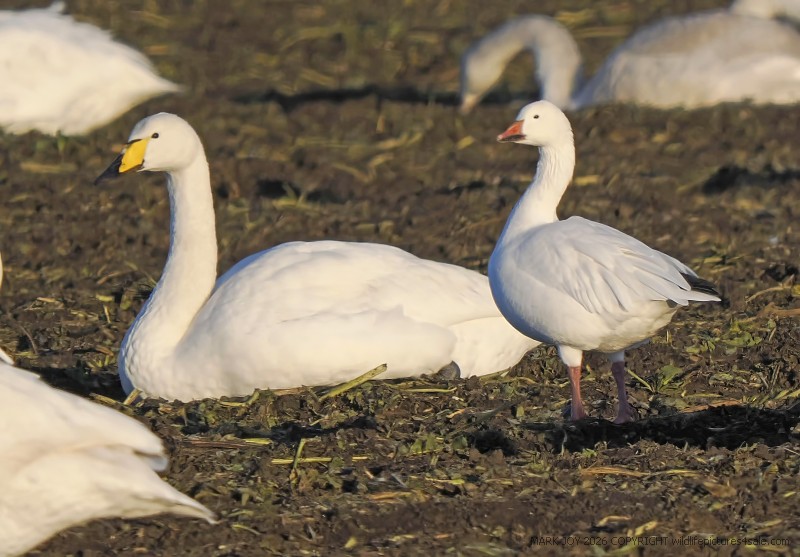
A Black Brant remained in East Yorkshire at Outstrays NR on 25th-1st; another lingered in Suffolk in the Kingsfleet area on 26th-4th. Further birds were noted at Hayling Island (Hampshire) on 29th, and Mersea Island (Essex) on 30th; and then, in the New Year, on 8th at Wallasea Island RSPB (Essex), and Snettisham RSPB (Norfolk).
The Red-breasted Goose was again seen at Wallasea Island RSPB (Essex) on 7th.
Scarce dabbling ducks were anything but over the period, with 10 American Wigeon logged in Scotland, Ireland and northern England, and an impressive haul of at least 30 Green-winged Teal across the region. Some sites enjoyed duos of the latter – at Booterstown Marsh (Co.Dublin) on 28th; on Islay (Argyll & Bute) on 30th; and on South Uist (Western Isles) on 6th.
We did well again lately for Ferruginous Duck, with several birds logged – long-stayers still present in Lincolnshire at West End GPs on 26th-4th, and in Hertfordshire at West Hyde GPs on 24th-3rd; a drake was again on Filby Broad (Norfolk) on 29th-5th; another was seen at Titchfield Haven NNR (Hampshire) on 29th-30th and again on 6th; and the recent Lackford Lakes SWT (Suffolk) individual was again there on 24th.
Lesser Scaup continued their recent winter trend of appearing in appreciable numbers, with 11 logged over the period. Two were still to be seen in Cornwall at Helston on 24th-7th; one in Essex still on Abberton Reservoir on 28th-6th; one still on Staines Reservoir (Surrey) on 27th-8th; one still on 27th on Loch Leven (Perth & Kinross); and additional British sightings coming from South Uist (Western Isles) on 2nd-6th still, Swithland Reservoir (Leicestershire) again on 6th and 8th, at Ellesmere (Shropshire) on 28th-8th, and on Upper Talley Lake (Carmarthenshire) on 31st-1st. A further possible drake was present at Chew Valley Lake (Somerset) on 7th. In Ireland birds remained at Tacumshin (Co.Wexford) on 28th-2nd, and on Lough Clubir (Co.Cork) on 31st.

Some 55 Ring-necked Duck were logged in recent days, with our peak counts being six still present on Urlaur Lough (Co.Mayo) on 7th; and trios present at Shapwick Heath NNR (Somerset) on 4th, on Loch Ballybrant (Argyll & Bute) still on 30th-1st, at Knockaderry Reservoir (Co.Waterford) still on 26th-7th, and at Dunfanaghy New Lake (Co.Donegal) on 26th-2nd.
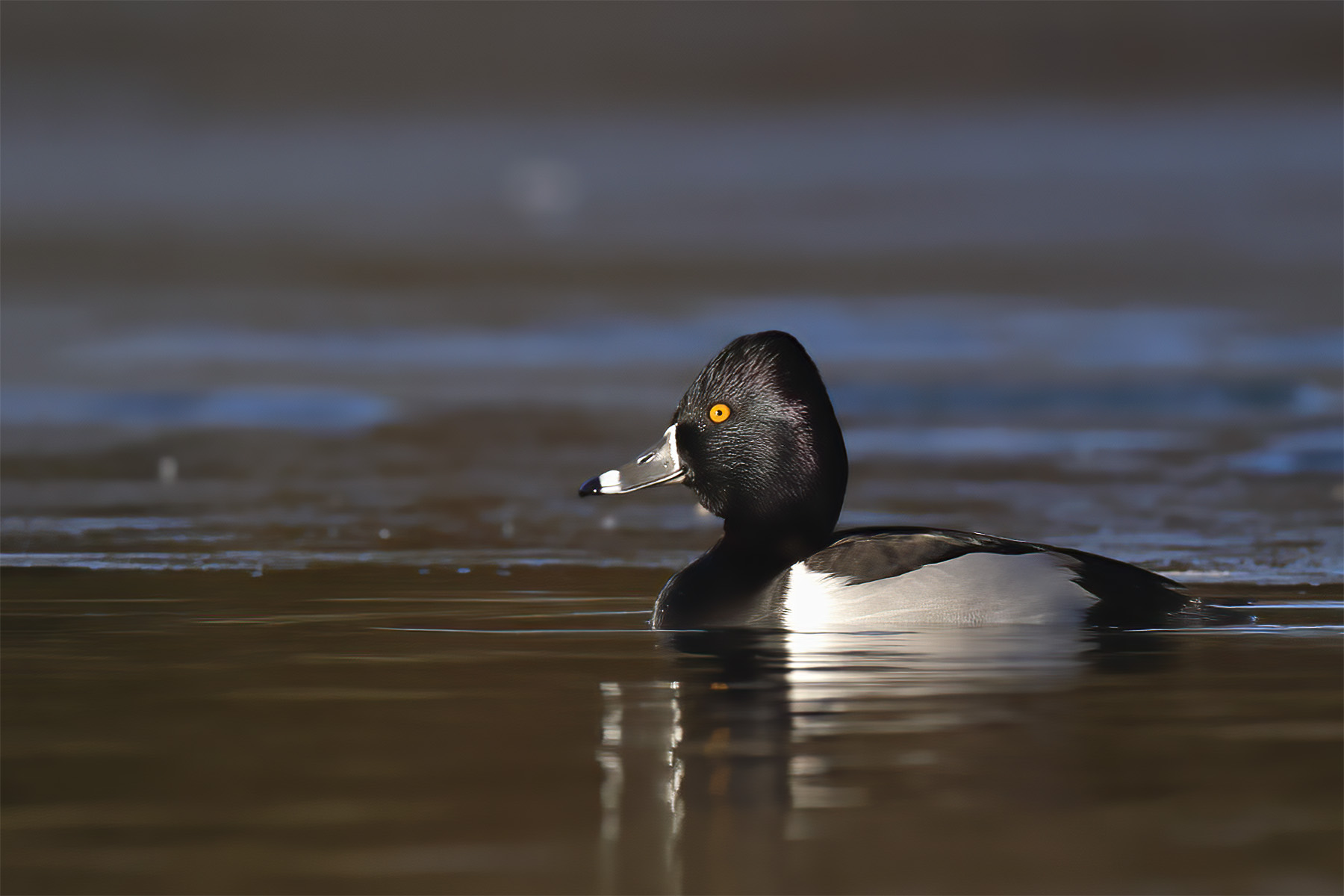
The recent drake Black Scoter was again seen at Dornoch (Highland & Caithness) on 26th-27th, and again on 6th.
Aberlady Bay (Lothian) was the hotspot for White-winged Scoter lately, with two drakes present on Christmas Eve; a second-winter drake on Christmas Day; a drake on Boxing Day; and a drake on 8th again; Gosford Bay boasted a drake on 25th-26th still, and a possible again on 30th. A drake was seen in Fife at Leven again on 28th and once more on 8th.
A dozen Surf Scoter were also logged over the period, with a peak count of three present at Dornoch (Highland & Caithness) on 30th; and Welsh duos noted at Colwyn Bay (Conwy) on 27th-30th, Gilman Point (Carmarthenshire) on 29th, and Black Rock Sands (Gwynedd) on 29th.
Both recent Scottish King Eider were still to be seen – one in Shetland in Quendale Bay off South Mainland on 24th-26th, and the other still in Highland & Caithness at Dornoch Bay on 24th-8th.
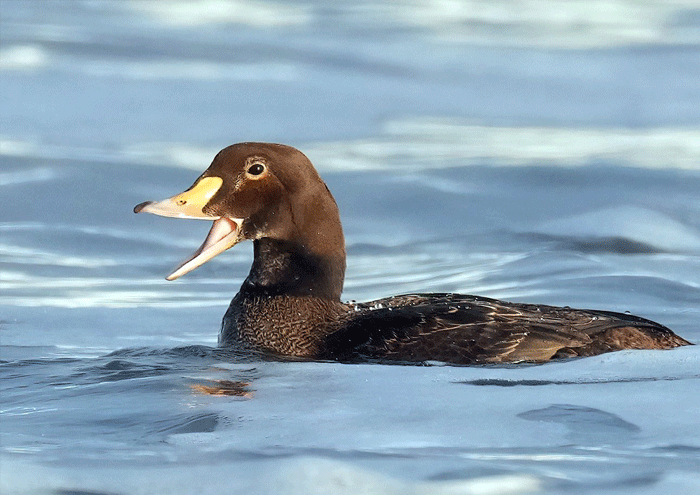
In Ireland the first-winter drake Harlequin Duck remained in Co.Donegal off Curransport on 26th-6th.
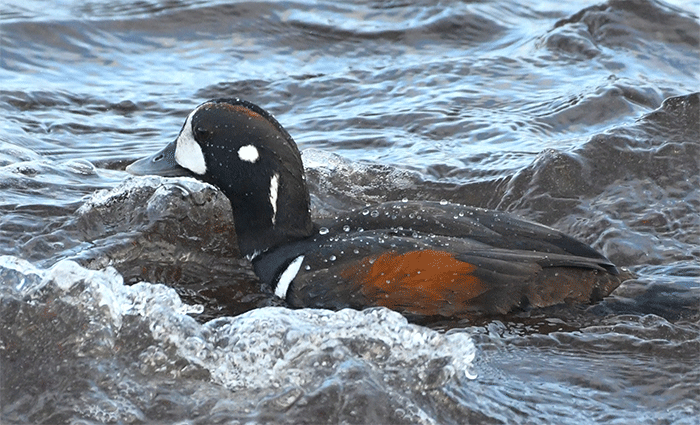
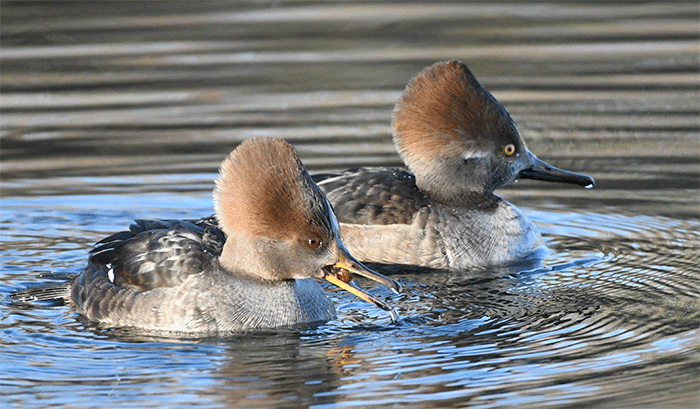
Finally, Kent’s excellent form over the years with Hooded Merganser continued with two female / first-winter drake birds found on New Hythe GPs on 4th, complete with the necessary qualifications of being both unringed, and mobile.
Fairly, but not entirely, quiet times of late on the wader front, with some lingering quality and a couple of surprises. Foremost among the latter was an untimely Dotterel seen briefly in Kent at Scotney GPs on 30th.
In Somerset the female Kentish Plover remained off Burnham-on-Sea on 25th-4th.
Lingering rarity in Co.Clare, the Semipalmated Sandpiper remained at Seafield into the New Year, still present there until 5th at least.
Suffolk’s wintering Temminck’s Stint was still to be seen at Minsmere RSPB on 28th-3rd.
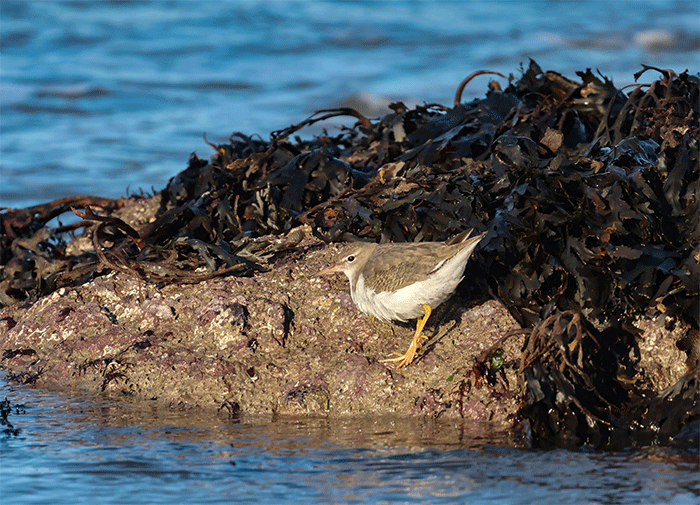
The juvenile Spotted Sandpiper remained at Ballynagaul (Co.Waterford) on 27th-3rd.
In Angus the Long-billed Dowitcher was still present at Montrose Basin on 24th-8th, while at Tacumshin (Co.Wexford) a bird popped up again there on 2nd.
Both recent, settled Lesser Yellowlegs remained into 2026, at Truro (Cornwall) still on 26th-7th, and on Rathlin Island (Co.Antrim) on 26th-8th. Another was found in Wales at Rhyl (Denbighshire) on 2nd-8th.

Finally, Grey Phalarope were seen at Kingsbarns (Fife) on 30th, and Doonbeg (Co.Clare) on 3rd, with two seen at the latter site that day.
Appropriately, given the arrival of the white stuff in the past fortnight, white-wingers arrived too, albeit not in their drifts. It was more of a light, widespread flurry of Glaucous Gull and Iceland Gull rather than a blizzard. But we did okay for them, all in all. Glaucous Gull numbered some 40 birds in all, with a peak count of four on Westray (Orkney) on 2nd; and Iceland Gull reached the giddy heights of some 25 birds, with two on Lewis (Western Isles) on 2nd-3rd and two at Freswick (Highland & Caithness) on 8th the only notable aggregations. With the latter came a dusting of Kumlien’s Gull - birds seen on 26th-28th at Loch Oire (Moray); a probable over Westray (Orkney) on 2nd followed by a confirmed adult on there on 7th; and a final juvenile at Newlyn (Cornwall) on 6th.
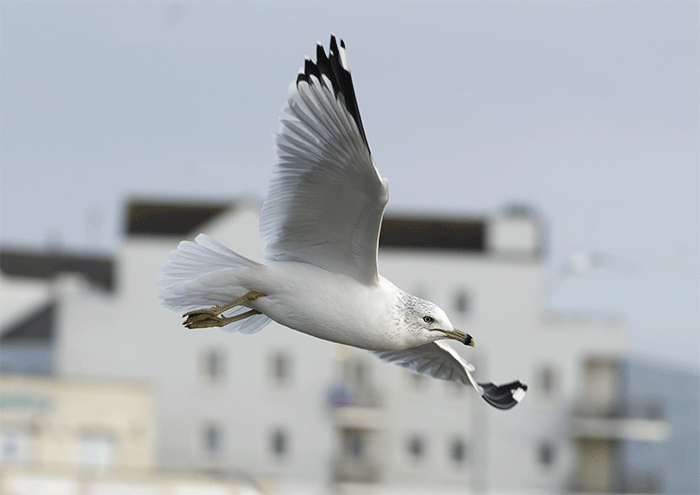
Ring-billed Gull on the other hand enjoyed a bit of a moment, with a dozen birds noted across the period, predominantly but not exclusively in Ireland. Indeed, the largest gathering of them was outwith Ireland, at Hayle Estuary RSPB (Cornwall) where, on 28th, three birds were noted, an adult and two first-winters.
A trio of Bonaparte’s Gull were logged over the period – a first-winter inland in Somerset at Wet Moor on 30th; another first-winter on 31st at Annagh Head (Co.Mayo); and the adult again at Larne (Co.Antrim) on 2nd-3rd.
Alas not clinched, a possible Franklin’s or Laughing Gull was noted passing over Carr Vale NR (Derbyshire) on Boxing Day. What a belated Christmas present that would have made.
While there were bigger fish to fry in Norfolk over the festive season, the county also scored Rough-legged Buzzard at Gresham on 1st, and Alby Hill on 2nd.
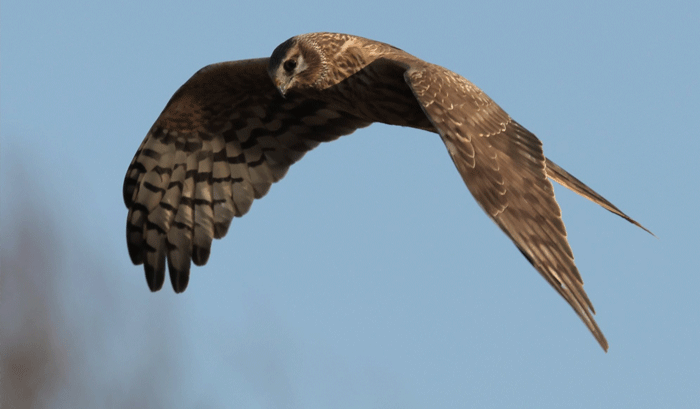
In Co.Wexford the juvenile Northern Harrier was again seen at Cahore Marsh on 26th and 30th, linking up with the male again at Tacumshin on 1st-2nd and 5th.
Finally, in Wales the adult female Pallid Harrier was still to be seen at Llanrhidian Marsh (Glamorgan) on 24th-7th; and the male at Castlemartin Corse (Pembrokeshire) again on 27th.
Striking an unseasonal note, two or three midwinter Hoopoe were logged in the fortnight – one again on Orkney at Birsay on 28th and 2nd; another settled into Killarney (Co.Kerry) on 28th-4th; and a further bird reported at Sandtoft (Lincolnshire) on 5th.
Five Great Grey Shrike felt more seasonally appropriate – birds were noted at Beaulieu Road Station (Hampshire) still on 24th-7th; in Harwood Dale Forest (North Yorkshire) on 24th-1st still; at Dersingham Bog (Norfolk) again on 27th; and in Wales at Llanwnda (Gwynedd) on 28th, and Llyn Brianne Reservoir (Ceredigion) on 30th.
A shade under 100 Waxwing brought winter colour, with a settled flock present at Monifieth (Angus) until 4th peaking with 37 birds there on 29th.
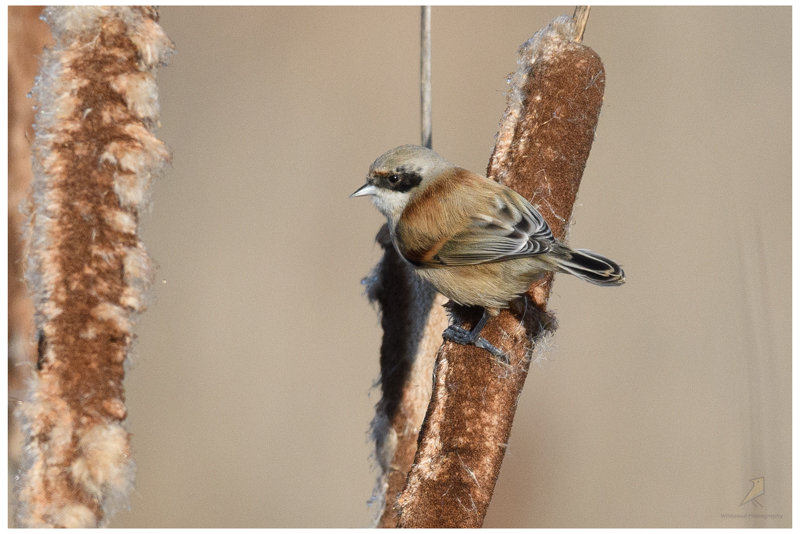
In Gloucestershire the three recent Penduline Tit continued to delight at Aust Warth on 24th-7th and at least two still present there on 8th, with one also seen at Pilning Wetland on 29th, and a brief bird in Somerset at Shapwick Heath NNR on 30th.
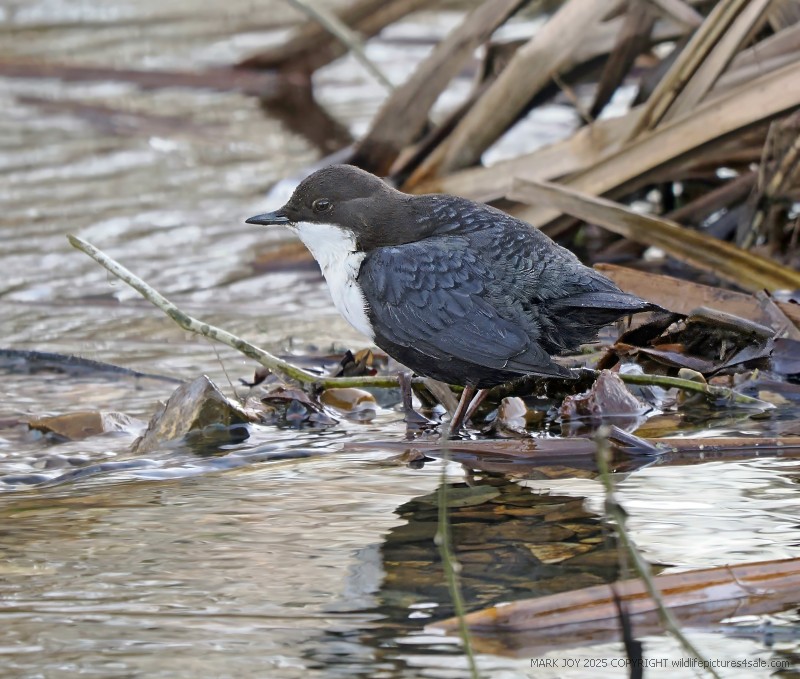
The Black-bellied Dipper remained in Norfolk at Bintree Mill on 24th-5th.
In Suffolk at least some of the 2025 Zitting Cisticola remained settled at Walberswick into the New Year – regular sightings there included two birds at least on 30th, 3rd and 5th.
Two Hume’s Warbler remained at Holkham Pines (Norfolk) on 30th, with at least one of them still tucked in there on 3rd. Another was found inland in West Midlands at Oldbury on 29th-30th.
Time on birders’ hands seemed well-rewarded during the period, with a significant increase in Yellow-browed Warbler sightings compared with the preceding weeks of December – nationally almost 30 were seen, with Mincinglake CP (Cornwall) holding two birds on 1st, and Chickerell Downs Woods (Dorset) two on 7th.
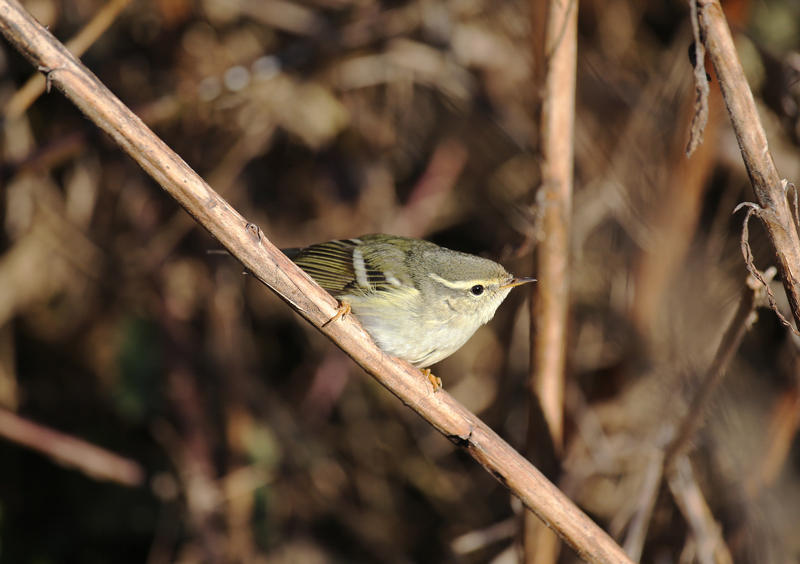
Cornwall went one better than that on 4th-7th, with a wintering Pallas’s Warbler found at Helston Loe Pool.
Settled Dusky Warbler remained at Dunhill (Co.Waterford) on 26th-4th, in Kent at Minster Marshes sewage works again on New Year’s Eve, and in Cornwall at Boscathnoe Reservoir still on 24th-4th. Another was found at Langton Herring (Dorset) on 4th.
If the Dorset Dusky Warbler was a pleasant surprise for its finder, one can only imagine how it felt to stumble upon a Red-flanked Bluetail at Nethy Bridge (Highland & Caithness) on 29th – the latter bird remaining there on New Year’s Eve still.
My grandad said 'that's a funny looking Robin' moments later I was looking at this extraordinary red-flanked bluetail! Seen today at nethy Bridge Scotland! pic.twitter.com/FptnoCinND
— James Richard (@JDPhotography24) December 29, 2025
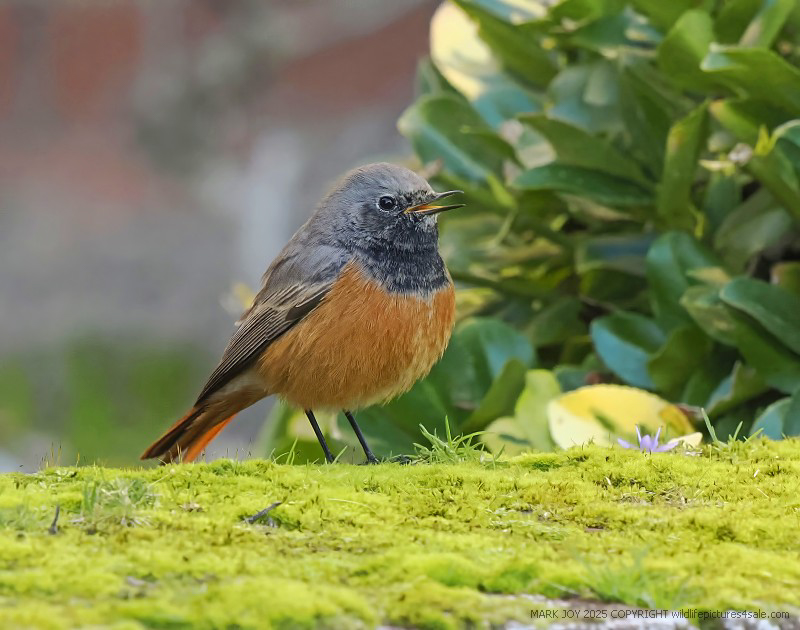
The recent first-winter male Eastern Black Redstart remained in North Yorkshire at Filey on 24th-2nd, but was significantly eclipsed in the popularity stakes by another individual found in Norfolk at Sheringham on 24th-8th, this bird making for a fine county double for some visitors with the Black-winged Kite.
The Richard’s Pipit remained in Cleveland at Brotton on 1st-8th.
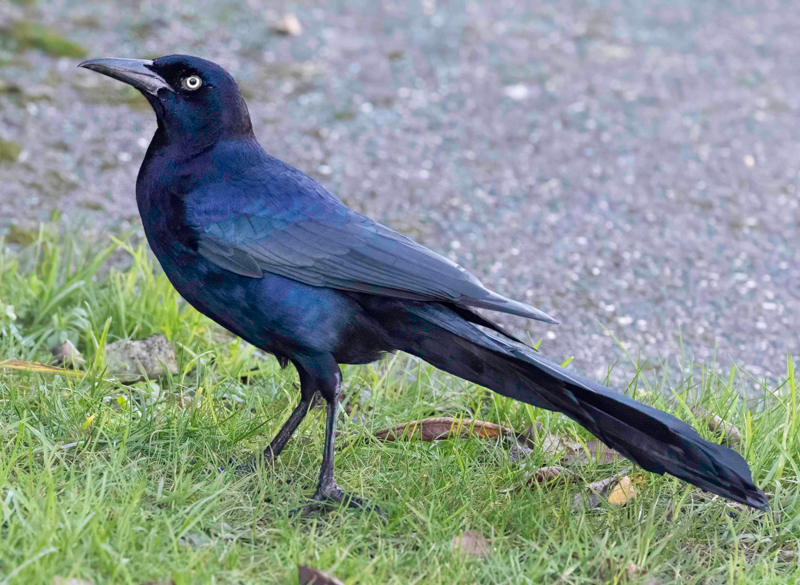
Finally, the Great-tailed Grackle in Hampshire continued to draw a steady stream of admirers, still present there at Holbury until 8th.
If the overseas news were a tabloid newspaper, we’d have some serious contenders for colourful front page headline fodder from the past fortnight. We’d probably best start in the Netherlands, where the much-twitched Spectacled Eider drake on Texel was looking decidedly under the weather by 28th when it was taken into care.
It’s mildly entertaining to compare how that intervention went with how past episodes in British twitching lore have played out. The Dutch made no bones about saying where the bird was being cared for, and have been posting regular updates as to its situation and progress – by the close of play on 8th it was still alive, had been treated for worms, and was gaining a little weight.
Also present in the Netherlands this week, the Black-faced Bunting seemed set to overwinter on Texel on 24th-8th; and the Pygmy Cormorant remained at Natuurpark Lelystad on 28th-3rd.
To France next, where all sorts of exciting things were to be seen. Continuing to frustrate British birders, the Lesser Short-toed Lark sp remained agonisingly just out of reach across the English Channel from Kent, sitting tight at Pas de Calais on the beach at Marck on 28th-31st still. The first-winter male Belted Kingfisher was still on the Canal de Nantes a Brest on 24th-7th; the Northern Harrier at Marais de Peychaud on 28th-2nd; and a dead Allen’s Gallinule was found near Etang de Thau on 3rd.
The latter may have been an ex-gallinule, bereft of life and ceased to be, but happily the same couldn’t be said for another Allen’s Gallinule lately, this one found alive and well on Sicily near Palermo on New Year’s Day.
In Spain, the Cape Gull remained in residence at Laredo on 26th-6th.
Out on the Canary Islands an Abyssinian Roller was present on Gran Canaria on New Year’s Eve.
Further south still, on Cape Verde the Willet was seen again on Boat Vista on 4th.
Mid Atlantic, on the Azores a Royal Tern was present on Sao Miguel on 26th-28th.
Still more island news – a Desert Finch settled at Paphos Wetland on Cyprus on 28th-4th.
Up on Iceland, the Baltimore Oriole remained in Reykjavik on 1st-6th still, and a White-winged Scoter still off Reykjavik on 2nd-7th.
On Faroe, massive kudos to the sharp eyes and confidence that found the Western Palearctic’s second-ever Short-billed Gull at Miðvági on 4th-5th.
And finally, east into Scandinavia, where Danish birders were treated to a fine Dusky Thrush at Refshaleoen on 26th-8th…
…and Norwegian birders landed an absolutely belting Azure Tit at Brekstad on 5th-7th. That’s both a national first and on the west coast of Norway. The utter chaos that would ensue should one ever do the unthinkable and shift still further west across the North Sea simply doesn’t bear thinking of.
Normal service resumes as of today, which is to say the Rarity Round Up will be dropping weekly once more now the Christmas shenanigans are over, and we’re back in the business of making wildly optimistic stabs in the dark by way of predictions for the weeks ahead.
As we go to press Storm Goretti will have done its worst with us, delivering intense windspeeds knocking on the door of 100mph to the southern half of Britain and Ireland. Will that have swept any birds of note in with it? As the week unfolds it’s looking like we’ll be getting a smorgasbord of weather, with easterlies and westerlies alike arriving at different junctures in different quarters of the region as a whole.
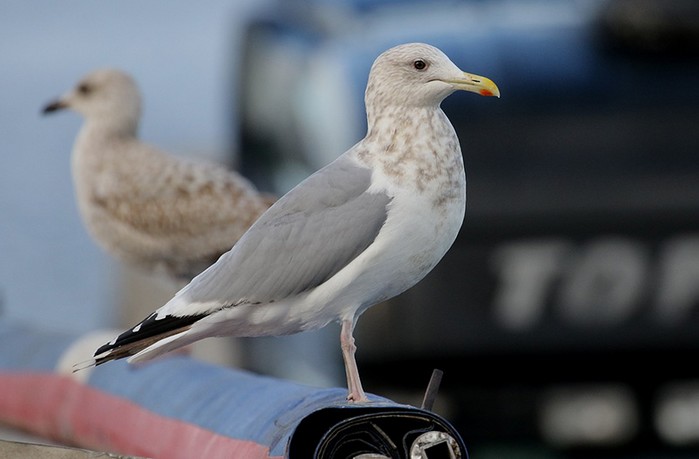
Birdwise, this might be like the Christmas leftovers – a mixture of mildly appealing odds and sods, but just maybe with a tasty morsel in their midst. The second week of January has a little form in terms of springing a pleasant surprise, not least where large gulls are concerned – since the turn of the century the coming week has given us both Slaty-backed Gull at Rainham Landfill (London) on 13th-14th January 2011, and Vega Gull at Duncannon (Co.Wexford) on 10th-13th January 2016.
And if checking your local gull flock weren’t already an enticing enough prospect, bearing in mind news from Faroe this week, is anyone feeling brave enough to sift through their local Common Gulls?
Jon Dunn
9 January 2026
Many thanks to all this week's contributors for your photos and videos and to everyone who contributed throughout the year.
Get Breaking Birdnews First
Get all the latest breaking bird news as it happens, download BirdAlertPRO for a 30-day free trial. No payment details required, and get exclusive first-time subscriber offers.
Share





