Wave of poisoning incidents hits vultures across Africa
Separate events in East and West Africa claim dozens of birds and highlight growing threats
A deadly trend resurfaces
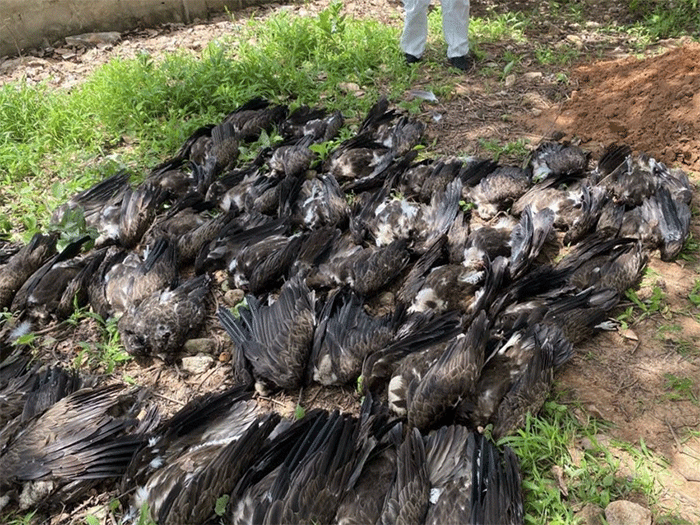
A new series of poisoning incidents in Africa has killed dozens of vultures in just ten days, conservationists report, underscoring the severe and widespread threat that toxic baits continue to pose for these key scavengers.
The recent incidents include a case in the borderlands between Kenya and Tanzania where a poisoned carcass intended to target large predators was eaten by vultures, and a separate event near a slaughterhouse in Burkina Faso in which vultures were deliberately poisoned for the illegal trade in body parts.
Vultures caught in toxic traps
In the Kenya–Tanzania border region, authorities say at least 34 vultures died after feeding on a carcass laced with poison. The bait was reportedly set in an effort to kill lions following a predation incident, but vultures — which feed on carcasses almost immediately after predators depart — became unintended victims.
Elsewhere, local officers in Burkina Faso discovered 22 dead Hooded Vultures near a slaughterhouse. A suspect later admitted that the poison was intended to facilitate the export of the birds for mystical or belief-based uses.
The scale of the problem
Both Hooded Vultures and several other African species are already in steep decline, and these recent poisonings come at a time when their populations are increasingly vulnerable. Hooded Vultures in particular are classified as Critically Endangered, with numbers estimated to have fallen by more than half over recent generations.
The two incidents together claimed nearly 60 vultures in just over a week — a stark reminder that poisoning remains one of the most serious threats these birds face on the continent.
Why vultures are so at risk
Vultures are especially susceptible to poison because of their feeding ecology: they rapidly locate and feed on carcasses, including those of animals that have been deliberately laced with toxic substances. Poisoned bait set for large carnivores, pests or targeted wildlife often kills multiple species, with scavengers like vultures among the hardest hit.
In some regions, vultures are also directly targeted because their body parts are used in traditional medicine or belief-based trade — a practice that fuels deliberate poisonings. The combined impact of intentional and unintentional poisoning has already pushed several African vulture species toward the brink.
Ripple effects through ecosystems
Vultures play a crucial role in natural systems by rapidly consuming carrion and helping limit the spread of disease.
Losing large numbers of vultures in short periods can disrupt these ecological services, with knock-on effects for other wildlife and local communities.
Conservation response underway
In response to recent events, wildlife authorities and conservation organisations are working to investigate the poisoning cases, apprehend suspects and raise awareness of the threats. These efforts are part of broader campaigns to reduce wildlife poisoning and protect vultures across their ranges.
At a time when vulture populations are already squeezed by habitat loss, persecution and other pressures, the renewed surge in poisoning incidents highlights the urgent need for coordinated action to safeguard these indispensable birds.
February 2026
Get Breaking Birdnews First
Get all the latest breaking bird news as it happens, download BirdAlertPRO for a 30-day free trial. No payment details required and get exclusive first-time subscriber offers.
Share this story