


Suspected rodent incursion tests defences on Welsh seabird islands
Suspicious gnaw marks on The Skerries triggered an emergency response involving a bait grid and a specialist rat-detection dog.
A suspicious gnaw mark on a monitoring block prompted an emergency operation to protect breeding seabirds on The Skerries, off the north-west coast of Anglesey.
The mark was discovered during routine surveillance on 20 April. Staff activated the island's biosecurity plan, secured the permit needed to use rodenticide, collected equipment from a rapid-response store and laid out a bait grid.
A specialist detection team also joined the search. Jinx, a dog trained to locate the scent of rats, and handler Greg examined the rocky island for further evidence of an incursion.
No additional sign was found. The RSPB believes the mark was most likely made by a single rodent that subsequently died during the harsh winter, although the animal was not recovered and the explanation cannot be confirmed.

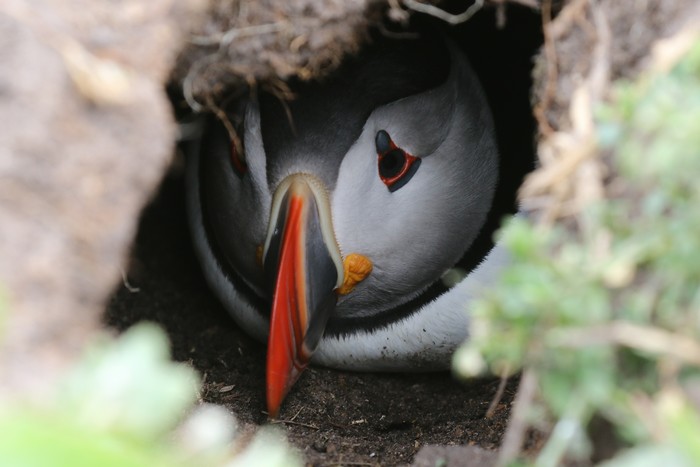
The outcome avoided the establishment of a breeding rat population, but it provided a real test of a response designed to move quickly when evidence is slight. The Skerries lie about 3 km off Anglesey and are designated for breeding Arctic, Common and Roseate Terns as well as Puffins.
Rats can eat seabird eggs, chicks and adults on islands where nesting birds evolved without mammalian predators. A single arrival hidden on a boat, in cargo or among equipment can therefore develop into a population with serious consequences.
“One pregnant rat can produce a colony of more than 300 in just eight months.”
RSPB Cymru
The Biosecurity for Wales programme works with 13 Welsh islands designated as Special Protection Areas or Sites of Special Scientific Interest for their breeding seabirds. Camera traps and wax blocks provide year-round surveillance, while the detection-dog team aims to search each island at least once annually.
During 2026, dog checks were completed on Skokholm, Ramsey and Bardsey, and monitoring equipment was deployed on Cardigan Island to help confirm that it remains rodent-free. New signs have also been installed at Martin's Haven, the departure point for Skomer boats, following rat sightings around the jetty.
The account is the RSPB's current assessment of its programme rather than confirmation that a rat survived on The Skerries. Its wider significance lies in the speed of the response: island biosecurity succeeds most effectively when prevention and early detection stop one suspected arrival becoming an established population.
9 Sep 2026
Get Breaking Birdnews First
Get all the latest breaking bird news as it happens, download BirdAlertPRO for a 30-day free trial. No payment details required and get exclusive first-time subscriber offers.




