


GPS tracking reveals the farmland features Scops Owls need after dark
Tracking breeding Scops Owls in Slovenia highlights the value of small woody features and grassland in intensively farmed landscapes.
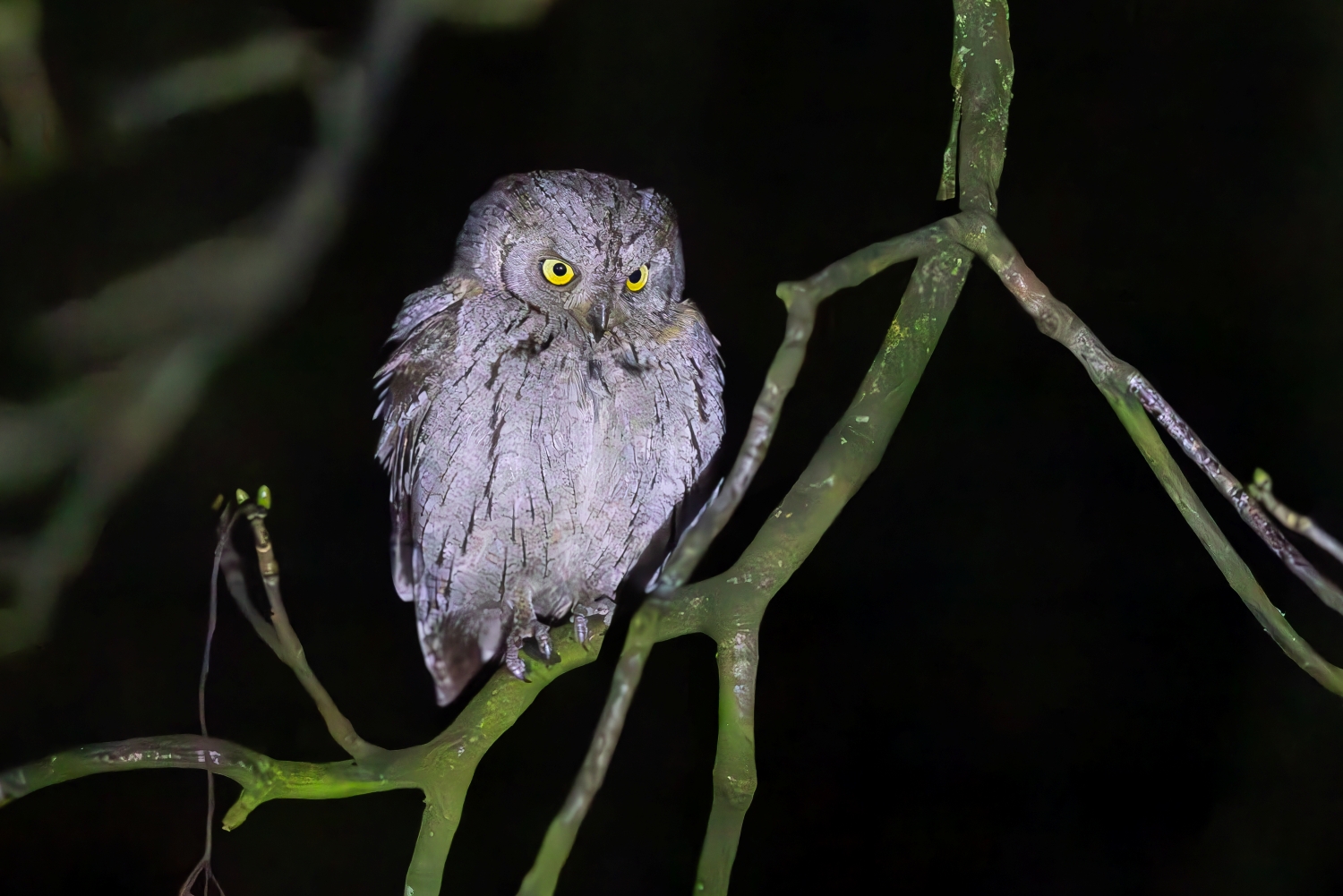
Small orchards, hedgerows and isolated trees can be disproportionately important to Scops Owls living in farmland, according to a GPS-tracking study in Slovenia.
Researchers fitted tags to 16 breeding birds and examined their nocturnal movements, home ranges and choice of habitat. The tracked owls used relatively compact areas averaging about 40 hectares, while the home ranges of five tracked pairs overlapped by approximately 80%.
The work revealed differences between the sexes as well as the landscape features used after dark. Males showed a pronounced activity peak around midnight, whereas females were active more evenly through the night. Movement steps became longer as temperatures rose and shorter with greater cloud cover. Moonlight was associated with increased activity by females but not males.
The clearest habitat selection involved relatively scarce woody features. Isolated trees and bushes, meadow orchards and hedgerows together occupied only about 12% of the owls' home ranges, yet the birds selected them more strongly than their availability would suggest.
Grassland contained the largest share of GPS fixes and made up about 27% of the home ranges. Overall, however, it was used roughly in proportion to its availability. The authors suggest that grassland may be most useful as prey-rich feeding habitat when it lies close to trees, hedges or other hunting perches.
Arable and fallow land produced the opposite pattern. Arable fields accounted for about 42% of the habitat available to the owls but were used less than expected.
“Small woody landscape features are particularly important for Scops Owls within predominantly agricultural landscapes.”
Study authors, Ibis
The findings matter because farmland-bird indicators and agri-environment measures are often designed around species that can be surveyed during daylight. A landscape that appears adequate when judged only by diurnal birds may still lack the perches, nest sites and feeding combinations required by nocturnal hunters.
Scops Owls are summer visitors to much of southern and central Europe, where they depend heavily on large insects and other small prey. The retention of old orchard trees, hedges and scattered woody features could therefore support both hunting and nesting opportunities without requiring every field to be taken out of production.
The study was based on a small sample from one Slovenian agricultural landscape, so its percentages should not be treated as universal thresholds. Even so, it offers unusually detailed evidence of how a nocturnal species uses fine-scale farmland features that daytime surveys can easily overlook.
9 Sep 2026
Get Breaking Birdnews First
Get all the latest breaking bird news as it happens, download BirdAlertPRO for a 30-day free trial. No payment details required and get exclusive first-time subscriber offers.




