Consumption-driven deforestation threatens 7,600 forest-dependent species worldwide
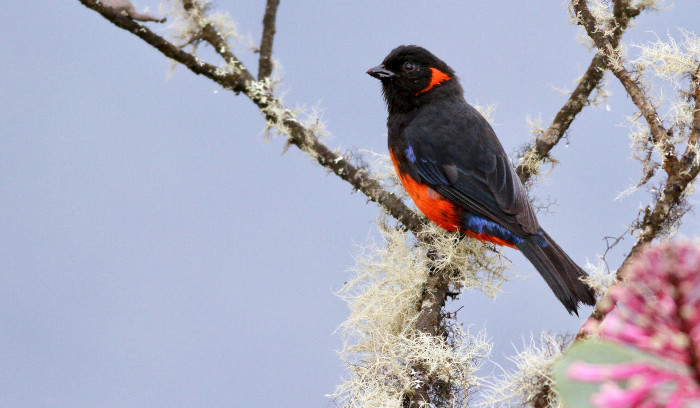
Biodiversity loss has accelerated at an alarming rate in recent decades, driven largely by human activities such as clearing forests to grow crops or harvest timber. While countries often degrade ecosystems within their own borders through these activities, they also play a significant role in driving habitat loss overseas by outsourcing agricultural production, i.e., importing food or timber from other countries, thereby leading those other countries to destroy their forests to produce the exports.
A Princeton study recently published in Nature quantifies for the first time the degree to which countries contribute to global biodiversity loss by shifting the environmental costs of their consumption abroad.
The researchers examined the impacts of 24 high-income nations on 7,593 forest-dependent species of birds, mammals, and reptiles, integrating economic trade data, satellite-derived deforestation maps, and species range information spanning from 2001 to 2015. By integrating forest loss data with comprehensive maps of species ranges, the researchers were able to identify "hotspots" of severe biodiversity loss and quantify the proportion of each species's habitat loss that can be attributed to the imports of each developed country.
"Tracing the impacts that countries have on the environment outside of their borders is difficult to do," says lead author Alex Wiebe, a doctoral student in the Department of Ecology and Evolutionary Biology. "By combining satellite imagery with economic and biodiversity data, we are now able to measure and map exactly where countries impact species around the world for the first time."
According to the results, consumption-driven deforestation caused by the 24 developed countries importing timber or crops from outside of their borders was responsible for 13.3% of global range loss experienced by forest-dependent vertebrates, in addition to the biodiversity loss they each caused domestically. On average, these countries caused international biodiversity losses 15 times greater than their domestic impacts, with the United States, Germany, France, Japan, and China being among the top contributors. Notably, 18 of the 24 countries observed in this study had higher international impacts than domestic impacts on biodiversity loss.
"By importing food and timber, these developed nations are essentially exporting extinction," said David Wilcove, co-author of the study and Professor of Ecology, Evolutionary Biology, and Public Affairs. "Global trade spreads out the environmental impacts of human consumption, in this case prompting the more developed nations to get their food from poorer, more biodiverse nations in the tropics, resulting in the loss of more species."
The study's findings also revealed how countries tend to have the largest impact on species in the tropical regions closest to them. For example, U.S. consumption had the most significant impact on wildlife in Central America, while China and Japan's consumption strongly affected species in the rainforest regions of Southeast Asia.
Additionally, the results highlighted the detrimental impacts of international trade on endangered species. According to the study, over half the range loss of 25% of critically endangered species stemmed from international consumption during the study period.
"By increasingly outsourcing their land use, countries have the ability to affect species around the world, even more than within their own borders," explains Wiebe. "This represents a major shift in how new threats to wildlife emerge."
The study's findings offer valuable insights into how we think about conservation and the patterns that emerge in how the distributions of species change over time. By analyzing these patterns, we can make more accurate predictions about where species are most at risk of extinction and enable more targeted conservation efforts that promote sustainable development. Wilcove underscores the need for collaboration between importing and exporting countries to advance habitat conservation and ensure more sustainable trade practices.
"Global trade in food and timber is not going to stop," notes Wilcove. "What's important is for the importing nations to recognize the environmental impacts this trade has on the exporting countries and to work with those countries to reduce those impacts. All nations stand to benefit by promoting habitat protection and sustainable agriculture because biodiversity benefits all nations."
Cara Clase, Princeton University
13 Feb 2025
More Information: R. Alex Wiebe et al., "Global biodiversity loss from outsourced deforestation," Nature (2025). DOI: 10.1038/s41586-024-08569-5.
Share this story