Young White-tailed Eagle Vanishes on Grouse Shooting Estate in National Park
The suspicious loss of a Dorset-born White-tailed Eagle is raising difficult questions for police, land managers and conservation bodies.
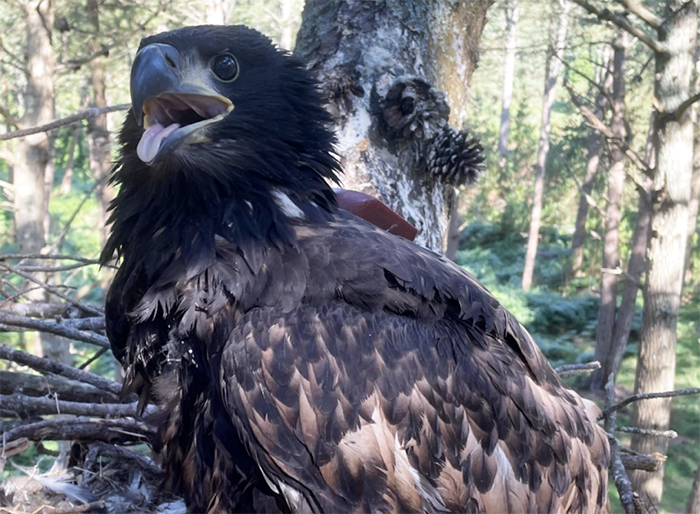
A young White-tailed Eagle has disappeared in the North York Moors National Park, prompting a police investigation and renewed concern over the vulnerability of reintroduced raptors in parts of the British uplands.
The bird, known as G834, was a satellite-tagged juvenile White-tailed Eagle Haliaeetus albicilla born in the wild in Dorset in 2025. It was part of the wider effort to restore the species to southern England, following releases carried out by the Roy Dennis Wildlife Foundation and Forestry England.
During spring 2026, G834 ranged widely through Britain. Tracking data showed that it reached the western side of the North York Moors on 30 April, before its tag stopped transmitting overnight into 1 May. No further signals have been received.
North Yorkshire Police confirmed that the disappearance is being treated as suspicious following analysis by the National Wildlife Crime Unit. Officers have appealed for information from anyone who may have seen the eagle, witnessed suspicious activity, or have relevant dashcam, CCTV or other footage from the area at the time.
Further reporting has identified the bird’s last known location as the Snilesworth Estate, a grouse-shooting estate within the North York Moors National Park. While the precise fate of the eagle has not been confirmed, the location and sudden loss of transmission have inevitably raised concern among conservationists, given the long-running association between some driven grouse moors and illegal persecution of birds of prey.
White-tailed Eagles are among Britain’s most spectacular restored birds, with a wingspan that can exceed two metres. Once lost from the country through persecution, they have slowly returned through reintroduction schemes in Scotland, the Isle of Wight and southern England. The Dorset-born G834 was therefore not just a wandering young eagle, but part of a conservation story many decades in the making.
The disappearance comes at a sensitive time for the species. Several satellite-tagged White-tailed Eagles have vanished in recent months, fuelling fears that illegal persecution could undermine the progress made by reintroduction projects. Conservationists argue that every young eagle matters, particularly while the English population is still in the early stages of recovery.
For those involved in raptor conservation, the loss of G834 is another troubling case in a familiar landscape. North Yorkshire has repeatedly featured in national raptor persecution statistics, and the North York Moors has long been regarded by many conservationists as one of the most difficult areas for birds of prey to survive.
Police are continuing their enquiries, and anyone with information has been urged to come forward. Until the bird, its tag, or other evidence is found, the final moments of G834 remain unknown. What is already clear is that the disappearance of one young eagle has once again thrown the spotlight on the uneasy relationship between raptor recovery, upland land management and wildlife crime enforcement in Britain.
June 2026
Get Breaking Birdnews First
Get all the latest breaking bird news as it happens, download BirdAlertPRO for a 30-day free trial. No payment details required and get exclusive first-time subscriber offers.
Share this story