DNA vacuum captures animal traces from air to map Danish wildlife
Portable air samplers detected dozens of bird and mammal species in Denmark, offering a new way to monitor wildlife without seeing or hearing it.
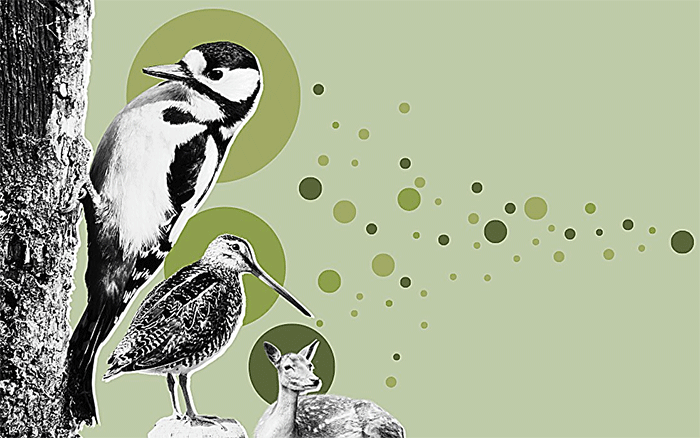
Researchers have developed a portable "DNA vacuum" capable of drawing invisible genetic traces left by birds and other animals from the air, allowing them to build a picture of the wildlife present in an area without having to see or hear it.
Animals continually release minute fragments of biological material through feathers, hair, skin cells, saliva and other sources. This environmental DNA, or eDNA, can remain suspended in airborne particles and be collected on a filter before laboratory sequencing is used to match it with reference databases.
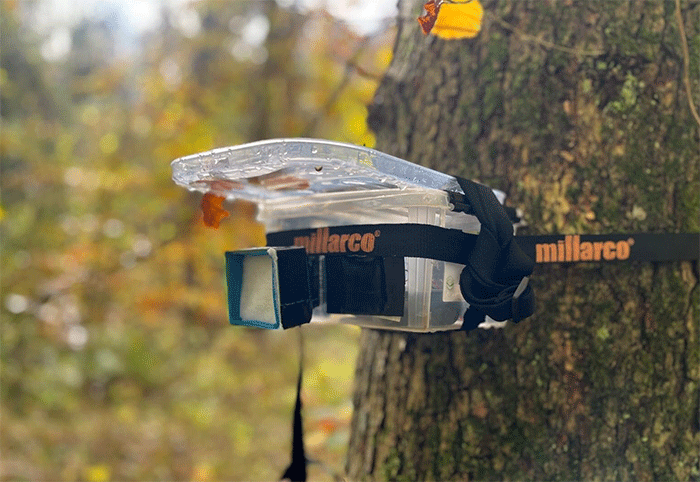
The University of Copenhagen team used inexpensive custom-built samplers consisting of a plastic housing, a computer fan and a filter similar to material used in vacuum-cleaner bags. The units were attached to trees and other vegetation in three protected Danish landscapes: Kalvebod Fælled on Amager, the island of Æbelø north of Funen and Tofte Forest in Lille Vildmose, northern Jutland.
In the first study, which tested changes to the equipment and the handling of samples, the researchers recorded 52 bird species, 19 mammals and one amphibian across the three areas. More importantly, the wildlife communities detected in the air reflected the habitat and season at each sampling site.
At Kalvebod Fælled, the filters recovered DNA from birds including Eurasian Teal, Common Snipe, Bearded Reedling and Northern Lapwing. Samples from Lille Vildmose contained traces of Tawny Owl, Great Spotted Woodpecker and Eurasian Bullfinch, as well as European Bison, while those from Æbelø included White-tailed Eagle, Long-eared Owl and European Fallow Deer.
The researchers did not detect animals expected to occur only many kilometres from the sampling stations. That finding suggests the signals were predominantly local rather than an indiscriminate mixture of DNA carried over long distances, an important requirement if the technique is to be used for wildlife mapping.
Tests of the equipment produced some initially counter-intuitive results. A coarser-grade filter captured more bird DNA and detected more wild bird and mammal taxa than finer alternatives. Larger filters, stronger airflow and dry storage at -20°C also improved results, helping to make detections more consistent between samples.
A companion study at Lille Vildmose examined how sampling duration affected the result and compared active air filtration with swabbing DNA from leaves. Researchers ran the air samplers for 24, 48 and 96 hours, then used DNA metabarcoding markers designed to detect birds and mammals.
Longer individual sampling periods produced richer and more consistent results. The 96-hour samples detected an average of 24 wild vertebrate taxa each, compared with 15 from 24-hour samples. The 24-hour treatment nevertheless produced the highest total number across the experiment, at 66 taxa, probably because the researchers analysed 40 of those samples compared with 20 collected over 48 hours and ten over 96 hours.
We hope that DNA vacuuming can become a method that functions as an additional tool in the toolbox for mapping species presence.
Kristine Bohmann, environmental DNA researcher at the University of Copenhagen
Active filtration substantially outperformed leaf swabbing. The leaf samples produced an average of only 1.5 vertebrate taxa each, while the air filters showed that increasing collection time could produce a more diverse and repeatable representation of the surrounding wildlife community.
The refined method could add a scalable and non-invasive source of information to conventional field surveys. Potential uses include confirming the presence of threatened species, assessing how wildlife responds to conservation work and detecting invasive species before they become established.
Important questions remain before DNA vacuuming can become a routine monitoring technique. The researchers are now studying how airborne animal DNA moves through space and time, including how long ago an animal may have left a detected trace and how close it was to the sampling station. They also plan to test the equipment in climates beyond Denmark, including tropical environments.
The research is published in Communications Biology and Methods in Ecology and Evolution.
4 Aug 2026
Get Breaking Birdnews First
Get all the latest breaking bird news as it happens,
download BirdAlertPRO
for a 30-day free trial. No payment details required and get exclusive first-time subscriber offers.
Share this story