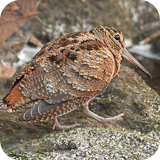
Feathers reveal where Woodcock shot in Britain and Ireland came from
Most sampled birds came from northern or eastern Europe, but residents were represented in all six winter regions, even where Woodcock no longer breed.

A Woodcock shot in winter on a coast where the species does not breed need not have crossed the North Sea. Feathers collected in six regions of Britain and Ireland indicate that locally originating birds occur in winter bags throughout the study area, including well away from the woods in which they bred.
Writing for the British Ornithologists' Union, Andrew Hoodless explains why that distinction matters. Woodcock are both a red-listed breeding bird in Britain and a winter visitor in substantial numbers from continental Europe. A count of birds present in winter cannot, on its own, say much about the pressure on the smaller resident population.
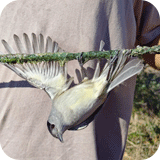
The clue lies in a feather grown months before the bird is seen. Rainfall varies across Europe in the relative amounts of two stable forms of hydrogen. The local signature passes through the food web, including the earthworms on which Woodcock feed, and into the feathers they grow. Once grown, a feather carries that signal to the wintering grounds.
For their study in Ibis, the researchers first collected feathers of known breeding-season origin. Those samples let them translate a map of hydrogen in rainfall into an estimate of what a Woodcock feather grown in a given region should look like chemically. They accounted for the difference in timing between a young bird growing its first feathers and an adult replacing its plumage.
Geographic assignment using isotope ratio alone is crude
Andrew Hoodless, writing for the British Ornithologists' Union
Rather than assigning each bird to a particular wood, the researchers estimated the probability of different origins. They used breeding abundance from the second European Breeding Bird Atlas alongside the isotope evidence: where two areas have similar rainfall signatures, an area with many breeding Woodcock is a more plausible source than one with very few.
Across 1,122 winter samples, the main source areas extended from southern Scandinavia and Finland through the Baltic states to Belarus and western Russia. Birds from different breeding areas mixed extensively. Even so, differences between the six winter regions were consistent with birds following broadly parallel routes across Europe.
The authors estimated that residents made up an average of 10.3% of birds shot across the winter regions. That is not the percentage of the resident population killed, nor a fixed ratio for every shoot. The sampling period, from mid-November into January, included the influx of continental migrants. Hoodless notes that large numbers do not begin arriving until the second and third weeks of November, and advocates delaying shooting until December to reduce pressure on residents.
The findings also explain why restricting attention to known breeding woods would miss some British birds. Residents move too. The study establishes their presence in the winter bag; assessing what that means for the breeding population still requires information on hunting effort and survival.
11 November 2026
Get Breaking Birdnews First
Get all the latest breaking bird news as it happens, download BirdAlertPRO for a 30-day free trial. No payment details required and get exclusive first-time subscriber offers.