



Weekly birding round-up: 3 - 9 Jul
One of the particular joys of writing the weekly Round Up is getting to enjoy, vicariously, the week’s rarities. And, as a rule, it’s the new birds that make the headlines. But this week, for a change, our most recent stand-out, stellar new mega is joined by two former superstars. Simply because weeks boasting a glittering array of birds of this calibre come around so infrequently, and deserve marking and noting. What a week this just was…
Decades of thwarted dreams and hurt finally found surcease this week. A dream, stolen from us by the hand of a fickle god, was realised again. An opportunity that flickered once, and was then cruelly snatched away, was returned to us once more last Sunday.
No more years of hurt. No more need for dreaming.
And the theatre of dreams? It was a return not to the Azteca stadium in Mexico, though something was happening there on Sunday too, but to Scotland. Over 25 years ago, Britain’s first Long-tailed Shrike was found on South Uist, definitely present on the island on 3rd-4th November 2000, but possibly present there since late October. The critical part of this first for Britain was the brevity of the time in which it was knowingly available to twitch, and the intemperance of the birding gods where the weather was concerned.
Precious few twitchers managed to make it to South Uist in time, with charters very much the order of the day for those determined to get there, come what may. Or not… a chartered fishing boat, (in)famously, suffered gearbox failure in the Little Minch, sparking a coordinated air/sea rescue response.
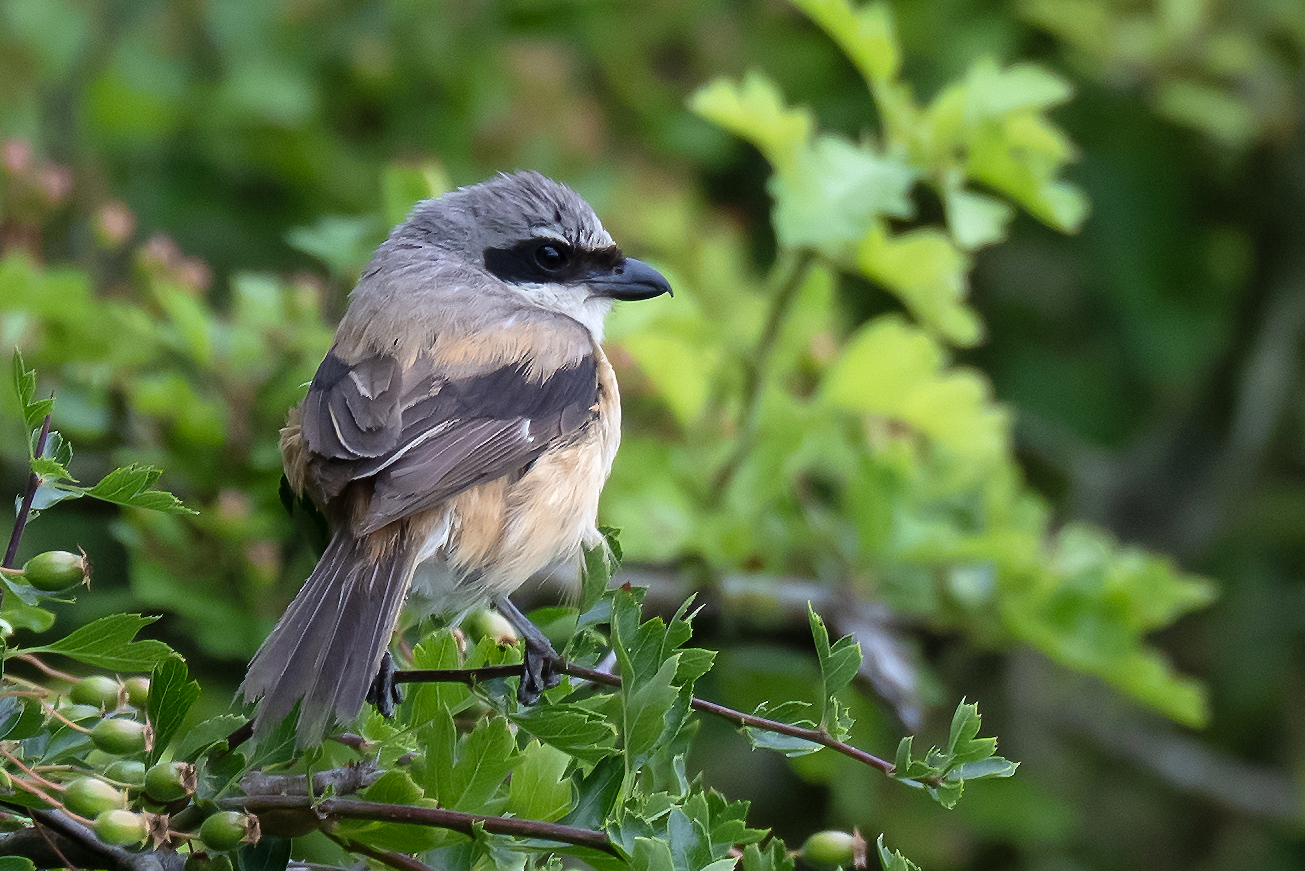
And after that… well, not a sniff of a further Long-tailed Shrike anywhere in Britain. We went on to score our first Masked Shrike not so very many years later, a long-staying bird at Kilrenny (Fife) in autumn 2004, that’s been followed by four more subsequent records… but that South Uist Long-tailed was moving firmly into blocker territory with every passing year. Sporadic sightings from elsewhere in Europe over the years did little to engender much confidence of another British bird any time soon…
Step forward visiting American birder Ian Redfield who, a little way outside of Crail (Fife) on Sunday 5th, and barely a stone’s throw from the site of the 2004 Masked Shrike, found an absolutely stonking male Long-tailed Shrike. And there it remained, anchored on the British mainland, readily accessible if sometimes on the elusive side, as the remainder of the week unfolded, still present and sometimes showing well until 8th, and reported distant and elusive still on 9th.
Bird of the year? It’s going to take quite something in the second half of 2026 to dislodge this strong contender for the title.
It’s been well-covered in these parts lately, but the lingering presence of Britain’s first Western Reef Heron thoroughly deserves a return to the headlines this of all weeks. Having moved lately to the Gann Estuary (Pembrokeshire), it settled down this past week, remaining present there – and still drawing a crowd – throughout the week until 9th.
Equally a fixture of recent weeks, Norfolk’s Black-winged Kite continued to haunt the county, being seen once more regularly at Sea Palling on 3rd-9th.
Intriguingly, another possible bird was reported from Morgan’s Hill (Wiltshire) on 4th. Is this charming species set to cross the Rubicon and become semi-regular in Britain in the coming years? It seems entirely feasible it may well do so.
Very quiet times in British and Irish waters this week, with the probable Barolo Shearwater seen heading north from Flamborough (East Yorkshire) on the morning of 7th a notable potential exception.
Large shearwaters were precious thin on the ground - single Great Shearwater were seen from Porthleven (Cornwall) on 4th, the Scilly pelagic of 6th, and on 9th from Porthgwarra (Cornwall). Our sole Cory’s Shearwater was a bird noted from Carnsore Point (Co.Wexford) on 4th.
Numbers of Balearic Shearwater remained low, with a peak count of their kind coming again from Portland (Dorset), where 62 birds were noted on 5th.
A Wilson’s Petrel was seen from the Scilly pelagic of 6th.
Finally, the White-billed Diver remained off Houton (Orkney) on 5th-7th.
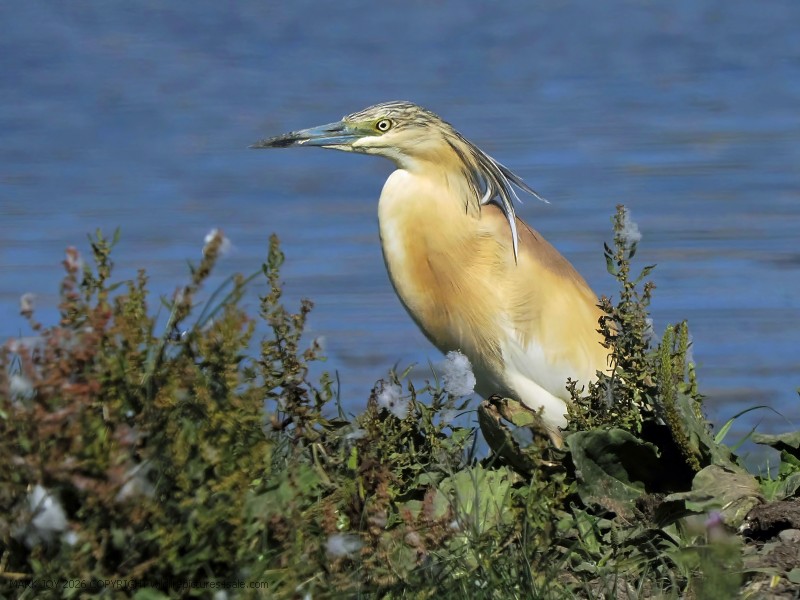
Norfolk shook things up a little among the long-legged beasties this week, with a Squacco Heron seen at Kelling Water Meadow on 6th-8th.
An adult Purple Heron was seen at Shapwick Heath NNR (Somerset) on 5th.
The week proved busier than of late for Night Heron - one was seen on 5th near Bridge of Allan (Forth); another on 5th and 7th at Attenborough NR (Nottinghamshire); one at Camp Lane Pits (Worcestershire) on 7th; another on 7th at North Cave Wetlands YWT (East Yorkshire); and a bird on 9th in Hampshire at Miller’s Pond.
Ever more peaceful on the rarity duckpond this week, with a midsummer Sargasso Sea-like calm largely descending upon preceedings.
The recent Green-winged Teal remained at Sandbach Flashes (Cheshire & Wirral) on 3rd.
The drake Lesser Scaup stayed put in Fife on Loch Gelly on 3rd-7th.
The recent drake Ring-necked Duck remained on Nether Kinellan (Highland & Caithness) on 5th-8th, while another was found at Oxford Island NR (Co.Armagh) on 4th-5th, and a female on Hanningfield Reservoir (Essex) on 8th-9th.
The drake Ferruginous Duck was still present on Draycote Water (Warwickshire) on 3rd, and a female was present at Shawell (Leicestershire) on 4th.
Numbers of Surf Scoter present at Musselburgh (Lothian) rose to three birds on 3rd-9th, with four reported on 7th; while the second-summer drake White-winged Scoter was again seen there on 7th-9th also.
In East Yorkshire the recent adult Pacific Golden Plover was again seen at Beacon Ponds NR on 4th; with presumably the same bird relocating down the coast to Donna Nook (Lincolnshire) on 6th-8th.

North Ronaldsay (Orkney) held onto its Semipalmated Sandpiper on 3rd-8th.
A Pectoral Sandpiper settled into Snettisham RSPB (Norfolk) on 4th-7th.
Short video of this afternoon's Pectoral Sandpiper on Snettisham beach #UKBirding #norfolkbirding #birds
— Steve Fitzgerald (@stevefitz.bsky.social) 5 July 2026 at 19:01
[image or embed]
The White-rumped Sandpiper remained at Cairnbulg (Aberdeenshire) on 3rd.
Temminck’s Stint this week were noted at Portmore Lough RSPB (Co.Antrim) on 5th, and Farlington Marshes HWT (Hampshire) on 5th-6th.
In Norfolk the two Black-winged Stilt remained at Titchwell RSPB on 3rd-5th.
A possible Lesser Yellowlegs was reported from Rye Harbour NR (East Sussex) on 7th.
The weekly waders conclude with Red-necked Phalarope present at Misson (Nottinghamshire) on 7th, and Newington Flash (South Yorkshire) on 7th-8th also.
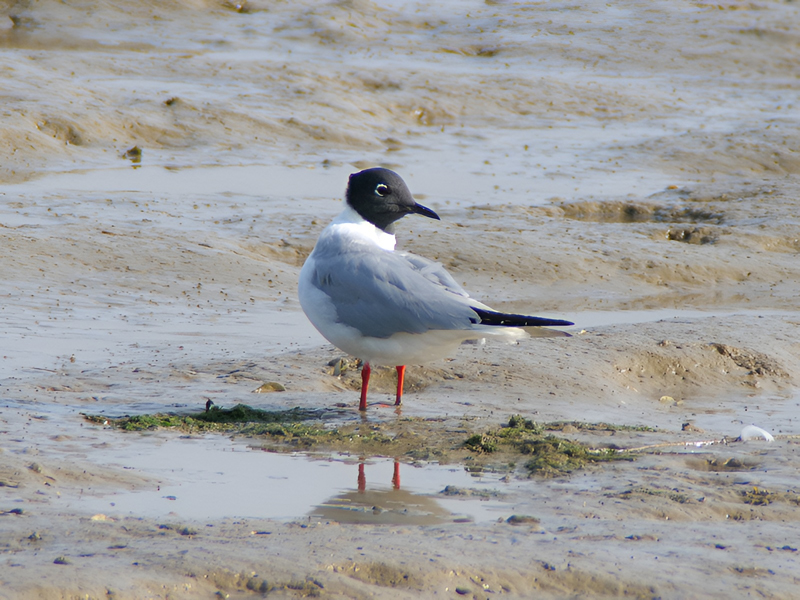
Onto the gulls, and a busy week once again for Bonaparte’s Gull - birds remained at Oare Marshes KWT (Kent) on 3rd-8th, Cairnbulg (Aberdeenshire) on 3rd, and on Shetland at Scatsa on 4th-6th. Additional sightings owed themselves to Blennerville (Co.Kerry) on 4th, and a probable seen heading upriver past Rainham Marshes RSPB (London) on 5th.
A Laughing Gull was a welcome bird on Skye (Highland & Caithness) on 5th-8th.
The Ring-billed Gull was again seen on Noss (Shetland) on 8th.
Sabine’s Gull in recent days were seen in Dorset from Portland on 5th, and in Cornwall at Tintagel on 7th.
Scottish sightings of Glaucous Gull came from Stenness (Orkney) again on 5th, and on South Uist (Western Isles) again on 6th.
Onto the terns, the recent Caspian Tern remained in Kent at Dungeness RSPB on 3rd-5th, and another was logged passing over Farmoor Reservoir (Oxfordshire) on 8th.
In Northumberland the female surinamensis American Black Tern remained present at Long Nanny 3rd-9th.
Lastly, the adult White-winged Black Tern was still present at Tacumshin (Co.Wexford) on 3rd-9th.

Away from our Norfolk headliner, there wasn’t much to report upon this week. Cornwall threatened the headlines with a couple of sightings of a probable pale morph Booted Eagle near Redruth on 8th…
…and a male Red-footed Falcon was found on 8th at Paull Holme Strays (East Yorkshire).
Up in Shetland, the Alpine Swift continued to haunt the cliffs at Noss on 3rd.
The week was marked with a flurry of Bee-eater sightings – on Scilly on St Mary’s on 3rd-5th, and St Agnes on 3rd and once more on 7th; two seen in Norfolk at West Runton on 5th; singletons on 6th over Porthleven (Cornwall) and Potland (Dorset); and in Kent, on 7th, two seen over Kingsdown and Worth Marshes RSPB.
Our principle headliner wasn’t the only shrike seen in Scotland this week – from the northern isles came sightings of Red-backed Shrike on Fair Isle (Shetland) still on 3rd-4th, and on North Ronaldsay (Orkney) on 6th-8th.
A Golden Oriole was sound recorded in Dorset at Lytchett Bay on 4th.
A singing Marsh Warbler was found on the shores of Pool of Virkie (Shetland) on 8th.
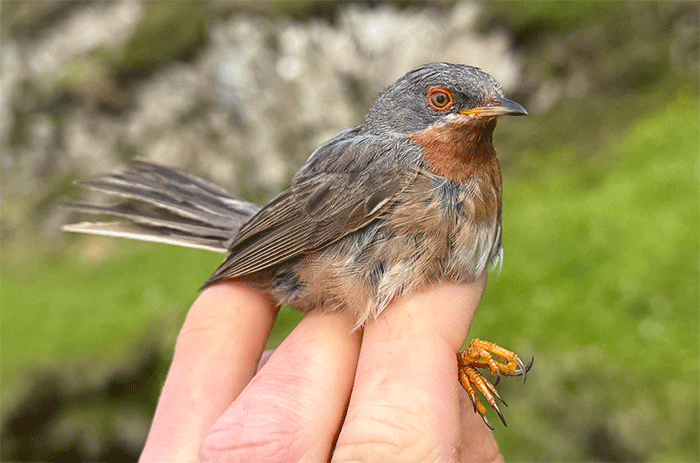
Also in Shetland, on Fair Isle a Melodious Warbler was present on 6th, and the Western Subalpine Warbler remained on the isle on 5th-9th.
Absent from the news awhile now, a singing Zitting Cisticola was once more logged in Suffolk at Walberswick on 9th.
Fair Isle also held onto a recent Serin on 3rd-6th, while further sightings came this week from Scarborough (North Yorkshire) on 4th, Boyton (Suffolk) on 5th, and Portland (Dorset) again on 8th-9th.
In Highland & Caithness the recent Common Rosefinch remained on Skye at Aird of Sleat on 3rd-9th.
Last but not least, the male Great-tailed Grackle remained in Lancashire & North Merseyside at Speke Hall NT on 3rd-5th.
Our overseas news starts to the north of us, where on Faroe a Cedar Waxwing was found on Vágar on 4th.
In Denmark a Black Vulture was logged at Hulsig Hede on 6th.
The Netherlands enjoyed an adult Great Knot on Texel on 6th-7th.
In France, two Elegant Tern remained at Polder de Sebastopol on 5th, and the Bridled Tern on Ile aux Moutons on 4th-6th still. A Western Reef Heron was to be seen in the Camargue at Le Petit Rhone on 6th.
Spain’s Mallorca also scored a Western Reef Heron on 4th and 9th, while the Elegant Tern remained at Salinas de Pinet on 4th.
After a week that featured a rarity of the sheer heft of an adult male Long-tailed Shrike, whatever immediately follows is always likely to be something of an anticlimax. Short of a first for Britain, almost anything inevitably would be.
Nonetheless, it should go without saying now that July retains the capacity to surprise. Waders, naturally, offer potential for a big bird – the coming week has historical precedent in the form of Caspian Plover at Aberlady Bay (Lothian) on 12th-13th July 1988, and somewhat more recently, the Great Knot at Breydon Water (Norfolk) on 13th-15th July 2014.
And, as we saw on Faroe only this past week, and as precedent also reminds us, it’s not too late for a surprise American passerine. Faroe enjoyed a Cedar Waxwing lately, and we’ve past history with Brown-headed Cowbird at Angle (Pembrokeshire) on 14th-15th July 2009.
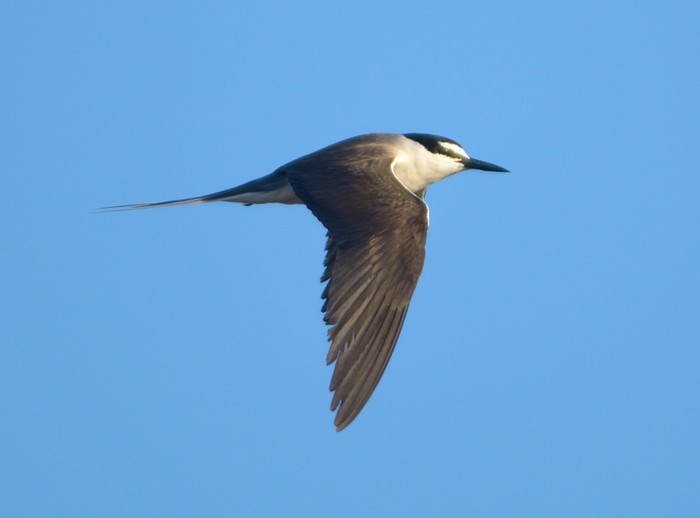
Looking to shorten the odds, the coming week has better form with rare terns, with multiple records of Sooty and Bridled to its credit. With the French Bridled Tern sitting just around the corner from the English Channel on L'île aux Moutons still this week as recently as 7th, we’re surely due a wander at some point in the not too distant.
Jon Dunn
10 Jul 2026
Many thanks to all this week's contributors for your photos and videos and to everyone who contributed throughout the year.
Get Breaking Birdnews First
Get all the latest breaking bird news as it happens, download BirdAlertPRO for a 30-day free trial. No payment details required, and get exclusive first-time subscriber offers.
Share





