Weekly birding round-up: 2 - Feb 2021
Storm Darcy bowled into Britain this week, bringing snow or at the very least plummeting temperatures for many. Meanwhile, on the rarities front, things were hotting up uncharacteristically for this time of year…
It’s easy to knock Twitter as a magnificent waste of time, a platform upon which anyone with an ill-formed opinion can air it, and for petty online vendettas to play themselves out. The upside to Twitter is, of course, the joy that’s elicited from a host of like-minded accounts posting interesting content, sharing news, information, and assistance.
For the most part, what we might broadly call ‘nature Twitter’ is very much all about the latter, leaving the grubbier side of social media to inane celebrities and politicians. And sometimes, just sometimes, the content posted on nature Twitter proves to actually be the news, and writes the headlines for us...
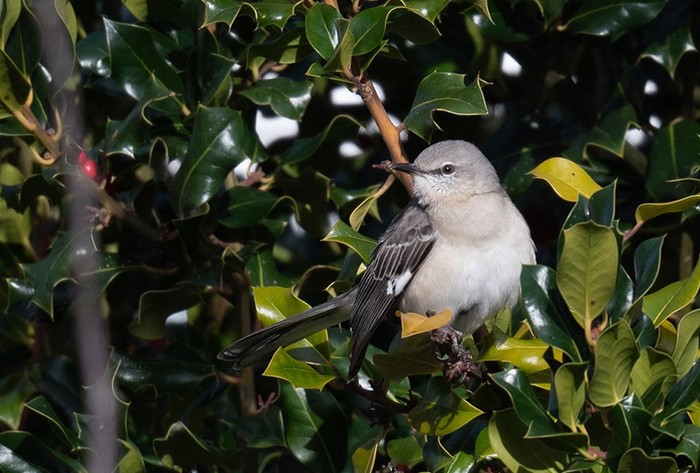
Who knows what would have happened had Chris Biddle not posted a tweet on 6th about the strange bird that had been hanging out in his garden? A Northern Mockingbird, latterly said to have been present in the mild microclimate of Exmouth (Devon) for perhaps a month or so already, might have slipped through the net entirely.
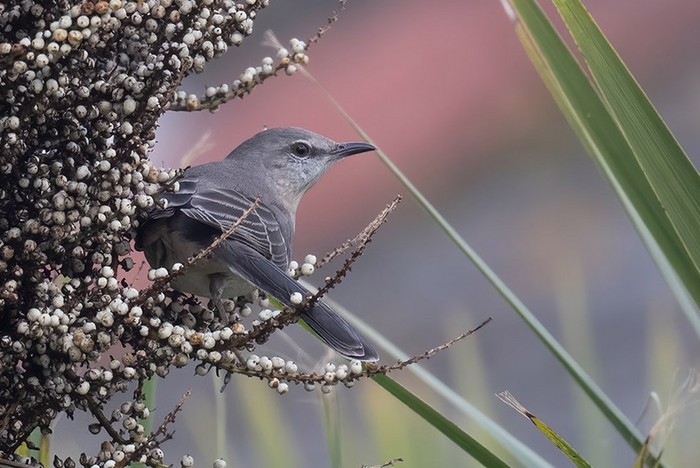
Happily, that’s not what happened. Chris correctly suggested an identity for the bird and, once that tweet had been seen by others on Twitter, the penny was dropping in the wider world. And sure enough, as the day unfolded, local birders started to post images of an immaculate and healthy-looking Northern Mockingbird.
One assumes the bird arrived in the late autumn in the same strong westerlies that brought a host of other Nearctic goodies to our shores, and has been quietly overwintering in the southwest ever since. The two prior accepted British records, birds present at Saltash (Cornwall) on 30th August 1982 and Horsey Island (Essex) on 17th-23rd May 1988 hardly give us an established pattern of vagrancy – and certainly the latter record, just a few miles from the port of Felixstowe, infers ship assistance anyway.
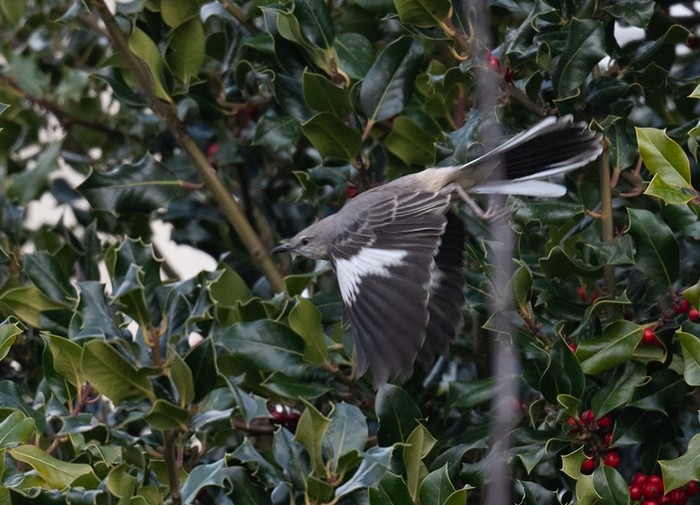
That’s not to say that a Northern Mockingbird couldn’t make it here under its own steam. On the other side of the Atlantic, the north-eastern population of them at least seems to show some migratory inclinations, and they’re expanding their range north into Canada too. Sea crossings certainly aren’t out of the question – there are records from Bermuda – while a bird found in Gambell in Alaska in September 2014 was not only on an island, but also some 1,500 miles away from the nearest known breeding population.
Britain: 2 accepted records
First record: Aug 30th 1982, Saltash, Cornwall
Most recent: May 17-23 1988, Horsey Island, Essex
Western Palearctic: 4 accepted records
Two further British records preceded our presently accepted duo – these being a bird on Blakeney Point (Norfolk) on 22nd-25th August 1971, and a further 1970s individual at Worm’s Head (Glamorgan) on 24th July – 31st August 1978. The former was considered an escaped cagebird due to feather wear; and the latter didn’t make the grade either, with the midsummer arrival date and possibility of ship assistance weighing against it.
However, surely everything’s looking good for this bird’s provenance – a thriving species in the eastern USA, capable of long-range dispersal, found in immaculate condition, and discovered in the wake of a classic autumn for Nearctic bird vagrancy. Now, with the bird still present in the area on 8th, all we need it to do is continue to reside happily in the gardens of Exmouth for a good while longer, as it’s presently a dream bird for many, but a nightmare to see for most.
I guess we’ll never know whether the White-throated Sparrow found this week in a garden near Barcombe (East Sussex) on 3rd is one and the same individual as that last seen some 40 miles away in Kent at Orlestone on 13th January, maybe displaced by the advancing cold front from the east.
Two bird theory, anyone? Well, why not. Stranger things have happened in south-east England, after all. We need only look back to the astounding Kentish winter double bill of Golden-winged Warbler in Maidstone on 24th January – 10th April 1989 and, simultaneously, a Common Yellowthroat wintering near Sittingbourne on 6th January – 23rd April.
So, two wintering White-throated Sparrows? Why not indeed.
Two widely separated White-billed Divers were the week’s star seabird turns – these being one of the recent two birds once again seen in Shetland in South Nesting Bay on 4th; and, way down the country in Cornwall, a bird seen motoring west past Pendeen on 5th.
Cornwall continued to serve regular sightings of Pomarine Skuas in recent days also – the waters between Falmouth and Rosemullion Head harboured four birds on at least 2nd, comprising pale and dark adults and two pale juveniles, with at least two of those birds still present in the area on 5th. Further east, a single bird was seen from Dawlish Warren NNR (Devon) on 2nd; and a possible bird was noted in Norfolk at Holme Dunes on 7th.
A Little Auk was seen on 6th from Pittenweem (Fife).
Further variety this week came from Norfolk where, on 7th, two Leach’s Petrels were seen passing Weybourne Camp.
The cold snap was, predictably, suppressing sightings of long-legged beasties of all kinds this week. With no positive news from the recent heartland of Cambridgeshire in recent days, our mainstay for Glossy Ibises was once again Devon where, at Fremington Pill, the quartet of birds were again noted on 2nd-5th. The balance of the week’s sightings came from Kent, where a bird was present at Grove Ferry NNR on 3rd, and the regular individual was again seen at Dungeness on 4th-5th; and Dorset, where the Stanpit Marsh bird was once more seen on 6th.
We return to our usual ways with the honkers and quackers this week, starting with The Goose Formerly Known As Canada - of which the two hutchinsii Richardson’s Cackling Geese still present on North Uist (Western Isles) on 6th-7th, and the two interior Todd’s Canada Geese still on Tiree (Argyll & Bute) on 8th, were the sole representatives reported in recent days.
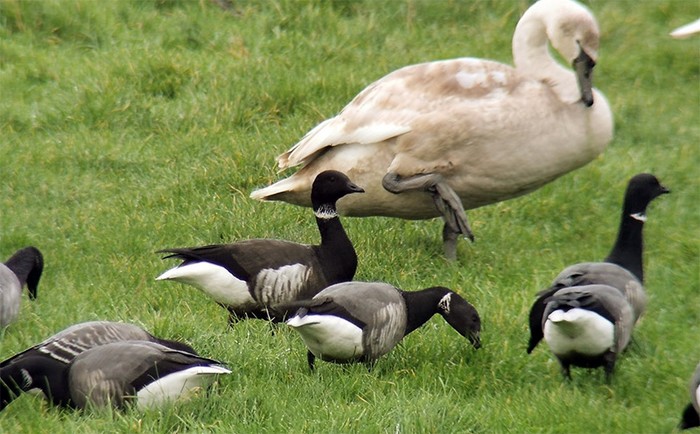
A handful of Black Brants cropped up again – one in Norfolk at Cley on 2nd, another on North Bull Island (Co.Dublin) once more on 5th, one more back on Dorset’s Fleet off Rodden Hive on 7th and, on 8th, the East Yorkshire bird seen once again at Kilnsea Wetlands.
Cold weather and freezing freshwater bodies were definitely making a difference where duck sightings were concerned lately. Just a few Green-winged Teal were reported – one still present on North Ronaldsay (Orkney) on 3rd; one on Ince Marshes (Cheshire) on 7th; and a bird still present at Blennerville (Co.Kerry) on 7th-8th…
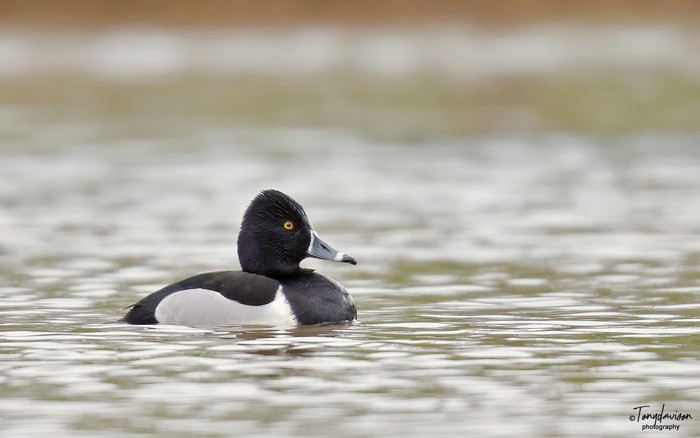
…while numbers of Ring-necked Ducks remained muted compared to a few weeks ago, with around 20 birds logged in recent days. Some duos remained constant – two birds remained at Radley GPs (Oxfordshire) on 2nd-7th; the two females were still present in Cornwall at Siblyback Lake on 4th; two more females were seen on 4th at Lough Allula (Co.Cork); and two drakes remained at Talley Lakes (Carmarthenshire) on 6th.
In Cambridgeshire, the Ferruginous Duck remained at Ouse Washes RSPB on 3rd-4th.
Co.Waterford’s first-winter drake Lesser Scaup was once more seen at Knockaderry reservoir on 6th, while in Co.Kerry the recent first-winter drake King Eider remained at Castlegregory on 6th also.
The latter was not, however, the best of the week’s seaducks. Those laurels went, once more, to the drake White-winged Scoter seen again from Eastfield (Lothian) on 7th.
He shared those chilly Lothian waters still with a drake Surf Scoter that day, while another drake lingered this week off Embo (Highland) on 4th-7th, and one more was seen again from Bremore Point (Co.Dublin) on 5th.
Heading the shorebirds section once more this week, the Sociable Lapwing was again seen in Cornwall at Maer Lake CBWPS on 3rd.
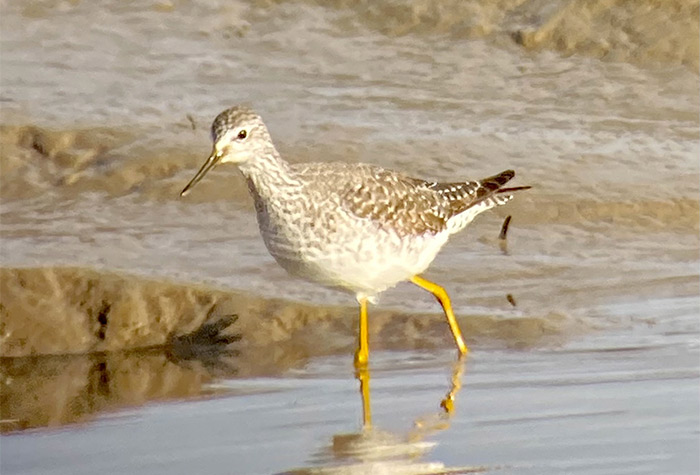
Moving up to Devon, the Lesser Yellowlegs was once more noted at Aveton Gifford on 2nd-7th; while the Irish wintering individual remained at Killongford Pools (Co.Waterford) on 3rd-5th.
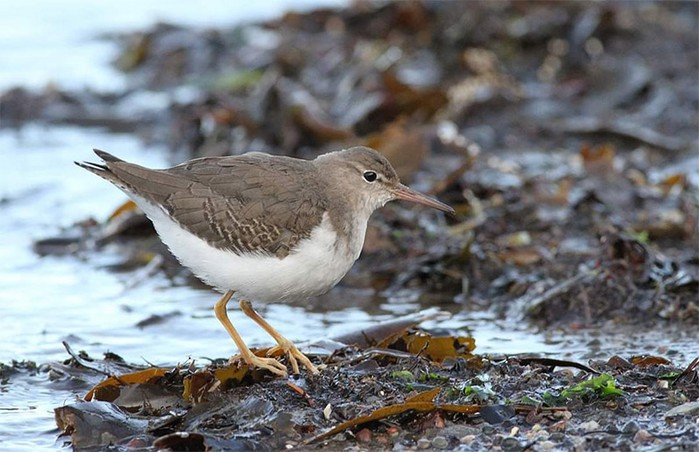
In Ayrshire the Spotted Sandpiper remained at Culzean Bay on 5th-8th, with the merest hint of some spots being acquired now…
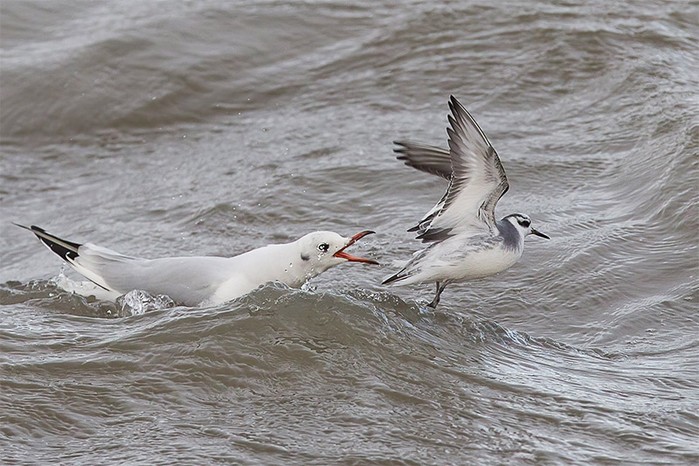
A Grey Phalarope was again seen from Filey Brigg (North Yorkshire) on 8th; while another was seen that day from Birling Carrs (Northumberland).
Eleven Ring-billed Gulls were logged this week, most of which, predictably enough, were in Ireland. These were a first-winter bird at Foynes (Co.Limerick) on 3rd again, and adults at Belfast Waterworks (Co.Antrim) again on 4th-7th; in Cork (Co.Cork) on 5th; at O’Callaghan Strand (Co.Limerick) again on 6th; at Nimmo’s Pier (Co.Galway) still on 6th; and at Tralee Bay Wetlands Centre (Co.Kerry) on 8th, where two birds were again logged.
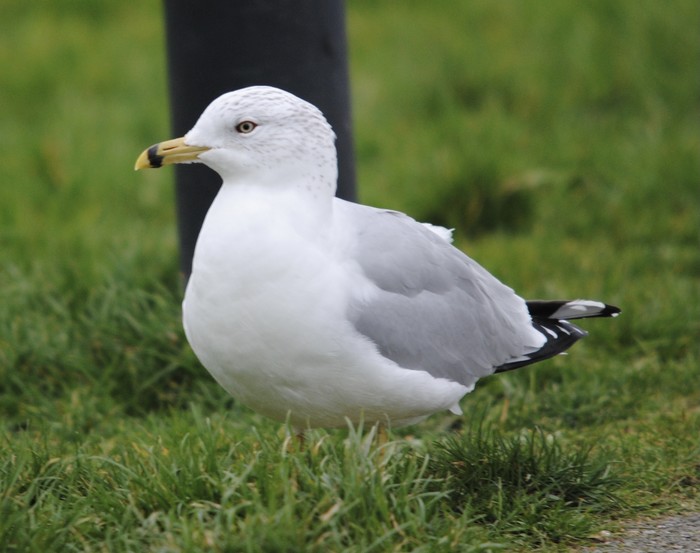
Two adults were seen in England – one apiece for Hayle Estuary RSPB still on 2nd-7th, and Blashford Lakes HWT (Hampshire) on 6th. Finally two adults were again seen in Scotland on 7th – at Strathclyde CP (Clyde) and Eastfield (Lothian) respectively.
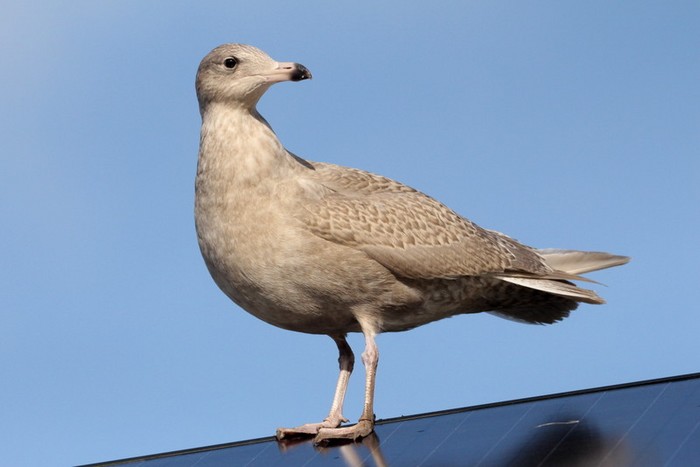
Numbers of white-wingers held more or less constant on the preceding week. Around 40 Glaucous Gulls were logged nationwide, with Scottish islands enjoying the lion’s share of them – eight birds at Loch of Spiggie (Shetland) on 3rd bettered only by 10 birds seen on North Uist (Western Isles) on 6th. North Uist also accounted for the best single site tally of the 60 or so Iceland Gulls logged this week, of which eight were seen on there on 6th also.
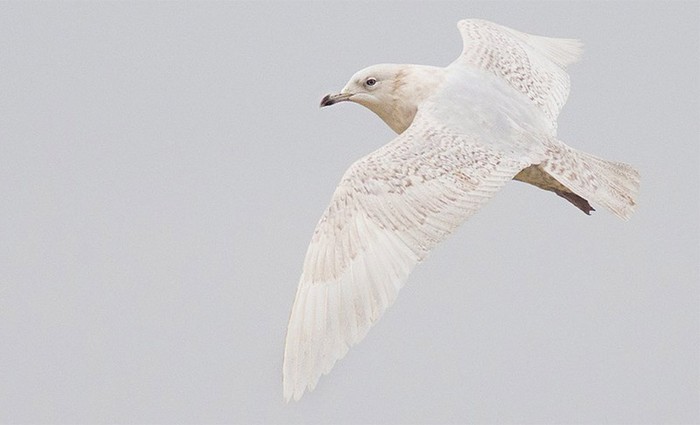
Four confirmed Kumlien’s Gulls were noted this week – a juvenile that lingered at Camden Quay in Cork (Co.Cork) on 5th-6th; an adult found on 7th at Clay Lough (Co.Armagh); a further adult on 8th at Tralee Bay Wetlands Centre (Co.Kerry); and one more adult on St Mary’s (Scilly) on 8th also. The probable juvenile bird remained on Ogmore estuary (Glamorgan) on 8th.
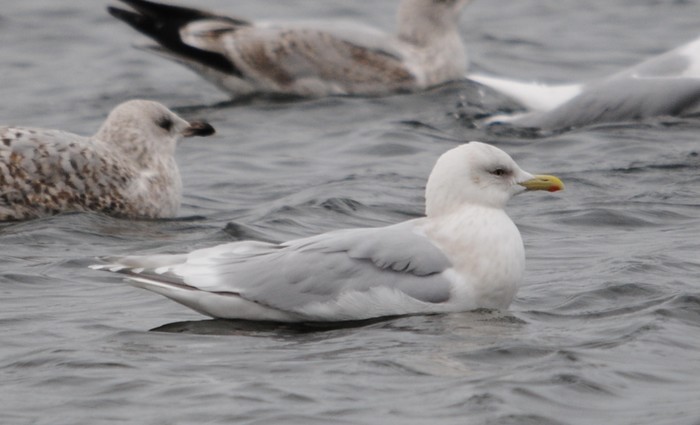
A Sabine’s Gull provided some variety to the week’s proceedings, seen on 7th at Usan Bay (Angus).
Finally, the stalwart adult Forster’s Tern was once more seen on 6th in Co.Galway at Claddach Beach.
Not a sausage, this week. Moving swiftly on…
If passerine news was a little thin on the ground, we can forgive it given what was found in Devon this week. Nonetheless, such rarified fare aside, there were still some scarce and rare-ish passerines hanging on – not least Yellow-browed Warblers, of which yet more new birds were being found… Birds remained this week in Portsmouth (Hampshire) on 2nd-4th; at Molesey Heath (Surrey) on 2nd-7th; in Little Clacton (Essex) still on 3rd-4th; and at Watermead Lake (Buckinghamshire) again on 5th. Elsewhere, one was in the balmy surroundings of Tresco (Scilly) on 3rd, another was found on allotments at Jarrow (Co.Durham) on 5th-6th, one more cropped up at the sewage works at St. Columb Major (Cornwall) on 7th and, on 8th, one was found in an Ipswich (Suffolk) garden. A final possible, brief bird was reported on 8th in Poole (Dorset).
The wintering Dusky Warbler remained at Ainsdale NNR (Merseyside) on 2nd-8th.
The Great Grey Shrike was still to be seen hunting around Thursley Common NNR (Surrey) on 2nd-7th – happily, buntings aren’t yet on the menu. One remained in Hampshire also this week in Woolmer Forest on 6th.
Three Waxwings chose to linger in Highland at Boat of Garten until 5th.
Both of our settled Rose-coloured Starlings remained present at Amlwch (Anglesey) on 3rd, and on Portland (Dorset) on 2nd-8th.
In Shetland, one of the recent Black-bellied Dippers was still hanging on at the Kirkhouse Burn feeding into deep-frozen Voe on 7th.
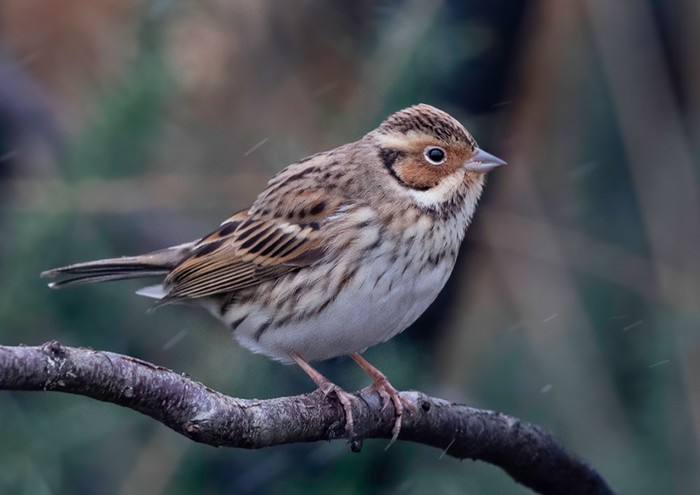
Closing the week once more, back in Surrey both the Rustic Bunting and the pair of Little Buntings were still to be seen at Thursley Common NNR on 2nd-8th, while up on Unst (Shetland) the Little Bunting at Baltasound was proving to be made of stern stuff, enduring in snowy conditions on 7th.
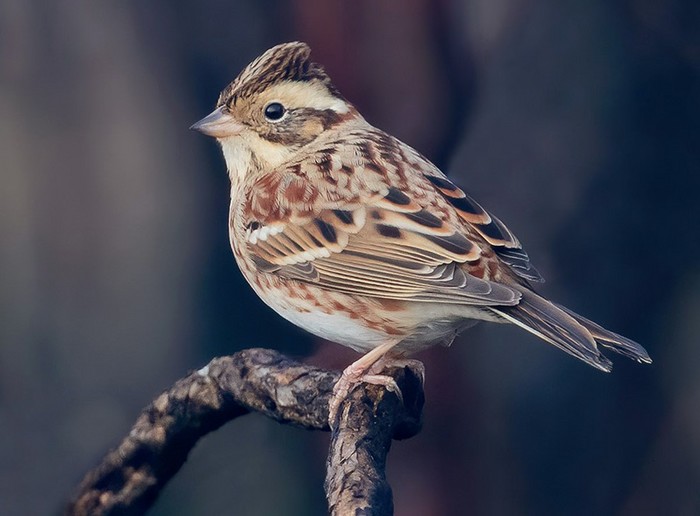
For a change this week, we’ll start the overseas news about as far overseas from Britain as the Western Palearctic allows, in Israel. Here, this week, the Grey Hypocolius remained at Atlit beach on 5th, while three Crested Honey Buzzards passed over Eilat on 6th.
Moving much closer to home now, and Scandinavia still had plenty going on. In Sweden, the Baikal Teal was still at Uppsala on 5th-6th; the Eastern Yellow Wagtail remained at Trelleborg on 3rd-6th; the Black-throated Thrush remained at Sjorrod on 3rd-6th; and the Oriental Turtle Dove was still present at Tavleliden on 6th.
In Denmark, Zealand remained a scoter hotspot, with the drake Stejneger’s Scoter still at Rorvig on 2nd-4th, and the drake Black Scoter still at Tisvilde Hegn on 6th.
Norway meanwhile still boasted three Pine Buntings at Ganddal on 3rd, with one still present there on 6th.
In Holland, the long-staying Brunnich’s Guillemot is practically resident now at Vrouwenpolder, still seen this week on 2nd-5th.
Poland’s Oriental Turtle Dove stayed put in Katowice on 2nd-6th.
Germany provides us with a White-headed Duck at Ausgleichsweiher on 6th, and the Pygmy Cormorant present still at Dubbelausee on 4th.
Austria’s recent Lesser Short-toed Lark remained at Hohenau an der March on 2nd-6th.
In France, the Pygmy Cormorant was still in Vauvert at Marias de Buisson Gros on 5th, and a King Eider was found at La Fumee on 2nd.
Finally, in Spain the Pine Bunting remained on Mallorca on 4th-7th.
I don’t think it was an unreasonable punt last week mentioning early February’s propensity for producing an outrageous passerine. Of course, nobody could have predicted that it would come from a westerly vector rather than the east - but that’s the perennial joy of birding. You just never can tell what’s around the corner…
The coming week has, historically speaking, some quality rarities on the roster. Take 10th February 2004, when an American Coot was found at Castle Loch (Dumfries & Galloway). Or 10th February 2012, when the extremely popular Common Yellowthroat turned up in Gwent at Rhiwderin, starting a stay that was set to continue into late March.
And who can forget seeing the news of the moribund and soon-to-be-departed Allen’s Gallinule found on Portland (Dorset) on 10th February 2002? Don’t forget also that one had enough juice in the tank to make it as far north as St Kilda (Western Isles) in March 2017, so a repeat just about anywhere is (remotely) feasible, particularly in a year that’s already seen multiple displaced birds out in the Canary Islands. But a little more realistically, and maybe on a date other than 10th?
Easterlies and south-easterlies seem set to dominate the weather in the coming week, so perhaps something pushed in from the Continent is a possibility. Water bodies and their damp fringes are clearly fruitful places to be looking at this time of year, so perhaps it’s time to turn up a Penduline Tit whilst out walking on your local patch…

Jon Dunn
9 February
Many thanks to all this week's contributors for your photos and videos
Share this story