WWT Caerlaverock reopens to visitors after closure
The Solway wetland reserve will reopen three days a week, with improved paths and hides, new wetland features and a summer focus on dragonflies and wildflower meadows.
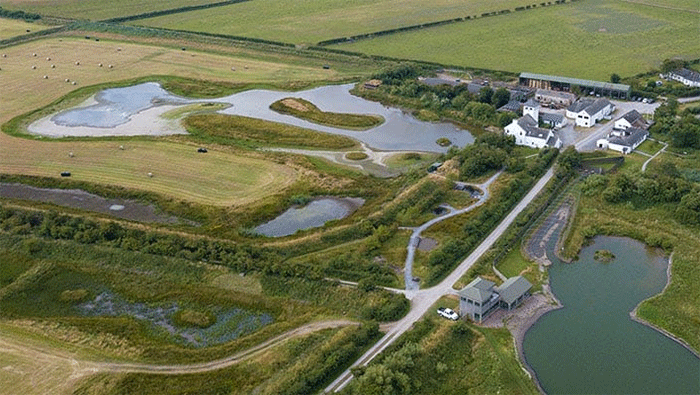
WWT Caerlaverock is reopening to the public on Thursday 2 July after a period of closure, the Wildfowl and Wetlands Trust has announced.
The Dumfries and Galloway reserve, on the Solway coast, will initially open three days a week, on Thursdays, Fridays and Saturdays.
WWT said the reopening follows work to restructure its small team and complete essential site maintenance, including improvements to paths and hides. The charity said the reserve will now place a renewed focus on offering a “wilder, wetter” wetland experience for visitors.
WWT Caerlaverock is one of Scotland’s best-known wetland reserves, lying between land and sea on the Solway Firth. Its habitats include pools, scrapes, wet grassland, wildflower meadows and coastal wetlands, supporting a wide range of wildlife through the seasons.
Although Caerlaverock is particularly well known for its winter birding spectacles, WWT said the summer months also offer plenty of interest.
David Pickett, WWT Centre and Reserve Manager, said the reserve is rich with life at this time of year, with wildflower meadow trails blooming with red clover, yellow rattle, hawksbit and buttercups. Skylarks are also abundant during June and July, a fitting link for a reserve whose name is said to mean “Castle of the Skylark”.
Visitors will also be able to see examples of smaller wetland features close to the admissions entrance, including mini drainpipe wetlands designed to show how wetland habitats can be created at different scales.
Further into the reserve, newer wetland areas in the corner field have become established over several seasons. WWT said these pools and scrapes are already attracting birds including Teal, Wigeon and Lapwing.
The reserve team is encouraging visitors to report sightings and share images, particularly from newly created wetland areas, to help build a picture of how wildlife is using the site.
The reopening also coincides with WWT’s Dragonfly Festival, with Caerlaverock recognised by the British Dragonfly Society as a dragonfly hotspot.
WWT said warm summer weather can provide good conditions for seeing a variety of dragonflies and damselflies around the reserve’s wetland habitats.
Reduced admission prices will be available at WWT Caerlaverock from 2 July to 1 September 2026 as part of the Government’s Great British Summer Savings Scheme.
The reserve will reopen to visitors on Thursdays, Fridays and Saturdays from 2 July.
July 2026
Get Breaking Birdnews First
Get all the latest breaking bird news as it happens, download BirdAlertPRO for a 30-day free trial. No payment details required and get exclusive first-time subscriber offers.
Share this story