Ural Owls rebuild a link across central Europe's forests
Long-running releases in Germany and Austria are establishing breeding populations where the large forest owl disappeared during the twentieth century.
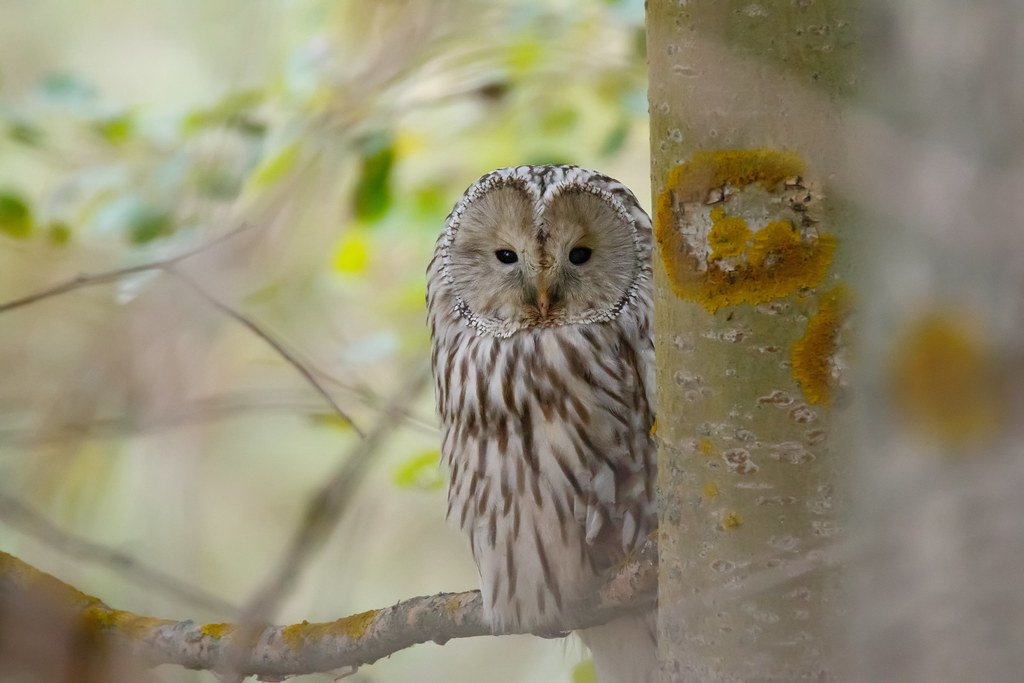
Ornithomedia are reporting that Ural Owl reintroduction programmes in Austria and Germany have progressed from repeated releases towards established wild populations. The projects are also beginning to reconnect areas occupied by the species across central Europe.
Ural Owl, Strix uralensis, is a large forest owl associated with mature woodland and cavities in old or dead trees. It disappeared from Germany and Austria during the twentieth century after persecution and the loss of suitable nesting habitat.
The longest-running programme began in Bavarian Forest National Park in 1975. Captive-bred birds were released over several decades, with the first successful wild breeding recorded in 1989. National park material now describes an established Bavarian-Czech population occupying about 50 territories across the wider Bohemian Forest.
The German recovery is not based on releases alone. Nest boxes provided early breeding sites, while the development of older, less intensively managed forest has created more natural cavities. The park reports that many owls now breed in old dead trees rather than depending entirely on artificial structures.
Austria began its current programme in 2008, centred on the Vienna Woods and Dürrenstein wilderness area. Its purpose is to establish linked breeding groups between populations in Slovenia and Italy to the south and Germany and the Czech Republic to the north, allowing dispersal and gene flow.
The reintroduction project would probably never have transcended the early visionary phase without the commitment of the Austrian Zoo Organisation.
Richard Zink, Austrian Ornithological Centre
In 2025 the Austrian work expanded to Grünau im Almtal in Upper Austria. Ornithomedia reports that 12 young owls were released there from a new acclimatisation aviary, among 29 released nationally that year. The European zoo breeding programme records a further 22 young released in Bavaria and 18 in Austria during 2025 under its reporting system.
Soft release gives young owls time to acclimatise in forest aviaries before doors are opened. Participating zoos breed birds while trying to maintain genetic diversity, and field teams monitor movements, survival and later breeding. The European Association of Zoos and Aquaria reported 194 Ural Owls in 21 participating institutions at the start of 2025.
The owl's return remains uneven. A viable population of roughly 15-25 pairs is also reported in the Czech Šumava National Park following releases that began in the 1990s, but some newer release areas still depend on continued support and have not yet demonstrated long-term self-sufficiency.
Large nest boxes can compensate for missing cavities, yet the programmes' wider goal requires connected mature forest. Young owls must be able to disperse between breeding areas without becoming isolated, and enough natural or artificial nesting sites must remain available through fluctuations in rodent prey.
The results therefore represent several stages of recovery rather than one finished project. Bavaria provides the longest evidence that releases can lead to persistent breeding; Austria is building additional groups and possible links; and ongoing zoo participation supplies young birds while managers test whether the network can become self-sustaining.
9 Oct 2026
Get Breaking Birdnews First
Get all the latest breaking bird news as it happens, download BirdAlertPRO for a 30-day free trial. No payment details required and get exclusive first-time subscriber offers.