The Roadside Racket Revolutionising Birdsong
Galápagos study links human noise to shifts in warbler song structure and behaviour.
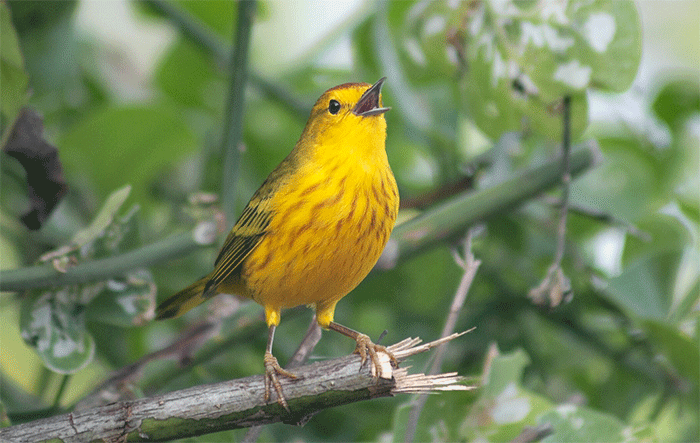
In the lush landscapes of the Galápagos Islands, a curious battle is unfolding — not just between rival yellow warblers, but between birdsong and the rumble of traffic. A new study has found that Galápagos yellow warblers (Setophaga petechia aureola) exhibit striking differences in how they respond to road noise, depending on their proximity to the source of the sound.
Published in Animal Behaviour, the research compared birds on Santa Cruz — the archipelago's busiest island — with those on the quieter Floreana. The findings suggest that prior exposure to human-made noise dramatically shapes both vocal and physical territorial responses.
The Experiment: Simulated Intruders in a Noisy World
Researchers conducted playback experiments simulating territorial intrusions using warbler song, with and without the addition of traffic noise. Warblers were studied in two zones: roadside territories (within 50 metres of a road) and quieter territories over 100 metres away.
The results? Birds near roads increased their aggression when confronted with a noisy intruder, approaching speakers more closely and making more frequent flights. Those in quieter territories, by contrast, decreased their aggressive responses under the same conditions.
“Birds living beside roads appear primed for conflict when their communication is disrupted,” said co-author Çaglar Akçay of Anglia Ruskin University. “But those further afield seem to back down — perhaps because the noise is unfamiliar or overwhelming.”
Song Shifts and Sonic Plasticity
The study also found notable changes in warbler songs. Regardless of island, birds raised the minimum frequency of their songs when noise was present — a likely attempt to avoid low-frequency masking from vehicle engines.
More nuanced shifts, however, were shaped by environment. On traffic-heavy Santa Cruz, warblers increased song duration in response to noise, a strategy thought to enhance message clarity. On Floreana, birds shortened their songs under the same conditions.
Strikingly, changes in peak frequency occurred only in non-roadside birds, suggesting that roadside singers may already operate at the upper limits of their effective vocal range.
Roads and Evolution on Darwin’s Isles
The Galápagos Islands are iconic for their role in the history of evolutionary science, yet even these remote outposts are not immune to the reach of modern human infrastructure. Between 1980 and 2013, the number of vehicles on Santa Cruz rose from just 23 to over 1,300.
That increase hasn’t just brought roadkill — of which the yellow warbler is the most frequent avian victim — but has introduced a new selective pressure in the form of chronic noise.
“Behavioural plasticity in response to human-altered environments is an emerging frontier in evolutionary biology,” said Sonia Kleindorfer, senior author of the study. “These findings show how even modest exposure to noise can reshape natural behaviours like song and aggression.”
What It Means for Conservation
This research reinforces the idea that individual experience with noise — not just species-wide traits — influences how animals cope with anthropogenic change. For conservationists, it raises important questions about how road development may fragment populations not just spatially, but behaviourally.
The yellow warbler, an island generalist found across all vegetated habitats of the Galápagos, proves an ideal model for future studies into acoustic ecology, human–wildlife conflict, and urban evolution.
25 Mar 2025
Share this story