The Lifeline of a Vanishing Sandpiper
Scientists uncover the high-quality feeding grounds that could make or break the survival of one of the world’s rarest shorebirds

The Spoon-billed Sandpiper (Calidris pygmaea) is teetering on the brink of extinction, with fewer than 800 individuals left in the wild. A newly published study highlights a crucial factor in the species’ survival: the availability of high-quality foraging grounds during migration. Conducted in the Tiaozini Wetland of China’s Yellow Sea region, the research underscores the significance of shallow water habitats as vital feeding stations that provide energy-rich prey during this shorebird’s perilous journey.
A Species in Decline
The Spoon-billed Sandpiper, with its distinctive spatula-shaped bill, undertakes one of the longest migrations of any shorebird, breeding in Arctic Russia before travelling to wintering grounds in South and Southeast Asia. However, habitat loss along the East Asian-Australasian Flyway—particularly in the Yellow Sea region—has severely impacted its ability to refuel, leading to sharp population declines.
Coastal development, pollution, and invasive plant species have drastically reduced the intertidal mudflats essential for migrating shorebirds. In response, conservationists have been racing to identify and protect critical stopover sites that still offer viable food resources. The Tiaozini Wetland, recently recognised as a World Heritage Site, has emerged as one such indispensable haven.
Shallow Waters: A Crucial Refuge
The study, led by researchers from Beijing Forestry University and international conservation organisations, investigated the composition of prey species in Tiaozini and the foraging preferences of the Spoon-billed Sandpiper. By analysing foraging videos, photographs, and faecal samples, the team discovered that shallow water habitats—where small pools of water remain after the tide recedes—were the birds’ preferred feeding grounds.
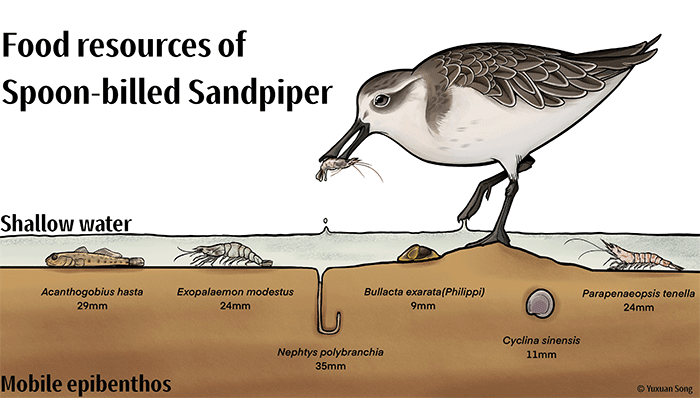
These microhabitats were found to support an abundance of mobile epibenthos, such as small shrimp, crabs, and polychaete worms, which together made up over 80% of the sandpipers’ diet. The study also noted a strong correlation between high prey biomass and nearshore areas, making them particularly critical to conservation efforts.
,b>Conservation Implications
The findings provide a clear mandate for habitat protection. The researchers advocate for prioritising shallow water mudflats in conservation planning, as these areas not only sustain the Spoon-billed Sandpiper but also support a host of other migratory shorebirds dependent on similar food resources.
"Ensuring the long-term protection of these staging sites is essential," the study's authors write. "By safeguarding the integrity of shallow water habitats, we can give the Spoon-billed Sandpiper—and many other threatened shorebirds—a fighting chance at survival."
Despite a ban on new coastal reclamation projects in China since 2018, ongoing threats such as industrial pollution, aquaculture expansion, and climate change continue to put these wetlands at risk. The study highlights the need for continuous monitoring and adaptive management strategies to counteract these pressures.
Looking Ahead
While the research offers critical insights, much remains to be done. Future studies will need to explore the long-term stability of these habitats, the impact of climate change on food availability, and the effectiveness of restoration projects aimed at improving wetland conditions.
The Spoon-billed Sandpiper’s fate may rest on the ability of conservationists and policymakers to act swiftly. With concerted global efforts, there remains hope that this remarkable bird can still be pulled back from the edge of extinction. For now, the mudflats of Tiaozini stand as a beacon of survival—a fragile but vital lifeline for one of nature’s most extraordinary migrants.
14 Mar 2025
Share this story