Teaching ibises to migrate proves anything but straightforward
The latest journey behind an ultralight aircraft has demanded patience, improvisation and a willingness to change course.
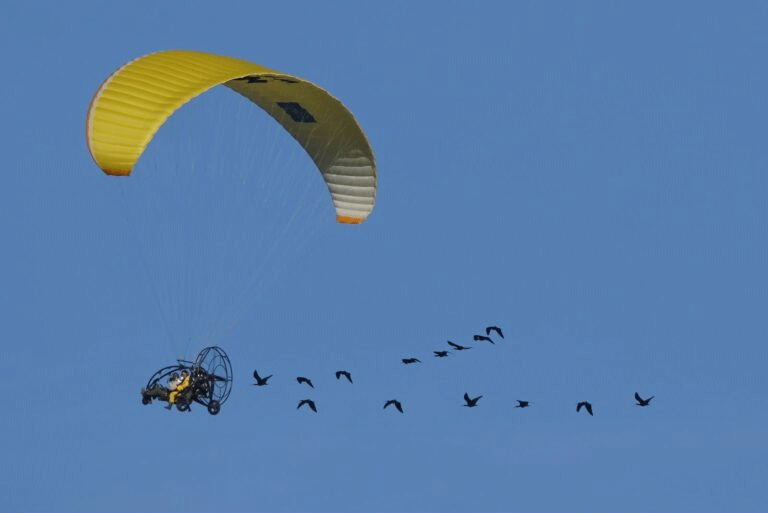
Leading young Northern Bald Ibises towards their wintering grounds is proving a lesson in unpredictability for the conservationists guiding this year’s human-led migration.
Waldrappteam’s journey towards Andalusia began with 30 birds. Half were handed to the Alive Foundation in Catalonia on 13 September, leaving 15 to continue south with their human foster parents and ultralight aircraft.
Progress has repeatedly faltered. On 22 September, the birds stopped following after 71 km, prompting a return to Olocau and a subsequent road transfer. The following day, only six completed the flight to Beas de Segura; the other nine were transported after turning back.
Then came a more encouraging entry in the team’s diary: all 15 flew 89 km to Las Infantas in just under two hours.
“What a fantastic flight!” the team reported.
The destination remains the area around Vejer de la Frontera. For the people teaching the birds their route, the contrasting flights underline how difficult it is to rebuild a migration tradition one stage at a time.
2 Oct 2026
Get Breaking Birdnews First
Get all the latest breaking bird news as it happens, download BirdAlertPRO for a 30-day free trial. No payment details required and get exclusive first-time subscriber offers.