Swiss Barn Owls shift towards darker plumage
Thirty years of monitoring and 3,102 sequenced genomes show a population becoming redder and more heavily spotted.
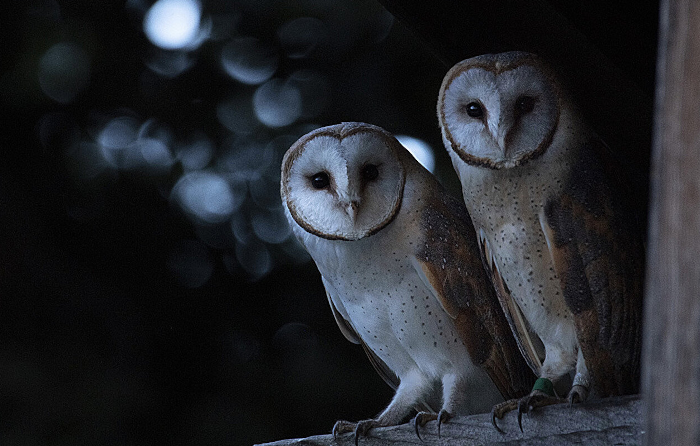

Barn Owls in Switzerland have become more reddish-brown and more heavily spotted over three decades, providing a rare genomic view of rapid evolution in a wild bird population.
The study in Nature Communications combined long-term measurements with whole-genome sequencing of 3,102 owls. Researchers followed two continuous, melanin-based traits: the background colour of the plumage and the size and density of dark spots.
Barn Owls vary from almost white to deep reddish-brown. Previous work in the same study system has linked that variation to hunting conditions, diet, fertility, immunity and responses to stress, although such associations do not show why the population changed.
The team identified a small number of genomic regions with large effects. These included MC1R, a well-known pigmentation gene, and a region on a sex chromosome that contributed to both colour and spotting. Allele frequencies at the main regions shifted subtly but consistently through time, linking the visible trend to inherited change in the monitored population.
To separate selection from random genetic drift, the researchers compared the observed genetic trajectories with simulations. Drift alone could not reproduce the change at one major locus associated with reddish plumage, whereas models including selection could.
Lead author Tristan Cumer said only simulations that included natural selection matched the observed pattern. Across about 30 years - roughly ten Barn Owl generations - the population moved measurably towards darker and more spotted birds.
Only simulations that included natural selection reproduced the changes we observed.
Tristan Cumer, University of Lausanne
The finding does not yet reveal what environmental pressure produced the shift. Co-author Alexandre Roulin suggested that changing prey availability could favour redder birds, which tend to eat more voles, while whiter owls tend to take more Wood Mice. Increased spotting could also be associated with environmental stress.
Those possibilities remain hypotheses. MC1R belongs to the broader melanocortin system, which is linked with physiology and behaviour as well as pigmentation. Selection could therefore be acting on another correlated trait, with plumage changing as an indirect consequence.
The study was enabled by decades of field monitoring led by University of Lausanne researchers and collaboration with the Swiss Ornithological Institute. Repeated sampling of the same population allowed the scientists to link visible change to changing genetic variants rather than relying only on comparisons between places.
There are also limits to what the work says about resilience. Rapid evolution may help some populations respond to environmental change, but it is not evidence that Barn Owls can automatically adapt to every pressure or that darker plumage is universally advantageous.
The researchers plan to analyse photographs more precisely and reconstruct the likely colour of birds that died very young. That work may reveal whether particular plumage forms survive better, helping to identify which life stage and ecological mechanism are driving the genetic change.
22 Oct 2026
Get Breaking Birdnews First
Get all the latest breaking bird news as it happens, download BirdAlertPRO for a 30-day free trial. No payment details required and get exclusive first-time subscriber offers.