Roseate Terns nest in Dublin Port for the first time
Roseate Terns have nested in Dublin Port for the first time, in a development described by BirdWatch Ireland as a significant and welcome surprise for the city’s long-running tern conservation work.
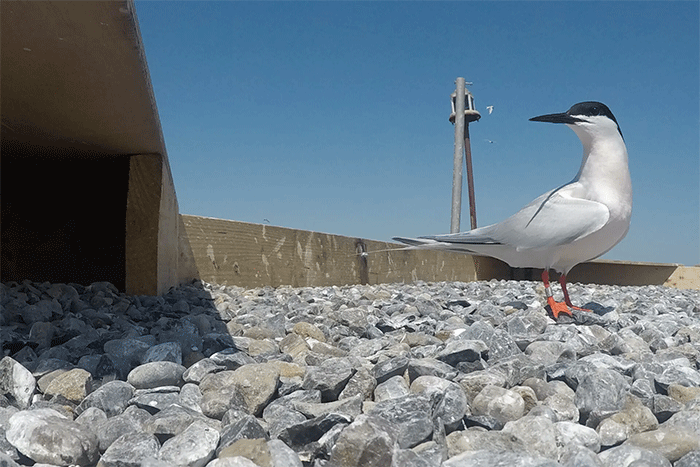
The species, one of Ireland’s rarest breeding seabirds, was found nesting within the Dublin Port tern colony during the 2026 breeding season. The discovery follows years of work by BirdWatch Ireland, Dublin Port Company and other partners to provide secure nesting space for terns in one of the busiest industrial settings in the country.
Roseate Terns are delicate, pale seabirds with long tail streamers, dark caps and a sharp, elegant flight. In Ireland they are strongly associated with carefully managed colonies, most famously Rockabill, off north Co. Dublin, which supports one of the most important Roseate Tern colonies in Europe.
The appearance of nesting birds in Dublin Port is particularly notable because the site has, until now, been known mainly for Common Terns and Arctic Terns. These species already breed on man-made structures in the port, where specially managed platforms and pontoons provide nesting habitat away from many ground predators.
BirdWatch Ireland said the arrival of Roseate Terns was not entirely unexpected. Conservationists had long considered Dublin Port a possible future nesting site for the species, given its proximity to Rockabill and the presence of a well-established tern colony. The last possible breeding record of Roseate Tern in the port area was in the 1970s.
The discovery also underlines the importance of providing safe, suitable nesting space for seabirds in places where natural habitats have been lost, altered or become vulnerable to disturbance and predation. Terns often rely on islands, rafts, pontoons and other isolated structures to raise their chicks safely.
Dublin Port may seem an unlikely place for rare seabirds to breed, but its tern colony has become an important example of how wildlife can persist alongside heavy human activity when careful management is in place. Nesting structures, gravel surfaces, chick shelters and regular monitoring have all helped support breeding terns in the port.
For Roseate Terns, the availability of secure nest sites is especially important. The species has suffered historic declines across parts of its range, and modern conservation work has focused on protecting colonies, improving nesting habitat and reducing losses to predators. Successful expansion into additional breeding sites could help make the wider population more resilient.
The nesting attempt in Dublin Port will now be watched closely by BirdWatch Ireland staff and project partners. As with all tern colonies, the outcome will depend on a range of factors, including weather, food availability, disturbance and predation pressure during the breeding season.
The record adds a new chapter to the story of Dublin Bay’s seabirds. A working port that already supports Common Terns and Arctic Terns has now attracted one of Ireland’s rarest breeding terns, showing how targeted conservation measures can create opportunities even in highly urbanised coastal environments.
June 2026
Get Breaking Birdnews First
Get all the latest breaking bird news as it happens, download BirdAlertPRO for a 30-day free trial. No payment details required and get exclusive first-time subscriber offers.
Share this story