'Rocket Bird' Thrills Birders in East Yorkshire
The White-throated Needletail – famed for its speed and rarity – has been recorded on the British mainland for the first time since 1991.
Discovery at Tophill Low
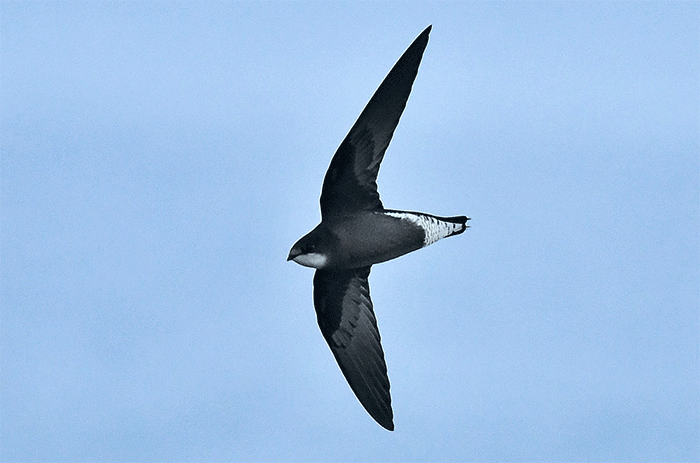
A routine afternoon at Tophill Low nature reserve in East Yorkshire turned extraordinary on 8 October when a White-throated Needletail was discovered – only the 11th British record of this spectacular species.
The bird was found by a married couple, Mr and Mrs Maddison, who photographed it and initially believed it to be an Alpine Swift. When they shared their images with reserve staff, excitement quickly turned to astonishment – the photos showed not an Alpine Swift, but a White-throated Needletail, one of the world’s fastest-flying birds and an extreme rarity in Britain.
The couple reported that the bird was likely present for around 30 minutes. Despite an afternoon search, there was no further sign on site.
Reappearance at Bempton Cliffs
At 17:10, just under three hours later, news broke that the bird had been relocated at Bempton Cliffs RSPB – some 16.5 miles north-northeast of Tophill Low – by a group from Oriole Birding bird tours.
Our group has just refound the East Yorks White-throated Needletail at Bempton Cliffs ?? pic.twitter.com/Vg7IaCEl65
— Oriole Birding (@OrioleBirding) October 8, 2025
The needletail delighted birders into the evening, hawking for insects off the cliffs and providing breathtaking views until dusk. It was thought to have roosted on the cliffs overnight, though this was not confirmed.
From Essex in 1846 to Yorkshire in 2025
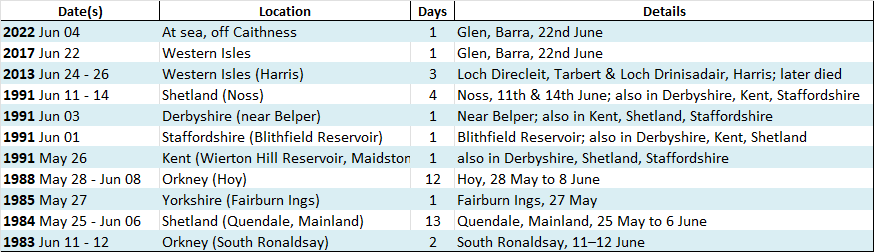
This latest record represents the first White-throated Needletail on the British mainland since 1991, and only the 11th ever recorded in Britain. Ireland has had just a single record.
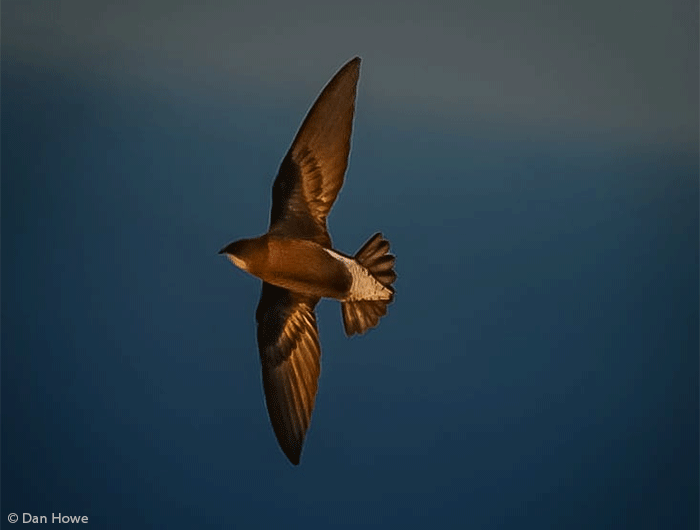
The first British record dates back to 1846, when one was shot at Great Horkesley in Essex – the specimen now housed in Chelmsford Museum. The first ‘modern’ record (post-1950) came from Orkney in 1983. The most recent ‘twitchable’ bird occurred in 2013 across the Western Isles, where many birders enjoyed views before the bird tragically collided with a wind turbine.
This latest bird is the first ever autumn record of a White-throated Needletail in Britain. All previous occurrences have fallen within a narrow late-spring to early-summer window between 25 May and 26 June – making the 8 October sighting even more exceptional.
Possible Same Bird in Scotland
The story didn’t end at Bempton. The following morning, 9 October, no further sign could be found there – but by late morning, news emerged from Aberdeenshire of a White-throated Needletail at Loch of Skene.
Given the immense rarity of the species, it is widely assumed to be the same individual seen in East Yorkshire, though with more than 280 miles between the two locations, the possibility of a second bird cannot be entirely dismissed.
Get Breaking News First
To get all the latest breaking bird news as it happens, download BirdAlertPRO for a 30-day free trial – no payment details required – and access exclusive first-time subscriber offers.
October 2025
Share this story