Robins Fear the Night: How Nocturnal Predators Shape Stopover Strategies
New research shows that European Robins respond strongly to owl threats but remain indifferent to hawks, altering fuelling and migration timing during stopovers
A landscape of fear for migrating birds
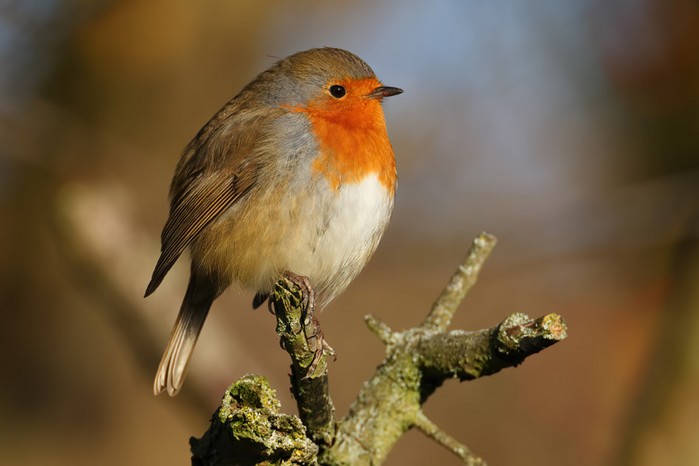
Every autumn, billions of songbirds cross Europe, pausing at unfamiliar stopovers to refuel for the next leg of their journey. But these essential breaks come with risks: predators lurk by day and night. A new study by Giuseppe Bianco and colleagues, published in the Journal of Animal Ecology, reveals that it is the nocturnal, not the diurnal, predators that reshape the stopover behaviour of first-year European Robins (Erithacus rubecula).
The researchers tested how robins reacted to auditory cues from two avian hunters: the Eurasian Sparrowhawk (Accipiter nisus), a diurnal pursuit predator, and the Tawny Owl (Strix aluco), a nocturnal ambush predator. By playing predator calls to captive juveniles in Sweden, they tracked food intake, body condition, activity, and departure timing across two-week stopovers.
No fear of the daytime hawk
Surprisingly, robins showed little response to sparrowhawk calls. Their feeding rates, body condition, and daily activity levels remained unchanged compared to controls. The researchers suggest that sparrowhawks are primarily a threat in flight, where body mass has less impact on escape performance, and where robins can rely on visual cues to detect danger.
In the dense soundscape of daylight forests, the study argues, auditory cues alone may not carry enough weight for birds to alter their behaviour. Shared vigilance in flocks may further dilute the perceived risk from hawks.
Owls change the game at night
The response to tawny owls was very different. Robins exposed to owl calls reduced their food intake, accumulated fuel more slowly, and ended the experiment in poorer body condition than controls. On average, their potential flight range was estimated to be 50 km shorter.
These birds also delayed their departures after sunset, unlike control birds, which left progressively earlier over the stopover period. The constant departure times of owl-exposed robins suggest that nocturnal predation risk constrains their behavioural flexibility, slowing migration pace and potentially delaying arrival at wintering grounds.
Fear carries hidden costs
This research highlights the concept of the “ecology of fear”: animals adapt not only to direct predation but also to the perception of risk. For robins, avoiding an owl’s pounce means fuelling cautiously and flying leaner. But this strategy comes at a cost - slower migration, more stopovers, and reduced competitiveness at wintering sites.
The study underscores how predators can shape migration strategies without ever making a kill. For first-year robins, the mere sound of an owl in the night can ripple through their physiology and behaviour, altering the tempo of their journey south.
Implications beyond robins
While this study focused on robins, the findings may apply more broadly to nocturnally migrating songbirds. Many species face the same trade-offs between fuelling and avoiding surprise attacks at night. By demonstrating predator-specific responses, the research opens new avenues for understanding how fear alone structures migration ecology.
September 2025
Share this story