footer_shadow

Red Kite dies after being found shot in Peak District

Police are seeking information after treatment failed to save a bird discovered with a badly injured wing.
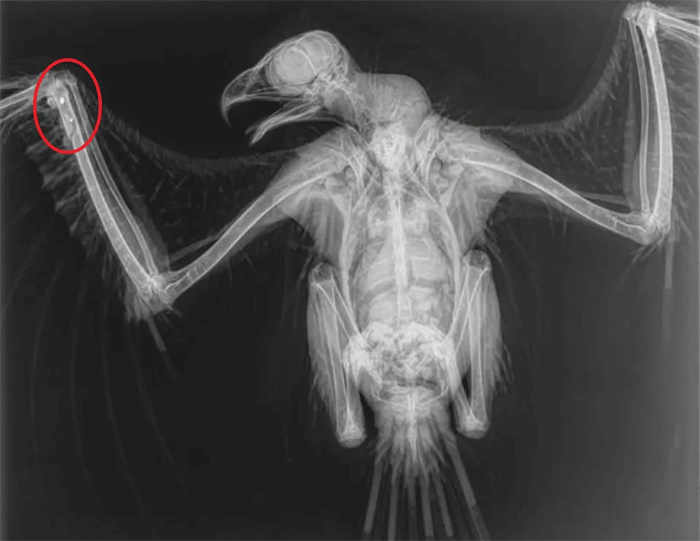
A Red Kite died after being found with gunshot injuries.
X-Ray showing the shot lodged in the kite's wing

Police have appealed for information after a Red Kite found with gunshot injuries in the Peak District died despite treatment.

A Derbyshire Police appeal, reproduced by Raptor Persecution UK, places the discovery between Buxton and Combs. The bird was found on or before 7 July; the appeal was issued on 27 September.

The kite was suffering from shock, bleeding and swelling around its left wing. X-rays revealed shotgun pellets and a fractured wing bone.

Commenting on the injury, Dr Ruth Tingay, Raptor Persecution UK, questioned how far it could have travelled:

it would seem unlikely that this Red Kite would have been capable of flying a long distance from where it was shot.
Dr Ruth Tingay, Raptor Persecution UK

That is her assessment; the precise location and timing of the shooting have not been established in the appeal. No suspect, arrest or charge has been announced.

Anyone with information is asked to contact Derbyshire Police on 101, quoting reference 26*431851.


2 Oct 2026


Get Breaking Birdnews First
Get all the latest breaking bird news as it happens, download BirdAlertPRO for a 30-day free trial. No payment details required and get exclusive first-time subscriber offers.

 

Share this story


Free BirdAlertPRO trial


Latest articles

article_thumb

RBA Round-up: 6 - 12 Nov

Multiple Crag Martins, Black-faced Buntings and a unprecedented influx of Hume's Warblers made the headlines this week. More here >

article_thumb

Scotland looks to quieter winter refuges for Greenland White-fronted Geese

A review of feeding areas on Islay and Kintyre is part of an effort to help geese leave Scotland in better condition for the journey north. More here >

article_thumb

Suffolk's wader partners report a halt to coastal declines

Ten years of work across reserves and farmland have helped stabilise Lapwing and Redshank numbers, according to the organisations managing the marshes. More here >

article_thumb

Feathers reveal where Woodcock shot in Britain and Ireland came from

Most sampled birds came from northern or eastern Europe, but residents were represented in all six winter regions, even where Woodcock no longer breed. More here >

article_thumb

Fewer Puffins breed on the Farnes, but more chicks leave monitored burrows

The 2026 census recorded 33,939 breeding pairs across the islands. On two islands, the burrows rangers followed had their most productive season in three years. More here >