Powerlines Drive Some Farmland Birds Away
Research in southern Portugal shows that while overall bird diversity is unaffected, species like the Little Bustard and Calandra Lark avoid areas close to transmission lines
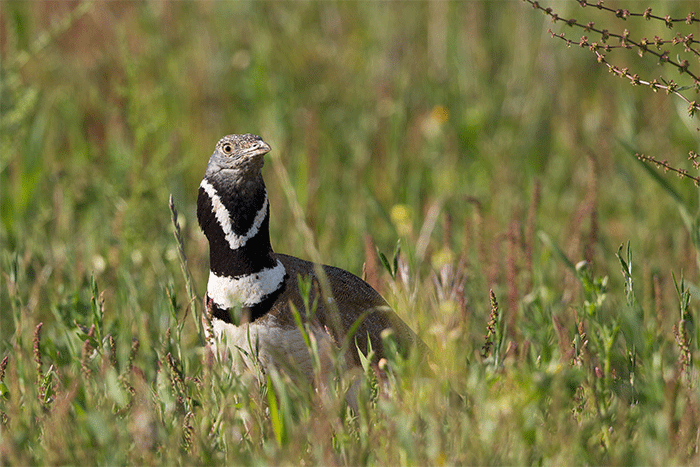
Testing the impact of powerlines on farmland birds
Overhead powerlines are an increasingly common feature of rural landscapes, but their influence on bird populations is not fully understood. While collisions and electrocutions are widely documented, less is known about whether birds avoid or are attracted to these structures. A new study in *Ecology and Evolution* sheds light on the issue, focusing on Special Protection Areas in southern Portugal, home to some of Europe’s most important farmland bird populations.
Richness unaffected, but specialists avoid powerlines
Researchers surveyed breeding birds across 150 points located at varying distances from transmission lines. Overall species richness – both general and grassland birds – was not reduced near powerlines. However, species-specific effects emerged. The Little Bustard and Calandra Lark were significantly less likely to occur within one kilometre of powerlines, even when habitat quality was suitable. Both species favour large, open fallow fields and appear particularly sensitive to habitat fragmentation caused by tall structures.
Other farmland birds show mixed responses
Common species such as Corn Bunting, Zitting Cisticola and Quail showed no evidence of avoidance. In some cases, species associations reflected land use more than distance to powerlines: for example, Zitting Cisticola was strongly linked to cereal fields, while Galerida larks avoided them. These findings suggest that while many farmland birds tolerate powerlines, a subset of specialists is disproportionately affected.
Conservation implications
The study highlights two important points. First, the Little Bustard is already considered Critically Endangered in Portugal, with populations collapsing across its range. Powerline avoidance adds further pressure by reducing the effective area of suitable breeding habitat. Second, the discovery that Calandra Larks also avoid powerlines represents a new concern, as this widespread species has recently been uplisted to Near Threatened nationally. Unlike collision-prone bustards, larks are rarely considered in impact assessments, meaning their vulnerability has been overlooked.
Rethinking infrastructure planning
The authors argue that burying or rerouting powerlines away from key habitats is the most effective way to prevent both collisions and displacement. Wire markers may reduce mortality but cannot address avoidance. With thousands of hectares of farmland in protected areas affected by existing infrastructure, compensatory measures may be needed to offset habitat loss. The study underscores that conservation planning must move beyond general bird counts to consider the species-specific sensitivities that determine how infrastructure reshapes rural ecosystems.
September 2025
Share this story