Parrot seen only once in last 100 years refound on Indonesian island
The Blue-fronted Lorikeet, documented only once in the past hundred years in 2014, has been photographed and sound-recorded in the highlands of Buru.
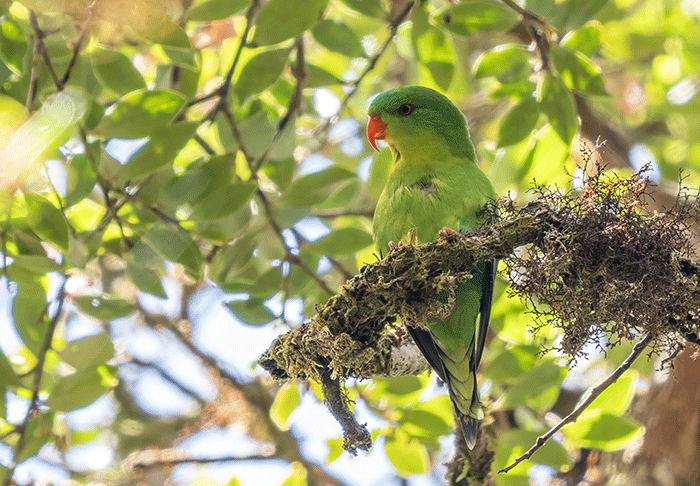
One of Indonesia’s least-known birds has been found again in remote mountain forest, after an expedition confirmed that the Blue-fronted Lorikeet still survives on the island of Buru.
The small, bright green parrot, which is found nowhere else in the world, was seen in April during a 14-day trek to the highlands of Mount Kapalatmada. The expedition was led by the Indonesian mountaineering group Kanal Buru and included members of American Bird Conservancy, Birdtour Asia and Yayasan Planet Indonesia.
The Blue-fronted Lorikeet Charmosyna toxopei was first described from specimens collected in the 1920s, but then went unrecorded for decades. It was photographed in 2014, but had not been documented again until this year. The new expedition produced the first photographs of the species for more than a decade and the first known sound recordings of its high-pitched calls.
For years, ornithologists suspected the bird might not be extinct, but simply living higher in the mountains than previous searches had reached. That theory now appears to have been correct. The lorikeets were found in difficult, little-explored highland forest reached only after days of climbing through steep limestone, dense vegetation and rough terrain.
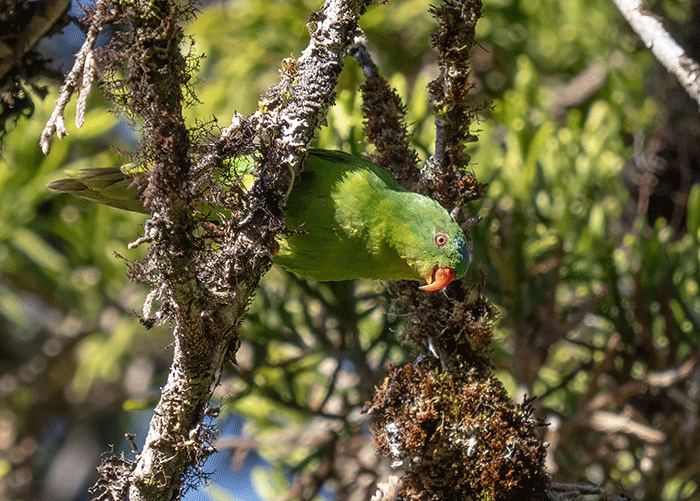
The expedition recorded several birds, though it is not yet clear how many individuals were involved. Reuters reported that at least nine were seen during the trip, while BirdLife International said the discovery provides proof that the species persists in Buru’s highlands.
The rediscovery is a hopeful moment, but it does not mean the bird is safe. BirdLife says the Blue-fronted Lorikeet is believed to have a very small and vulnerable population, and its habitat may be under pressure from deforestation, logging, mining and hunting.
The species was listed as Data Deficient on the IUCN Red List in 2024, reflecting how little is known about its population, range and threats. Before that, it had been considered Critically Endangered because of its presumed rarity and the likely pressure on Buru’s forests.
Conservationists say the find underlines the importance of protecting Buru’s remaining highland forest and working with local communities who know the mountain best. It also offers encouragement for searches for other “lost” birds that may still survive in remote and under-explored places.
June 2026
Get Breaking Birdnews First
Get all the latest breaking bird news as it happens, download BirdAlertPRO for a 30-day free trial. No payment details required and get exclusive first-time subscriber offers.
Share this story