Only 2% of Wildlife Crimes Resulted in Convictions in 2024
A new national analysis warns that weak enforcement against wildlife crime is enabling wider offending, with over 80% of perpetrators also linked to violent, acquisitive or drug-related crimes.
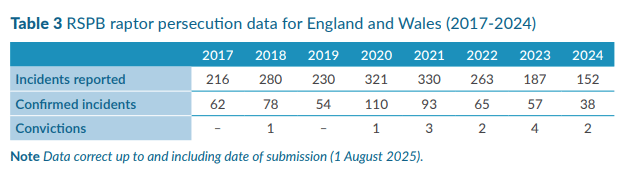
Convictions remain “dangerously low”
Wildlife and Countryside Link has released its annual Wildlife Crime Report, revealing that just 2% of wildlife crimes recorded in 2024 led to a conviction. Nearly 2,000 incidents were reported last year, ranging from badger baiting and hare coursing to raptor persecution and the illegal wildlife trade, yet only 43 offenders were successfully prosecuted.
The figures show a slight rise in convictions compared with 2023, but remain far too low to deter persistent criminals. Hunting offences fell to their lowest level of convictions since 2017, with only 14 cases securing a result in court.
Campaigners warn that this chronic lack of enforcement sends a message that harming wildlife carries little risk – with serious consequences for both nature and public safety.
Wildlife crime closely linked to violence and organised offending
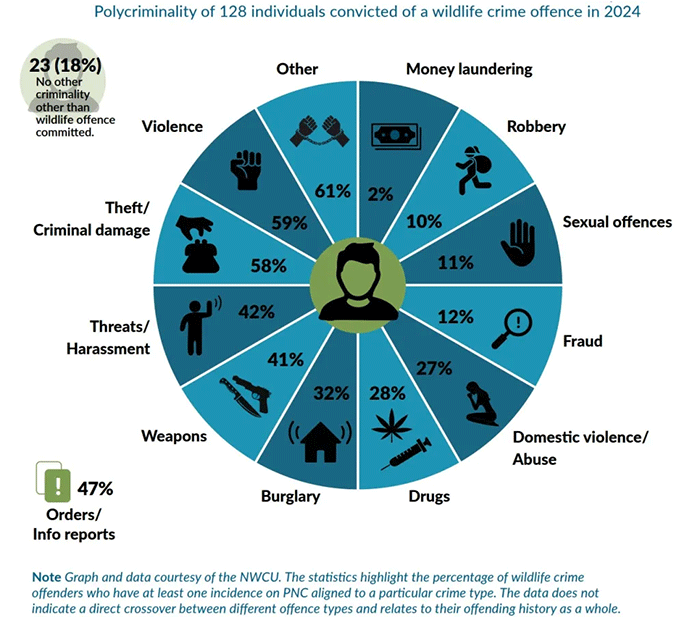
New analysis from the National Wildlife Crime Unit sheds light on the broader criminal behaviour of wildlife offenders. Reviewing data from 128 individuals, the unit found that more than 80% were connected to other serious offences, including violent assault, theft, domestic abuse and drug crime.
The links were strongest among poaching, hare coursing and badger crime offenders. For these groups, violent offending ranged from 67% to 78%, while drug-related crimes were particularly associated with badger crime offenders.
Only 18% of all wildlife offenders had no record of other offending – highlighting how wildlife crime often forms part of a wider pattern of criminal behaviour.
Raptor persecution and illegal hunting still widespread
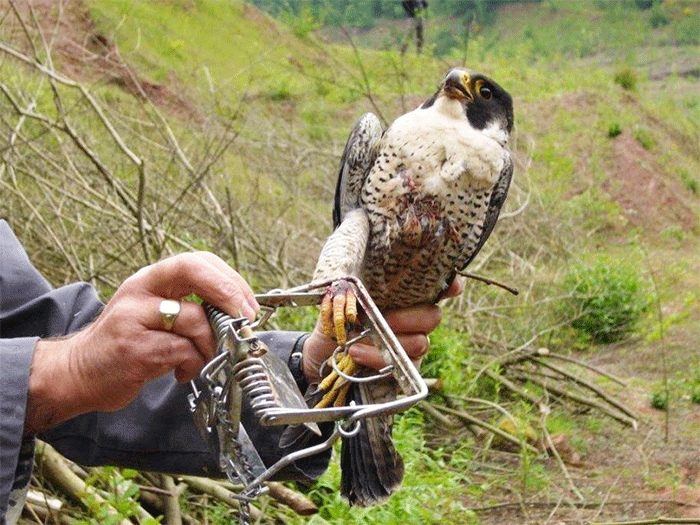
The report shows that many of Britain’s most serious wildlife crimes remain commonplace. Birds of prey continue to be shot, poisoned or trapped, with hen harriers again highlighted as England’s most persecuted raptor. Despite years of evidence, no one has ever been convicted for targeting or killing a hen harrier.
Suspected illegal hunting remains widespread, with hundreds of alleged infringements of the Hunting Act still occurring under the guise of trail hunting. Hare coursing and badger baiting – often involving organised groups – continue to be reported at scale.
Marine wildlife also remains vulnerable, with seals and dolphins often disturbed or harmed, and many incidents going unrecorded or unenforced.
Wildlife crime in development and trade also rising
Building-related wildlife offences involving bats, badgers and nesting birds remain common as developers and homeowners breach protections meant to safeguard species during construction and renovation.
Meanwhile, border enforcement recorded a 30% rise in illegal wildlife trade seizures, covering items from wild plants and traditional medicines to ivory, ornaments and live animals destined for the pet and food trades. Yet only eight CITES-related prosecutions have been reported since last year’s assessment.
Even fisheries enforcement – once a relative success story – is now faltering following major funding cuts, including a 90% reduction in Environment Agency enforcement grants since 2010.
Urgent calls for reform
Wildlife and Countryside Link is calling on the Government to make key wildlife crimes notifiable to the Home Office so they are properly reported and prioritised. The group also wants tougher penalties, long-term funding for the National Wildlife Crime Unit, and action on promised measures such as banning snares and trail hunting.
Richard Benwell, the organisation’s CEO, warned that the failure to take wildlife crime seriously “leaves the door wide open for these criminals to commit other offences,” adding that tackling wildlife crime is vital for both public safety and biodiversity recovery.
As the UK approaches its legally binding target to halt and reverse biodiversity loss by 2030, the report argues that meaningful enforcement against wildlife crime is an essential – and currently missing – part of that effort.
November 2025
Get Breaking Birdnews First
Get all the latest breaking bird news as it happens, download BirdAlertPRO for a 30-day free trial. No payment details required and get exclusive first-time subscriber offers.
Share this story