


More vultures dead as Africa's poisoning crisis worsens
Vulture Conservation Foundation reports that two separate incidents in Botswana and Senegal have added to a growing toll of vulture deaths across Africa in 2026.
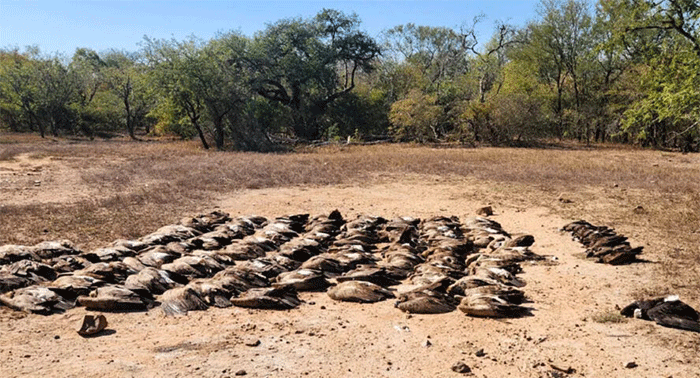
More than 60 vultures have been killed in less than a week in two separate poisoning incidents in Botswana and Senegal, according to a report from the Vulture Conservation Foundation.
The organisation says the latest deaths form part of a wider pattern of poisoning across Africa, with more than 200 vultures recorded dead since the beginning of 2026 in six separate incidents. It warns that the known cases are likely to represent only a fraction of the true scale, as many poisoning and poaching incidents go undiscovered.
In Botswana, BirdLife Botswana and Safari360 reported the deaths of at least 30 vultures between Nxai Pan National Park and Makgadikgadi Pans National Park. Initial investigations identified the birds as White-backed Vultures Gyps africanus. They were found close to a zebra carcass in the Phuduhudu area.
The affected area has been secured by authorities to reduce the risk of further poisoning. According to the Vulture Conservation Foundation, the first hypothesis is that predators, rather than vultures, may have been the intended target of the poisoned bait. Such cases are a recurring problem in areas where human-wildlife conflict affects rural communities and livestock owners.
A separate incident was recorded in Edioungou, Senegal, where 33 vultures were found dead alongside an eagle, an African Wildcat, three dogs and a goat in rice paddies. Initial findings suggest that the animals may have consumed the carcass of a goat laced with a toxic substance, although the exact source of contamination has not yet been determined.
The Senegal case is the second recorded vulture poisoning incident in the country this year. In March, 24 vultures were poisoned and decapitated in Khaoul Godaguène, in an incident thought to be linked to traditional beliefs. The cause of the latest incident remains under investigation.
Poisoning is one of the principal threats to African vultures. The Vulture Conservation Foundation says around 60% of African vulture deaths each year are attributed to poisoning, while seven of the continent’s 11 vulture species are listed as Endangered or Critically Endangered by the IUCN.
The impact of such incidents is especially severe because vultures are slow-breeding birds. Most species raise only one chick per year and may take several years to reach breeding age. This means that sudden losses of adult birds can take decades to replace, even where conservation work is already under way.
Vultures play a major ecological role by rapidly consuming carcasses that would otherwise remain in the landscape. By doing so, they help reduce disease risk and limit the environmental impacts of decomposition.
The Vulture Conservation Foundation says recent poisoning cases underline the need for accurate investigations and stronger law enforcement, particularly as African vultures are already under pressure from poisoning, habitat disturbance, collisions with powerlines, belief-based use and declining food availability.
June 2026
Get Breaking Birdnews First
Get all the latest breaking bird news as it happens, download BirdAlertPRO for a 30-day free trial. No payment details required and get exclusive first-time subscriber offers.
Share this story





