Occurrence of biofluorescence in birds-of-paradise
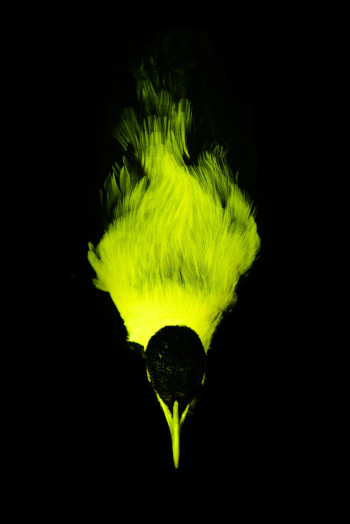
Bird-of-Paradise (Paradisaea guilielmi) in the American Museum
of Natural History's collection. (© Rene Martin)
New research by scientists at the American Museum of Natural History and the University of Nebraska-Lincoln reports, for the first time, the widespread occurrence of biofluorescence in birds-of-paradise. The study, based on Museum specimens collected since the 1800s, finds biofluorescence in 37 of the 45 known birds-of-paradise species and suggests that this special "glow" is important among males for hierarchy and mating displays. The research is published today in the journal Royal Society Open Science.
"The unique mating rituals and displays of birds-of-paradise have fascinated scientists and spurred a myriad of studies focused on trait evolution and sexual selection," said the study's lead author Rene Martin, an assistant professor at the University of Nebraska-Lincoln who conducted this work when she was a postdoctoral researcher at the Museum. "It seems fitting that these flashy birds are likely signaling to each other in additional, flashy ways."
Biofluorescence is a phenomenon that occurs when an organism absorbs light, transforms it, and emits it as a different color. In recent years, Museum Curator John Sparks, an ichthyologist, and his colleagues have identified previously unknown biofluorescence in hundreds of species across the tree of life, with a particular focus on fishes.
Using a specialized photography setup with ultraviolet and blue lights and emission filters, the researchers have captured biofluorescence in animals ranging from sharks to turtles to corals. About a decade ago, Sparks worked closely with Museum ornithologists to search for biofluorescence in the Museum's vast collection among a subset of birds that are known for their courtship displays.
"Despite there being over 10,000 described avian species, with numerous studies that have documented their bright plumage, elaborate mating displays, and excellent vision, surprisingly very few have investigated the presence of biofluorescence," Sparks said.
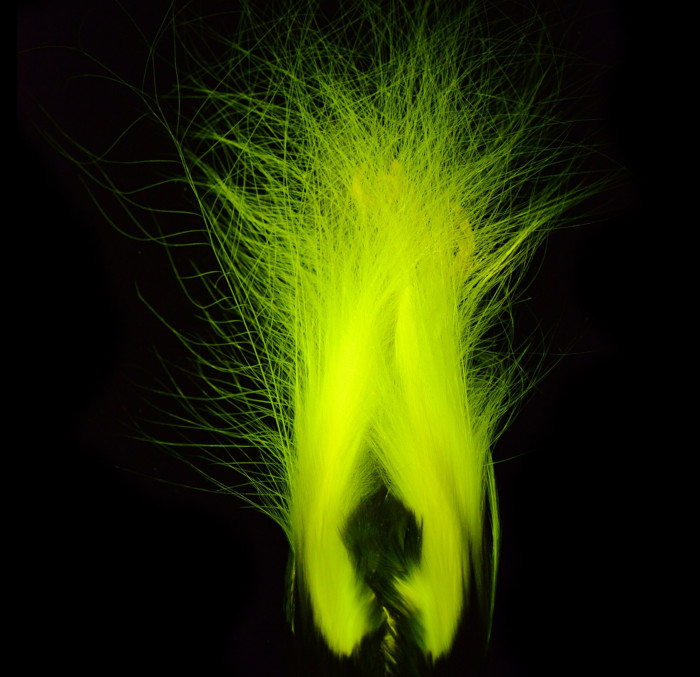
Bowerbirds and fairy wrens failed to glow, but among birds-of-paradise, Sparks found bright green-yellow fluorescence. Sparks' initial work was continued recently by Martin and Emily Carr, a Ph.D. student in the Museum's Richard Gilder Graduate School.
Together, the team took a closer look at biofluorescence in birds-of-paradise, which live across eastern Australia, Indonesia, and New Guinea, finding that the birds also fluoresce when exposed to UV light, not just blue light. This phenomenon is especially prominent in males, focused on their bright plumage and skin in areas that are highlighted during displays: the inner mouth and bill, feet, and feathers on the head, neck, and belly. In females, biofluorescence is usually restricted to plumage on the chest and belly.
"These birds live near the equator, where there is an abundance of bright solar light year-round, and they live in forests where the complexity of light is significantly affected by differences in the canopy and where biofluorescent signals may be enhanced," Carr said.
Studies based on closely related species found that the pigments in the birds' eyes align with the fluorescence peaks that the researchers measured. Based on this, the authors infer that birds-of-paradise can see these biofluorescent patterns, which enhance contrast against dark plumage and possibly play an important role in courtship and hierarchy.
American Museum of Natural History
11 Feb 2025
More Information:"Does Biofluorescence Enhance Visual Signals in Birds-of-Paradise?," Royal Society Open Science (2025). DOI: 10.1098/rsos.241905..
Share this story