


Magpie Euthanised After Being Found in Illegal Glue Trap in Glasgow
The Scottish Society for the Prevention of Cruelty to Animals (Scottish SPCA) has renewed calls for enforcement of glue trap ban following distressing incident
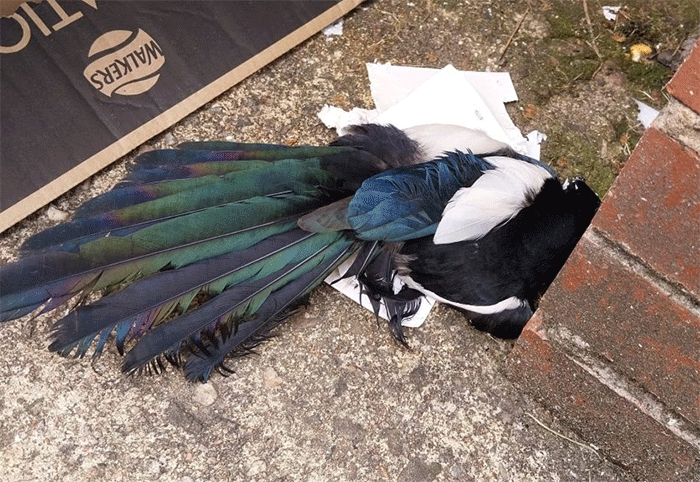
Bird found in communal bin store
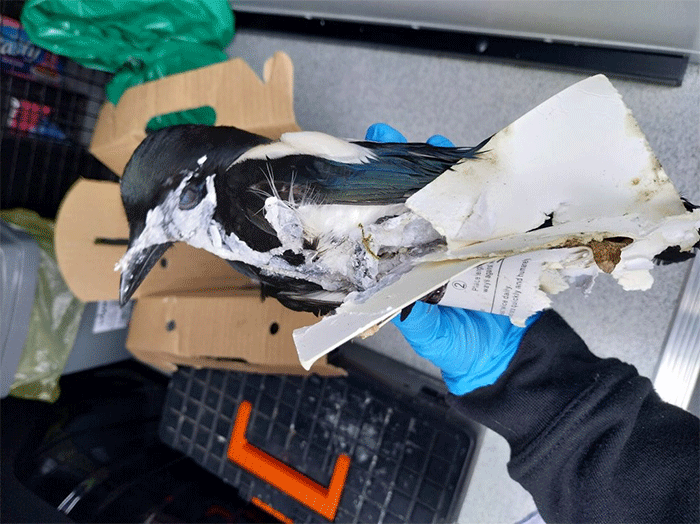
A magpie was discovered stuck to a glue trap intended for rodent control in a communal bin store on Ashgill Road, Glasgow. The bird's belly and right wing were adhered to the trap, with glue also present on its face and around the eye. An Animal Rescue Officer from the Scottish SPCA attended the scene and used vegetable oil to free the magpie. However, due to the severity of its injuries, the bird had to be humanely euthanised.
Scottish SPCA's stance on glue traps
A special investigations inspector from the Scottish SPCA stated: "The Scottish SPCA does not support the use of glue traps. These devices are indiscriminate and cause unnecessary suffering to any bird or animal caught in them. People setting these traps are obliged to check them regularly to prevent suffering, but there is no practical way of enforcing this. Too often, they are placed incorrectly, putting non-target species such as birds at risk. It's an outdated and inhumane method of pest control that has no place in a compassionate, modern society."
Legislation and public reporting
In March 2024, the Scottish Parliament passed the Wildlife Management and Muirburn (Scotland) Bill, which includes a ban on all forms of snares and glue traps, offering greater protection for Scotland's wildlife. Despite this legislation, incidents like the one in Glasgow highlight the ongoing challenges in enforcement and public awareness.
The Scottish SPCA urges anyone who discovers a trapped animal in distress or suspects a trap or snare is illegal to contact their confidential animal helpline on 03000 999 999.
May 2025
Share this story





