


Large reserves shield northern birds from climate-driven decline
Cold-adapted birds declined in small protected areas in northern Finland but remained more stable in large reserves, a new study finds.
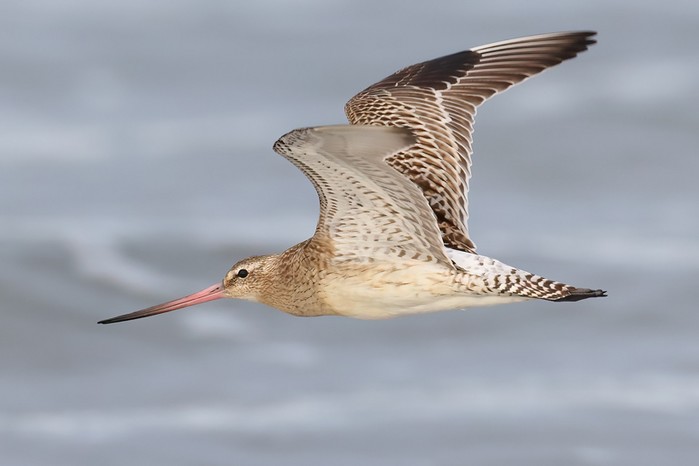
Large protected areas can buffer cold-adapted birds against climate-driven decline in northern Europe, according to an analysis of long-running bird counts from 245 reserves across Finland.
Researchers compared breeding-bird abundance in two periods, 1980-1999 and 2010-2022. The surveys used standardised line transects, generally walked in June by experienced observers, and covered 100 species across southern, central and northern Finland.
Reserve size alone did not explain bird-population trends across the whole country. The important pattern emerged when the researchers also considered each species' temperature preference and latitude.
In northern Finland, species associated with cooler climates declined in small protected areas but not in large ones. Warm-adapted species, by contrast, increased in small northern reserves while remaining more stable in large reserves. The relationship between reserve size and population trend was not statistically significant in southern or central Finland.
Small PAs have a limited capacity to slow down the biodiversity loss in terms of declines of cold-dwelling species.
The authors suggest that large reserves retain more extensive areas of continuous habitat and a wider range of microclimates. They may therefore continue to provide cool refuges as average temperatures rise. Small sites have proportionally more edge, making their internal conditions more vulnerable to clear-felling, drainage and other changes in the surrounding landscape.
The pattern is particularly relevant in Finland because its protected-area network is strongly skewed by geography. The 69 northern sites in the study averaged 336.4 sq km, compared with 33 sq km for the 100 central sites and 17.3 sq km for the 76 southern sites.
From the northern data, the team identifies about 117 sq km - roughly an 11 km by 11 km square - as a useful planning benchmark. Cold-dwelling birds showed largely negative trends in northern reserves below that mean size, while declines were weaker in larger areas.
That figure should not be treated as a universal minimum for every reserve or species. It is derived from the structure of this Finnish dataset, and no protected area in southern Finland reaches it. In more fragmented southern landscapes, improving connections between smaller sites may be more realistic than creating single reserves of comparable scale.
The study also does not say that small protected areas lack value. Smaller sites can preserve scarce habitats, support locally important populations and act as stepping stones. Its narrower conclusion is that, for cold-adapted species exposed to a warming boreal climate, size appears to add protection that a scattered network of small sites may not provide on its own.
Finland spans more than 1,000 km from south to north, allowing the researchers to test the same question across a substantial climatic gradient. They argue that the findings are likely to be relevant elsewhere in the boreal biome, where the largest protected areas are also concentrated in remote northern regions.
The authors recommend prioritising large protected areas above the 117 sq km benchmark where possible, while improving ecological connections among smaller reserves. Both approaches could help the global commitment to protect 30% of land and sea by 2030 deliver habitat that remains functional as climates change.
The open-access study, Large Protected Areas Buffer Against Climate Change Effects on Bird Populations in Northern Europe, was led by Leena Hintsanen of the Finnish Museum of Natural History at the University of Helsinki and published in Diversity and Distributions.
21 Aug 2026
Get Breaking Birdnews First
Get all the latest breaking bird news as it happens, download BirdAlertPRO for a 30-day free trial. No payment details required and get exclusive first-time subscriber offers.
Share this story




