


Fresh greenery in nests linked to healthier chicks - but scientists still do not know why
The first quantitative synthesis of experiments on green nest material finds the clearest benefit in chick mass and body size, while leaving the biological mechanism unresolved.
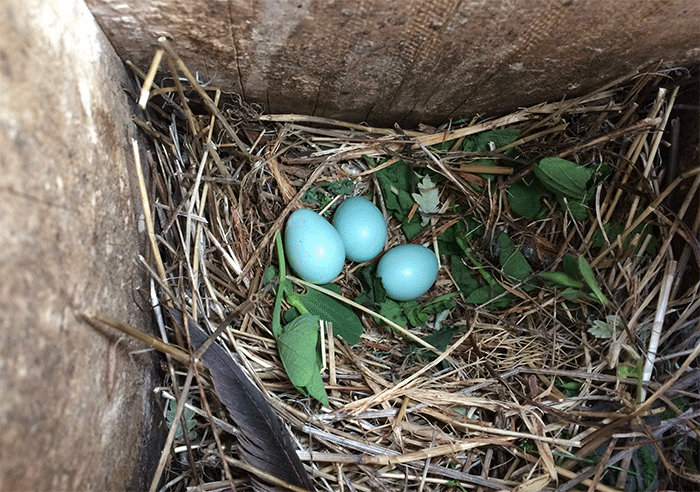
Birds of many species carry fresh leaves, herbs, grass stems and aromatic sprigs into their nests, often continuing to replenish the greenery after the nest itself is complete. A new meta-analysis suggests the behaviour really can benefit their offspring, but scientists are still unable to say exactly how it works.
Researchers led by Shreya Dimri at Bielefeld University combined 28 experimental studies covering seven bird species, 17 geographical locations and 274 effect sizes. The studies had actively added or removed green material, allowing the team to examine causal effects rather than relying only on observations of naturally decorated nests.
Those morphological measures included nestling mass, wing length and tarsus length. Across the combined data, nests with green material tended to produce better results, although the strength of the effect varied with the outcome measured and the experimental design.
Three main explanations have dominated previous research. The courtship hypothesis proposes that nest greenery acts as a display of mate quality. The nest-protection hypothesis suggests aromatic plants suppress parasites or pathogens. A third, sometimes called the drug hypothesis, proposes that plant compounds directly improve the physiology or condition of adults or young.
Altogether, the evidence suggests that green nest material can improve fitness-related outcomes, with the clearest positive effect found for morphological measures of nestling condition.
The synthesis found no compelling evidence that any one of those explanations was better supported than the others. In particular, the results challenge the familiar assumption that aromatic compounds are necessarily responsible for the benefits, and the review found no consistent overall reduction in parasites or pathogens.
Other mechanisms have received much less attention. Fresh plants might alter nest temperature or humidity, improve the physical structure of the cup, absorb waste, or help maintain hygiene in ways that have not yet been tested systematically. The positive effect may also arise through different routes in different species.
The evidence base remains narrow. About 81% of the effect sizes came from just three species: Blue Tit, European Starling and Spotless Starling. Many individual experiments were small, with 41% of effect sizes based on fewer than ten nests in each group, limiting how confidently the findings can be generalised across birds.
The authors say experiments on a wider range of species, regions and plant types are now needed, together with direct measurements of nest microclimate, hygiene and chick physiology. The peer-reviewed study, Why do birds use green nest material? A systematic review and meta-analysis of experiments, is published in Proceedings of the Royal Society B.
20 Aug 2026
Get Breaking Birdnews First
Get all the latest breaking bird news as it happens, download BirdAlertPRO for a 30-day free trial. No payment details required and get exclusive first-time subscriber offers.
Share this story




